
Meniscus Surgery Recovery: Repair vs Removal Timelines
Have you ever wondered which path gets you back to daily life faster: repair that preserves tissue or removal that eases pain sooner?
I am Dr. Lokesh Chowdary R, MBBS, MS – Orthopaedics, Managing Director and Senior Orthopedic Surgeon at Boss Multispeciality Hospital on Magadi Main Road, Bangalore, near Kamakshipalya and RR Nagar.
In this short introduction I will set realistic expectations about meniscus recovery and how your knee heals over time. Full recovery ranges from a few weeks to several months. Repairs generally take longer than partial removal, and replacement procedures need the most time before intense sports.
I prioritise physiotherapy and non-surgical care when appropriate and recommend surgery only when medically required. Your diagnosis, tear pattern, and rehab shape the recovery timeline more than any single rule.
Read on to see a simple map of days 1–7, weeks 2–4, and weeks 4–12, plus clear signs of normal progress and when to contact your care team.
What I mean by “meniscus surgery recovery” in real life
Recovery is the full return of function, not just healed skin. I mean pain control, restored motion, strength, and the confidence to use your knee for daily tasks. How fast that happens depends on the diagnosis and your treatment plan.
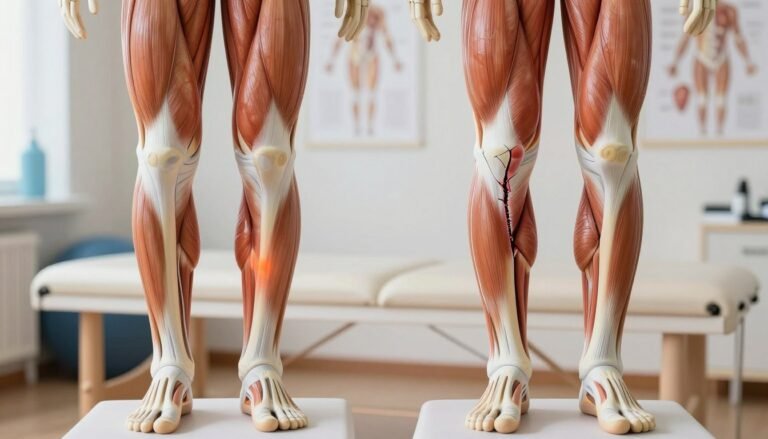
How the meniscus and cartilage work together
The meniscus acts as a shock absorber and spreads load across the knee joint. It works with the cartilage to protect the bones when you walk, climb stairs, or play sports.
Common symptoms after a tear
- Pain with activity or bending; sometimes brief aching at rest.
- Swelling that comes and goes after use.
- “Catching” — a short snagging feeling; “locking” — the knee may stick and need straightening. These often mean a flap or unstable tear that needs closer checks.
Tears happen from twisting, pivoting, sudden stops, overuse, or age-related degeneration. Many cases improve with physiotherapy and non-surgical care. I always look for overlapping problems — ligament injury, arthritis, or cartilage irritation — before deciding the best path.
Meniscus repair vs meniscectomy: why the procedure changes your recovery timeline
Different tears demand different plans, and that choice drives how we protect healing.
I explain blood flow first. The outer red zone has better circulation and often heals with a meniscus repair. Inner white-zone tears have poor blood supply and often need partial removal. That simple biology changes the timeline.
How tear location and blood supply affect healing potential
Peripheral tears may heal because they get more blood. A repair needs protection so sutures can knit tissue inside the knee.
When I lean toward repair vs partial removal
I choose based on tear pattern, tissue quality, age, activity goals, and other injuries. I prefer to preserve cushioning when possible. If the tear is complex or in an avascular zone, a meniscectomy often gives quicker pain control and earlier function.
Why replacement takes the longest timeline
Replacement is a different category. It restores lost tissue but needs months of protection and graded rehab. Return to high-impact sports can take many months, sometimes up to a year. Follow-up and surgeon-guided protocols shape the exact plan.
| Procedure | When chosen | Early focus | Typical timeline |
|---|---|---|---|
| Repair | Peripheral tears, good tissue | Protect stitches, control swelling | Months to full sport |
| Meniscectomy | Complex/avascular tears | Pain relief, rebuild strength | Weeks to months |
| Replacement | Irreparable loss of tissue | Long-term graft integration | Many months; sports delayed up to a year |
Your recovery timeline at a glance: weeks to months
Here’s a compact timeline to help you plan the weeks and months after knee treatment. I give realistic ranges so you can arrange work, family support, and guided physiotherapy sessions without guessing.
Typical recovery time after meniscectomy
After a meniscectomy, basic healing often centers around roughly six weeks. Pain and swelling usually ease first, then strength and confidence return more slowly.
Full comfort may continue to improve beyond this period depending on conditioning and how you load the knee during activities.
Typical healing after meniscus repair
A meniscus repair needs protected healing and can take up to three months for the tissue to knit. I ask patients to follow a stepwise plan controlled by their physiotherapist.
During this phase we watch range, swelling, and strengthening milestones before advancing load.
Returning to intense sports after replacement
Replacement routes take the longest. Integration can take several months, and return to intense sports may be delayed up to a year in some cases.
These timelines are guides. Your specific tear type, procedure details, and rehab consistency change the pace. I focus on a stable, confident knee that tolerates daily activities and sport without setbacks.
Immediately after knee surgery: the first week (days 1–7)
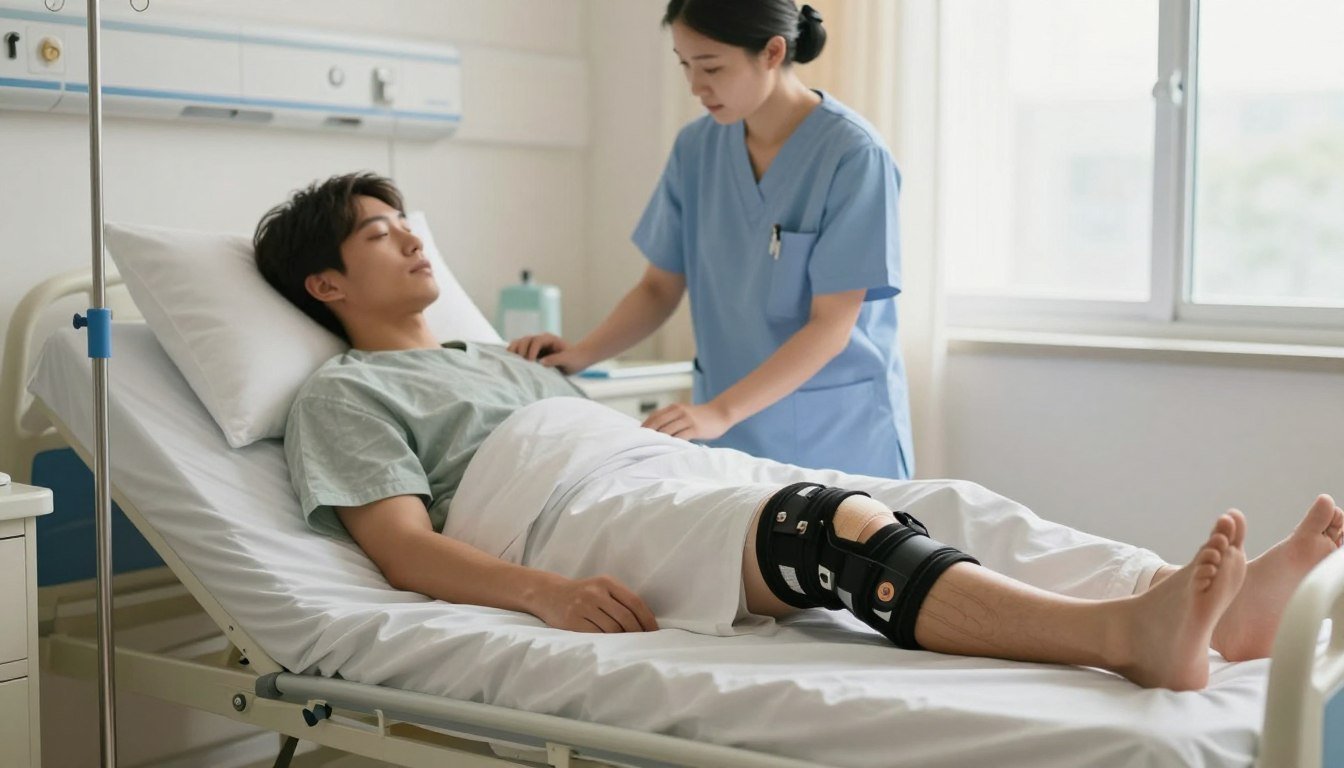
The first seven days after knee treatment set the tone for pain control and early motion. Expect pain and swelling to peak around 48–72 hours and then ease slowly as you follow basic steps.
Controlling pain and swelling safely
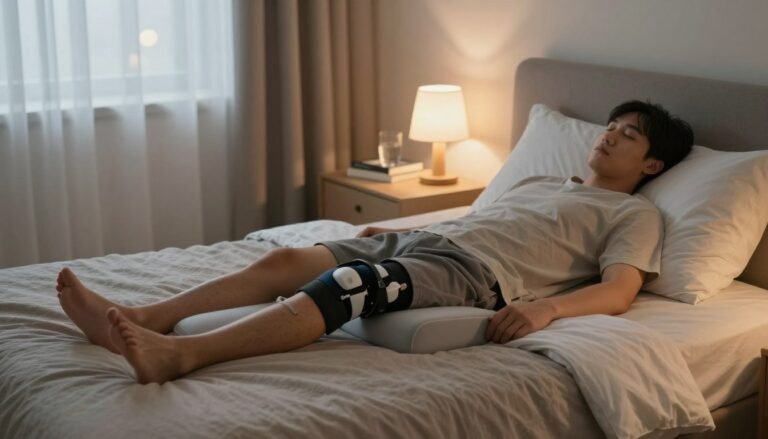
I advise icing for 20 minutes every 2–3 hours while awake and keeping the leg elevated above heart level when resting. These measures cut swelling and help comfort.
Wound care for arthroscopic portals
Keep portal sites clean and dry. Steri-strips usually lift off by themselves in 10–14 days. Call me if you see increasing redness, warmth, or coloured drainage.
Early safe motion and simple exercises
Do frequent ankle pumps to lower clot risk and gentle straight leg raises to engage the quadriceps without stressing the repair. Your therapist will guide the correct dose.
- Red flags: fever, spreading redness, yellow-green drainage, or worsening pain instead of steady improvement.
- Take prescribed pain medicines on schedule; don’t wait until pain is severe.
I coordinate early plans with your therapist and emphasise safety-first steps. When in doubt, contact your clinic for personalised advice.
Walking, weight-bearing, and how long to use crutches
Simple rules about walking and when to use crutches make the early phase much easier to manage. I explain how weight should be shared based on what was done inside the knee and why protection matters.
After meniscectomy
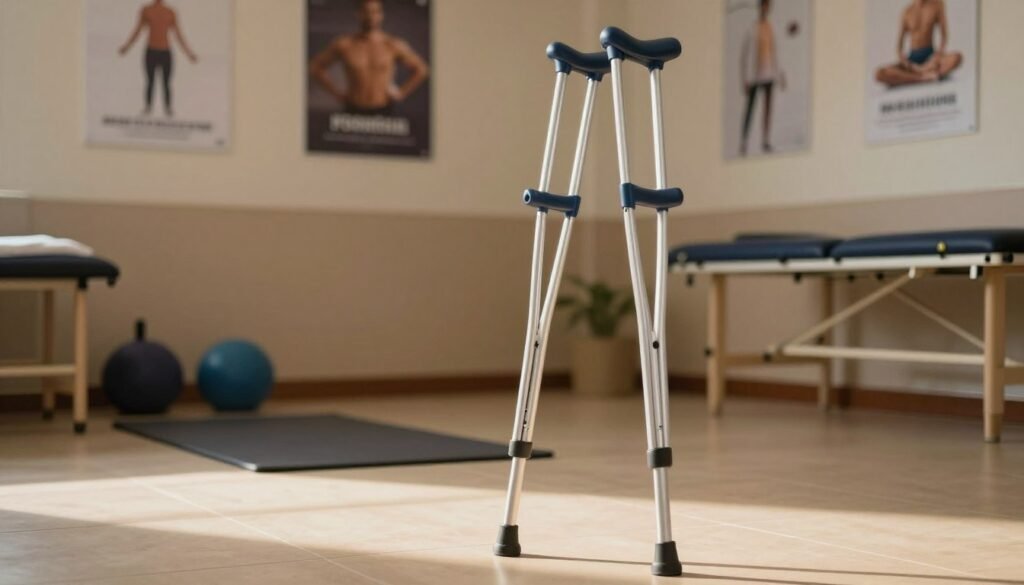
With a meniscectomy most patients bear weight as tolerated right away. I tell many people to use crutches for comfort and balance while swelling settles.
Start short walks at home and increase distance each day as pain and swelling fall. Use crutches mainly until your limp improves and you feel steady.
After a meniscus repair
A repair often needs toe-touch or non-weight-bearing for about 4–6 weeks to protect the stitches. In that time you will usually rely on crutches and limit the load through the joint.
Your surgeon or therapist will outline when partial weight is allowed and how to progress to full weight safely.
When you can stop leaning on crutches
Safe walking feels like a small or no limp, mild and settling pain after activity, and stable swelling that does not climb each day. I release crutches based on gait quality, quadriceps control, and swelling—not strictly the calendar.
| Procedure | Initial weight-bearing | Typical crutch use | Usual timeline |
|---|---|---|---|
| Meniscectomy | Weight as tolerated | Crutches for comfort, short use | Days to weeks for walking |
| Meniscus repair | Toe-touch / non-weight-bearing | Crutches for 4–6 weeks | Progress by protocol over weeks |
| Replacement | Protected weight-bearing | Crutches for several weeks | Longer graded progression |
- Practical tip: on stairs in Indian homes, lead with the stronger leg up and the operated leg down. Use a handrail and the crutch for support.
- Keep bathrooms slip-free and sit while dressing if balance is poor.
- Always follow your surgeon’s written plan and report increasing pain, new instability, or rising swelling.
Physical therapy and exercises that protect healing while restoring range of motion
A guided physiotherapy plan is the backbone of safe motion and steady strength after a knee procedure. I usually start formal physical therapy around week two, once pain and swelling are controlled.
Early sessions focus on swelling control, restoring full extension, gentle flexion, and retraining a normal walking pattern when allowed. Your physical therapist measures swelling, range motion, and basic quad control each visit.
Range targets and a conservative pace after repair
I set practical range-of-motion goals. Aim for near-full extension quickly and slow, protected flexion.
When a repair was performed, we avoid deep bends and heavy shear early. That protects the repair while the tissue heals.
Introducing stationary cycling
Stationary cycling usually starts once you reach about 90–100° of knee bend. Begin with smooth motion and no resistance, then add a little load only if swelling stays low.
Safe strengthening and balance
Closed-chain exercises such as mini squats and wall sits build quadriceps and hip strength with less joint shear. Start shallow and increase depth gradually.
Balance and proprioception drills—supported single-leg stands and gentle perturbations—reduce reinjury risk by improving neuromuscular control.
- Sessions are progress-based: your therapist advances exercises when swelling, range, and strength improve.
- Consistency beats aggressive workouts; avoid pushing through pain that causes new swelling.
| Phase | Focus | Examples |
|---|---|---|
| Week 2 | Swelling, extension | Ankle pumps, straight leg raises |
| Weeks 3–6 | Range, gentle strength | Stationary cycling, mini squats |
| 6+ weeks | Advanced strength, balance | Single-leg stance, progressive loading |
Weeks 2-4: getting back to daily activities safely
Weeks two to four are when many people notice steady gains in comfort and confidence while testing daily tasks. Pain usually eases and motion improves, but swelling can still come and go if you overdo activity.
I advise planning work and travel with caution. After a meniscectomy many patients return to desk work in about 1–2 weeks. Jobs that require standing, walking, or heavy lifting often need 3–4 weeks before tolerated safely.
Driving and reaction time
Driving is about more than pain; it is about braking ability. For automatic cars, left knee procedures may allow driving in 1–2 weeks if you can move quickly and feel safe. Right knee work often needs 2–3 weeks before reliable braking.
- Self-check: sit comfortably, move foot from gas to brake quickly, and test with no pain or rising swelling after a short practice drive.
- Keep short walks, take frequent breaks, and elevate the leg after activity to control swelling.
- Patients with a repair may still have weight-bearing limits; plan extra support and protected commuting.
| Activity | Typical time | Notes |
|---|---|---|
| Desk work | 1–2 weeks | Use short breaks and leg elevation; avoid long commutes initially |
| Standing/walking jobs | 3–4 weeks | Gradual increase; support shoes and rest periods help |
| Driving (automatic) | Left: 1–2 wks / Right: 2–3 wks | Only when braking is quick and swelling is controlled |
Weeks 4-12: rebuilding mobility, strength, and confidence in your knee
This stage is about measured gains: improving range, building strength, and learning to trust the joint again. I work with patients and their physical therapist to progress by signs, not by calendar alone.
Swimming and pool-based therapy
Pool therapy gives low-impact conditioning without stressing the joint. Water walking, gentle flutter kicks, and light pool jogging build endurance while reducing load.
Some strokes that force deep knee flexion may be delayed after a repair. I advise checking with your therapist before adding new moves.
Swelling patterns: normal vs concerning
Mild swelling can persist for months. After partial removal it often eases over 2–3 months; after a repair it may take up to 6 months to settle fully.
However, swelling that slowly increases with the same activity or brings new heat and pain suggests overload and needs activity modification and review.
Criteria-based progress before jogging and sport drills
I use measurable goals: near-full range of motion, minimal swelling, and quadriceps strength around 80% of the other leg before introducing straight-line jogging.
Sport-specific drills begin with controlled lateral steps, light agility patterns, and progressive intensity. Your therapist watches form, swelling, and pain at each step.
- Focus on mobility and graded strength rather than rushing impact.
- Let objective tests from your physical therapist guide return to higher-risk sports.
- Confidence returns when function, not just pain, is restored.
| Area | Typical expectation | When to progress |
|---|---|---|
| Mobility / range | Near-full extension and improving flexion | Consistent daily gains, minimal swelling |
| Strength | Progressive quadriceps and hip strength | ~80% of contralateral leg for jogging start |
| Swelling | Mild, intermittent for months | Increase or persistent heat = slow down and reassess |
Return to sports and higher-impact activities without setbacks
Returning to sport needs a stepwise plan that protects healing and builds confidence. I clear higher-impact activity only when objective tests and patient tolerance line up. Feeling okay is not the same as being ready; sport stresses the knee differently than daily walking.
Non-impact activities: cycling and swimming after meniscectomy vs repair
After a meniscectomy many patients resume gentle cycling and pool work earlier because there is less need to protect stitches. With a meniscus repair I advise a longer cautious phase to avoid deep flexion or sudden loads.
Both paths use water therapy to build endurance with low joint stress, but I clear unrestricted pool drills only when swelling stays low and range is stable.
Straight-line running: typical timelines and criteria
Straight-line running often starts around 8–12 weeks after meniscectomy. After a repair I commonly delay running until 4–6 months. These are guides — I base clearance on range, controlled single-leg strength, and no next-day swelling.
Cutting and pivoting sports: why they take longer
Sports with rapid deceleration, cutting, and twisting (basketball, football, tennis) place high shear on repaired tissue. Return is usually 3–4 months after meniscectomy and 6–9 months — sometimes up to 12 months — after repair, depending on complexity and any associated injuries.
I look for good landing mechanics, symmetric strength, and the ability to tolerate sport drills without pain or swelling spikes before I clear full play.
- I encourage a graded, physiotherapist-led return-to-sport plan to rebuild skills and confidence.
- Keep regular follow-up with your surgeon so the plan matches your specific procedure and any other knee injuries.
| Activity | Meniscectomy (typical) | Meniscus repair (typical) |
|---|---|---|
| Cycling / swimming | Weeks 2–6: gentle | Weeks 6–12: gradual |
| Straight-line running | 8–12 weeks | 4–6 months |
| Cutting/pivoting sports | 3–4 months | 6–9 months (up to 12) |
Conclusion
In practice, each knee tells a different story about how fast it will mend.
I focus on the tear pattern, the chosen procedure, and a steady, therapist-led plan to guide healing. A partial removal often allows faster return in weeks, a repair needs protected healing over months, and complex reconstruction can take longer.
Some pain and swelling are normal. Worsening heat, fever, coloured drainage, or new locking needs review promptly. I base progress on motion, swelling control, and strength targets before advancing to jogging or sport.
Don’t compare your course to another person’s—two identical meniscus tear scans can behave very differently. If you want a personalised plan, book an appointment with me, Dr. Lokesh Chowdary R, at Boss Multispeciality Hospital on Magadi Main Road, Bangalore (near Kamakshipalya and RR Nagar).