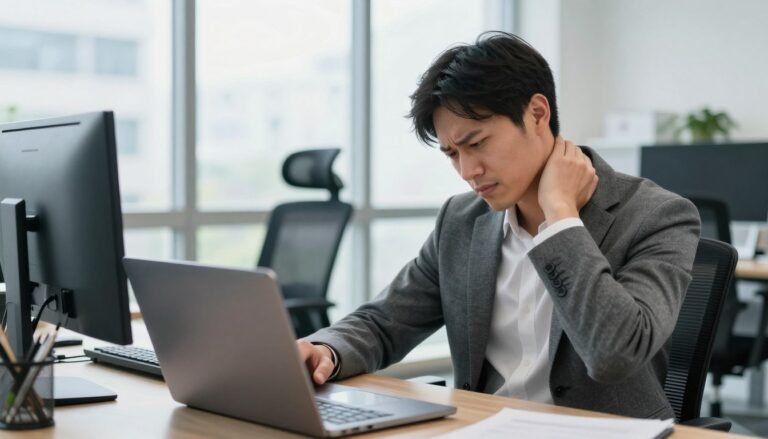

Lower Back Pain from Sitting: Causes and Relief Strategies
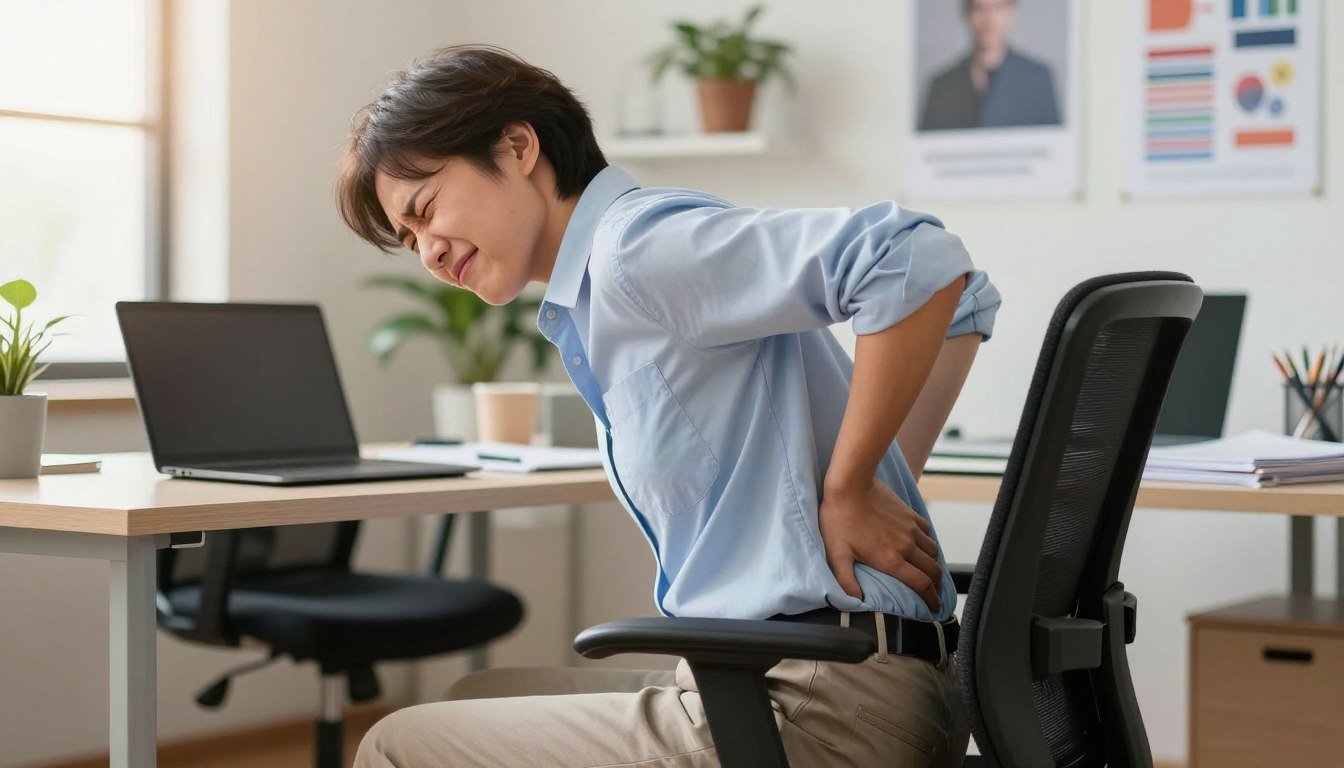
Have you ever wondered why a long day at your desk leaves your body aching and stiff?
I am Dr. Lokesh Chowdary R, MBBS, MS (Orthopaedics), Managing Director and Senior Orthopedic Surgeon at Boss Multispeciality Hospital, Bangalore.
Prolonged sitting and poor posture increase stress on the lumbar region and discs. That often shows up as discomfort in the lower back during office work, commuting, or long meetings.
In this article I will explain how the spine supports your weight and why pressure changes when you sit. I will outline common posture and muscle-related causes, plus the medical conditions we must consider.
My approach favors accurate diagnosis and non-surgical care first. I will describe posture correction, graded movement, and physiotherapy-guided recovery, and note when specialist evaluation is needed.
What I Mean by “Lower Back Pain” and Why Sitting Triggers It
I often see patients who describe a steady ache after hours at their desk. In clinic terms, lower back pain refers to symptoms arising in the lumbar vertebrae L1–L5, the part that carries most of your upper-body weight and allows bending and twisting.
The lumbar spine in simple terms: L1–L5
The vertebrae stack like building blocks. Between them, fluid-filled discs act as cushions. Together they let you move and absorb stress.
How prolonged sitting increases pressure on vertebrae and discs
Sitting, especially with a rounded posture, shifts more pressure onto the discs than standing. Minutes spent immobile reduce muscle circulation and raise sustained compressive load on the spinal cushions.
Why pain can feel dull, sharp, or stiff
A dull ache often points to strained muscles. Sharp pain may signal a mechanical problem or disc irritation. Stiffness is common after long stillness and reflects protective muscle guarding.
| Tissue | Typical Sensation | Common Trigger |
|---|---|---|
| Muscle | Dull ache, tightness | Prolonged immobility |
| Disc | Sharp or shooting | Increased compressive pressure |
| Nerve | Numbness, tingling | Disc irritation or narrowing |
Common Causes of Lower Back Pain from Sitting
I see that many routine desk habits and weak stabilizers combine to make symptoms worse. Identifying the specific cause guides treatment, and most issues improve with early care.
Poor posture
Slouching, leaning to one side, or losing the natural curve increases disc stress and alters spinal load.
Muscle strain and mechanical problems
Sustained positions fatigue muscles and create trigger points. Stiffness and ache around the buttocks are common.
Weak core and hip control
When core and hips are weak, the lumbar area compensates and faces extra strain during ordinary tasks.
- Herniated disc: a disc bulge can irritate a nerve and cause symptoms down a leg.
- Degenerative discs: age-related wear may flare with bending and prolonged sitting.
- Sciatica and spinal stenosis: nerve compression can cause one-sided burning, numbness, or weakness.
| Cause | Typical sign | When to see me |
|---|---|---|
| Muscle strain | Localized stiffness, worse after rest | If not improving with basic care in 2–4 weeks |
| Disc or nerve issue | Shooting pain, numbness, or leg weakness | If numbness or leg weakness appears |
| Non-spinal conditions | Visceral pain, fever, or unusual symptoms | If you have fever, abdominal symptoms, or sudden severe pain |
I recommend avoiding self-diagnosis; a targeted exam helps choose the right conservative plan for most patients.
Symptoms to Pay Attention to Before You Try to “Push Through”
Your symptoms tell a story. I want you to spot signs that suggest nerves are involved rather than simple muscle strain.
Patterns that suggest nerve irritation
Tingling, numbness, burning sensations, or weakness that travels into a leg indicate nerve irritation. These symptoms differ from the dull ache of tired muscles.
One-sided vs. both-sides signals
One-sided symptoms often point to a focal issue such as sciatica or a disc problem. Symptoms on both sides can reflect a broader condition or muscular imbalance and need careful assessment.
Red flags that need urgent evaluation
- Fever with worsening pain
- Rapidly increasing leg weakness or numbness
- New bowel or bladder changes, severe night pain, or unexplained weight loss
| Symptom | Likely clue | Action |
|---|---|---|
| Tingling into leg | Nerve irritation | Seek evaluation |
| Diffuse ache | Muscle strain | Home care, monitor |
| Bilateral stiffness | Postural or systemic | Assess if persistent |
I advise not to “push through” when neurological signs appear. Many people improve with simple changes, but timely review prevents prolonged recovery. Listen to your body and seek care when symptoms escalate.
How I Check Your Sitting Posture and Daily Habits
I begin by watching how you settle into a chair and noting where your body first shows strain. This quick observation tells me whether your symptoms are likely mechanical or need further investigation.
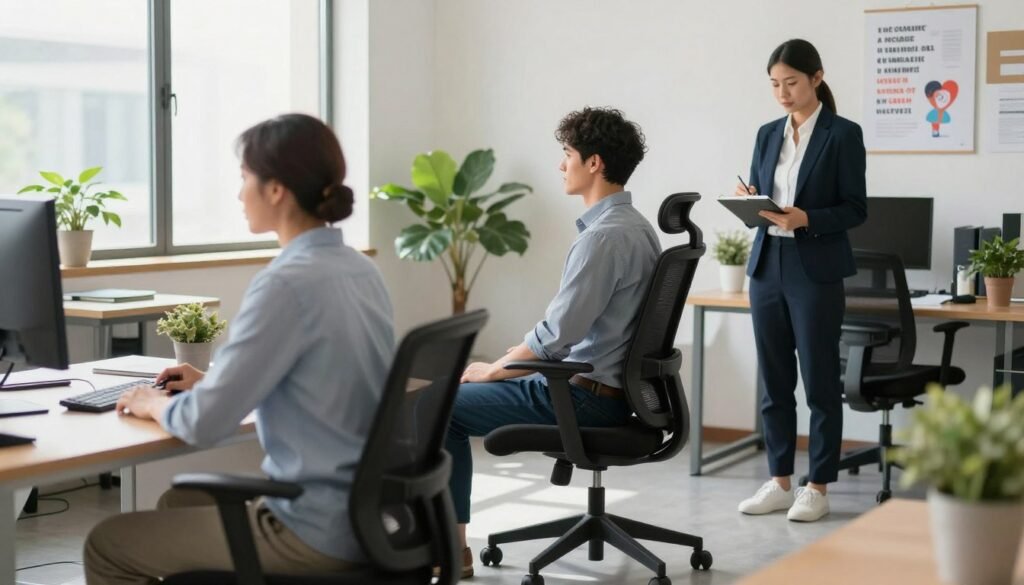
The “imaginary straight line” alignment
I ask you to align head to tailbone as if a string runs through your center. I look for level shoulders, no forward head, and even weight on both sit bones. A forward head or rounded trunk raises pressure on the lumbar discs.
Pelvis position and why it matters
A pelvis that tilts too far forward or back changes the natural curve. Excessive arching or rounding forces muscles to work and increases stress at the lumbar level.
Why minutes at a stretch count
Sitting for 10–15 minutes is not the same as remaining unchanged for 60–90 minutes. I time how posture drifts after a few minutes to judge endurance and fatigue.
Common desk errors I check
- Monitor too low, chair height off, feet unsupported — these alter reach and add strain.
- Working on a laptop in bed or long commutes can add cumulative stress across the day.
- Simple fixes like a rolled towel for lumbar support often reduce discomfort.
| Check | What I look for | Immediate advice |
|---|---|---|
| Alignment | Head over shoulders, weight even | Adjust chair, bring screen to eye level |
| Pelvis | Neutral, not over-arched or flat | Use lumbar towel support |
| Duration | Posture change after minutes | Set movement reminders every 30–45 minutes |
I use these steps to decide whether your symptoms likely come from posture and muscle strain or require further tests. Small, consistent changes usually bring noticeable improvement and make sitting standing transitions easier.
How to Sit and Work More Comfortably Without Aggravating Back Pain
Small changes to how you sit and set your desk often cut strain and help you work longer without discomfort. My goal is a neutral spine that reduces unnecessary pressure, not an exaggerated rigid pose you cannot keep.
Chair setup: seat height, backrest, and lumbar support
Adjust the seat so your feet sit flat and your knees are near a right angle. Use the backrest and slip a rolled towel or cushion at the lumbar level if the chair lacks support.
Foot, knee and hip positioning
Keep feet flat and avoid tucking a leg under you. Aim for even weight on both sit bones and knees roughly level with your hips to reduce pelvic strain.
Armrests, shoulders and workspace basics
Support your arms to ease neck and upper back tension. Place the monitor at eye level and keep elbows comfortably bent with keyboard and mouse close.
| Adjust | Simple action | Why it helps |
|---|---|---|
| Seat height | Feet flat, knees ~90° | Reduces pelvic tilt and pressure |
| Lumbar | Rolled towel or cushion | Maintains natural curve |
| Screen | Eye level | Prevents forward head and slouch |
Try short standing breaks or alternate sitting standing briefly each hour. Make changes gradually; comfort often improves over days as your body adapts.
Movement Breaks That Relieve Back Pressure During the Day
Short, regular movement is often the simplest way to ease spinal stress during a workday. Frequent motion prevents muscles from tightening and reduces steady pressure on the discs.
Sitting-to-standing transitions to unload discs
I advise standing for 30–60 seconds every 30–45 minutes. Even brief standing shifts load away from the spine and gives discs time to recover.
Simple micro-movements at your desk
Do gentle trunk extensions, shoulder rolls, ankle pumps, and neck rotations. Short walks for water or stairs restore circulation and cut stiffness without drawing attention.
Using reminders to build a habit
Set phone alarms, smartwatch prompts, or calendar nudges. Consistency matters more than intensity—small, repeated breaks add up and prevent flare-ups.
| Action | Duration | Why it helps |
|---|---|---|
| Stand briefly | 30–60 seconds | Unloads discs and eases compressive pressure |
| Micro-movements | 30–90 seconds | Restores circulation, reduces stiffness |
| Timed reminders | Every 30–45 minutes | Builds a sustainable posture-and-break habit |
Non-Surgical Relief Strategies I Commonly Recommend
When a flare starts, I use a stepwise non-surgical plan to calm inflammation, restore movement, then build strength.
Ice vs. heat: Use ice for acute inflammation—about 20 minutes, then remove. Repeat as needed during the first day or two. Use heat once sharp inflammation eases (often after ~24 hours) to relax tight muscles and improve flexibility.
OTC pain relief: Nonsteroidal drugs can reduce swelling and discomfort. Use them short-term, follow dosing advice, and tell your doctor about stomach, blood pressure, or kidney issues before regular use.
Physiotherapy and guided recovery
Physiotherapy combines targeted strength, flexibility, and posture training. We progress by form and tolerance, not speed.
Key exercises I teach
- Plank: core bracing to steady the spine.
- Bird dog: control and alignment with slow reps.
- Bridge: glute and hip strength to offload the lumbar discs.
- Pelvic tilts, cat‑cow, child’s pose: restore mobility and reduce stiffness.
| Stage | Focus | Why it helps |
|---|---|---|
| Reduce irritation | Ice, short rest, meds | Lowers inflammation so rehab can start |
| Restore movement | Mobility drills, gentle stretches | Improves circulation and flexibility |
| Build strength | Core and glute exercises | Increases resilience and reduces recurrence |
If symptoms persist despite guided care, injections or nerve blocks may aid rehab. Surgery is reserved for clear nerve compromise or failure of well-supervised conservative treatment. I emphasize steady progress and consistent habits over quick fixes.
Conclusion
Many people find that small changes bring steady improvement in daily comfort. Sitting-related lower back pain often stems from posture, muscle overload, or reduced spinal support, and most causes are treatable with targeted care.
Reduce sustained pressure by improving your chair setup, build brief movement into each hour, and work on core and hip strength gradually. Watch symptoms carefully—especially tingling, numbness, fever, weakness, or bowel/bladder changes—and seek prompt review if these appear.
The best treatment depends on a clear diagnosis; what helps a muscle issue may not suit a disc or nerve condition. Many people improve with non-surgical care and physiotherapy, but recovery times vary.
If symptoms persist or limit daily life, book an appointment with me, Dr. Lokesh Chowdary R, at Boss Multispeciality Hospital, Magadi Main Road (near Kamakshipalya and RR Nagar), for a focused orthopedic evaluation and a personalised plan for relief and recovery.