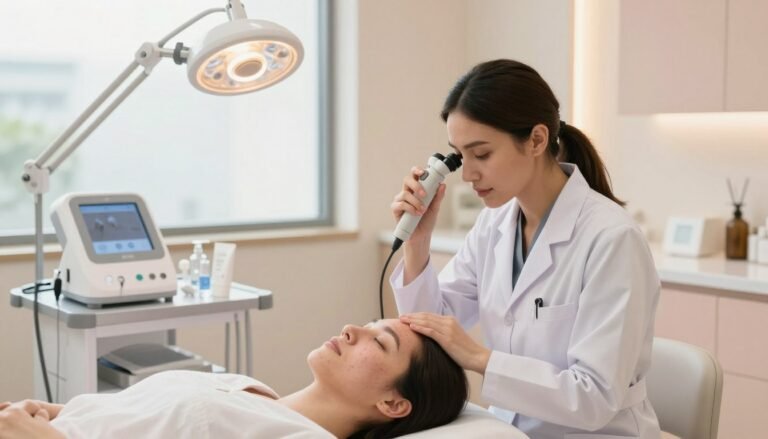

Types of Acne Scars: How to Identify & Treat Each Type
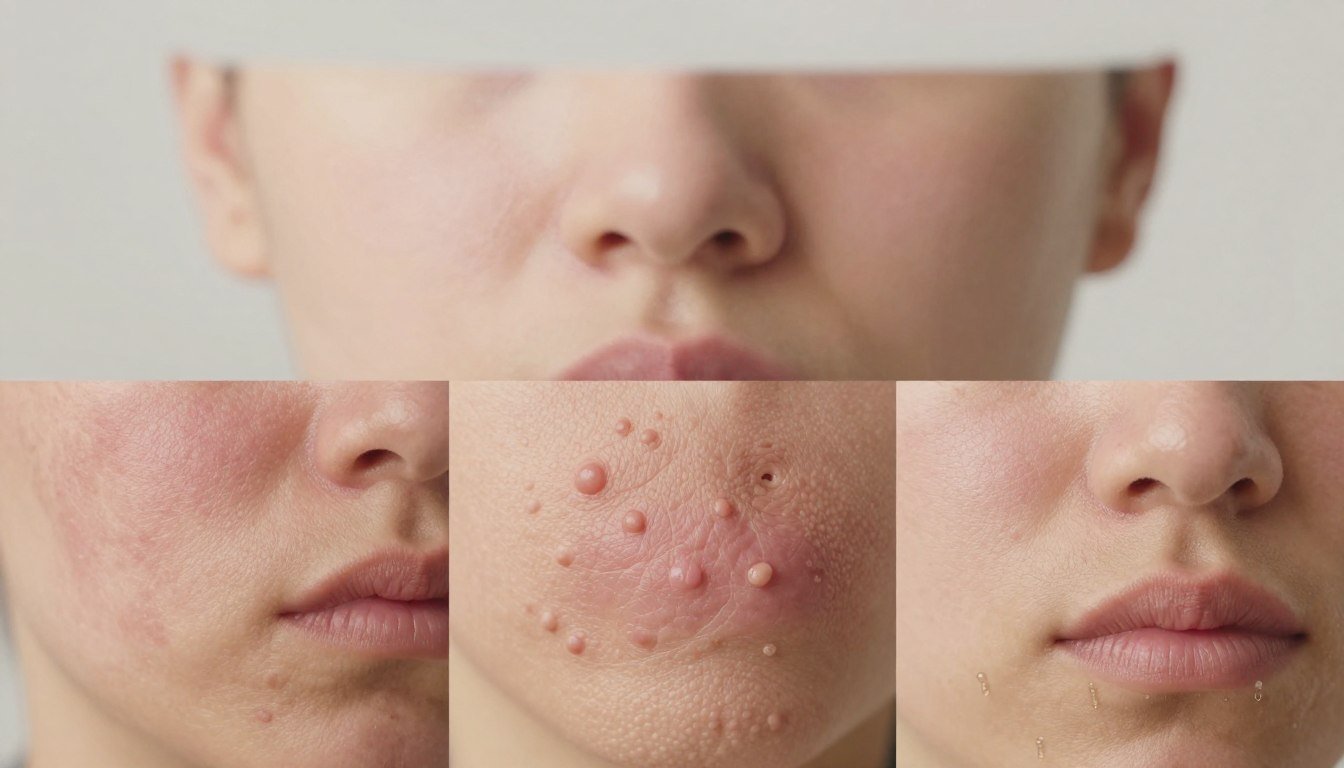
Have you wondered why some marks vanish while others linger and change how your face looks?
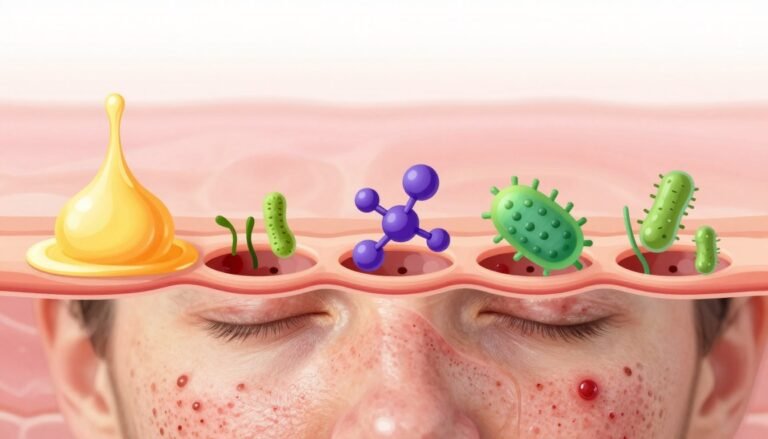
Acne happens when hair follicles get clogged with oil and dead skin cells, which leads to pus-filled bumps and inflammation.
Most reddish or brownish marks left behind after pimples clear will fade on their own over time. But many people in Bangalore find that some scars persist on delicate facial skin long after breakouts stop.
We help you identify each scar so the treatment plan matches your unique skin needs. Our expert team guides you through options that improve texture and tone, and we explain why some marks need professional care.
We focus on patient education first, so you feel confident choosing the right step for clearer, healthier skin. Read on to learn how each scar is identified and which treatments help most.
Understanding the Origins of Acne Scarring
Acne scarring starts with a simple clog in a hair follicle and can alter skin long after the spot heals.
When follicles fill with oil and dead cells, bacteria can grow and trigger inflammation. That reaction leads to red bumps and pus-filled acne lesions.
How deep the inflammation reaches determines whether marks heal cleanly or result in lasting scars. Early care can limit damage and keep your skin texture smoother.
- Clogged follicles: excess oil and dead cells set the stage for bacteria to multiply.
- Inflammatory response: deeper inflammation raises the risk of permanent tissue change.
- Early treatment: addressing acne lesions promptly reduces long-term scarring.
- Our clinical approach targets root causes to protect skin integrity.
| Factor | What Happens | Risk |
|---|---|---|
| Clogged pore | Oil and dead cells block the follicle | High, leads to lesions |
| Bacterial growth | Inflammation and pus formation | Moderate to high |
| Depth of inflammation | Damage to deeper tissue layers | Determines scarring severity |
| Early care | Topical or clinical treatment | Reduces long-term marks |
The Different Types of Acne Scars Explained
Not every post-pimple mark looks the same; their shape and depth guide treatment choices.
Identifying varied marks
We group marks by how they change the skin surface and how deep the damage goes.
Some are shallow depressions. Others are steep and narrow, needing more focused care.
Common skin surface changes
Knowing the exact category helps us plan a personalized treatment at Boss Multispeciality Hospital.
Expect differences in healing time and the number of sessions required. We set clear goals with you.
- Shape and depth determine the best method to restore smooth skin.
- Each patient shows a unique pattern, so we tailor the approach for optimal results.
- Realistic expectations help you follow the plan and track progress.
| Shape | Depth | Recommended approach |
|---|---|---|
| Shallow dents | Superficial | Topical care and light resurfacing |
| Rolling depressions | Medium | Subcision or fractional therapies |
| Steep, narrow pits | Deep | Surgical release or advanced laser |
Why Acne Lesions Lead to Permanent Marks
When a pimple turns into a swollen, painful lesion, it raises the chance of lasting damage. Deep inflammation harms tissue under the surface and may prevent smooth healing.
Picking or squeezing makes this worse. That behavior disrupts repair, raises infection risk, and often leaves a visible scar.
- Deep, inflamed lesions pose higher risk for permanent marks on your skin.
- Avoid picking—manual trauma increases chance of scarring and damages surrounding tissue.
- Nodules are more likely to leave permanent scars because they reach deeper layers.
- Persistent inflammation interrupts normal healing and leads to severe acne scarring.
| Lesion severity | Risk level | Recommended action |
|---|---|---|
| Superficial spots | Low | Topical care, gentle routine |
| Deep nodules | High | Early clinical treatment to limit scarring |
| Persistent inflammation | Moderate–High | Anti-inflammatory therapy and follow-up |
Understanding why lesions become permanent helps you protect your skin. We aim to reduce the risk and manage acne scarring with timely, evidence-based care.
Distinguishing Between Mild and Severe Acne
Pinpointing severity helps us pick the safest, most effective care for your skin. We start with a quick clinical look to see how deep lesions sit and how much inflammation they show.
Mild characteristics
Mild cases show surface whiteheads or blackheads. These sit on the top layer and rarely cause lasting damage.
Topical routines and gentle peel sessions often help fade small marks and restore tone.
Severe and nodule formation
Severe cases present painful, pus-filled nodules under the surface. These reach deeper tissue and raise risk for permanent scarring.
We may suggest microdermabrasion or a targeted chemical peel when healing permits. These treatments improve texture and reduce the appearance of scarred areas.
- Identify severity early to lower chance for severe scars.
- Mild cases need simpler care; deep nodules require clinical intervention.
- A tailored plan blends home care with clinical treatment for best results.
| Severity | Signs | Suggested treatment |
|---|---|---|
| Mild | Surface spots, low inflammation | Topical care, peel |
| Severe | Deep nodules, high inflammation | Clinical therapies, microdermabrasion |
| Goal | Restore smooth skin | Prevent long-term scarring |
The Role of Inflammation in Skin Damage
Inflammation is the hidden driver that decides whether a spot heals cleanly or leaves lasting change.
With acne, the immune response fights bacteria and debris. When swelling is brief, the surface usually recovers well.
But prolonged inflammation harms the underlying tissue. That damage can create uneven texture and deeper marks over time.
We focus on early control to protect your skin. Calming inflammation lowers the chance that lesions become permanent.
- Inflammation level often predicts how severe the final mark will be.
- Long-lasting swelling breaks down collagen and delays repair.
- Timely care shortens inflammation and preserves tissue health.
| Factor | Effect | Action |
|---|---|---|
| Acute inflammation | Temporary redness | Topical anti-inflammatories |
| Chronic inflammation | Tissue damage | Clinical anti-inflammatory therapy |
| Patient follow-up | Improved outcomes | Personalized plan by our team |
Understanding inflammation helps you make informed care choices in Bangalore. We use evidence-based methods to calm the response and protect your skin for the long term.
Identifying Rolling Scars on the Face
On close inspection, rolling marks show a sloped edge rather than a sharp pit, which changes how we treat them.
Rolling scars appear as gentle, wave-like depressions across the skin. They create a soft, uneven texture that can be visible on the face.
Identifying these depressions matters because they respond best to lifting or release techniques rather than simple resurfacing. We examine your skin carefully to confirm the pattern and depth.
- Gentle, sloped depressions that blend into surrounding skin.
- Require treatments that lift the tissue to a normal level.
- Our team matches the plan to your needs and skin tone.
| Feature | Appearance | Approach |
|---|---|---|
| Rolling | Wave-like, shallow | Subcision, fillers, fractional therapy |
| Noticeability | Moderate on cheeks and temples | Targeted lifting and skin resurfacing |
| Goal | Smoother texture | Restore contour and confidence |
With a tailored plan, many patients see clear improvement and better skin confidence after treatment.
Deep and Narrow Scarring Patterns
Some indentations run deep and thin, requiring more than surface treatments to correct.
These deep and narrow scars often penetrate the lower layers of the skin. That deeper damage makes them harder to treat than surface marks.
We assess the depth and the tissue beneath to choose the right level of intervention. Precision matters. Treating the root prevents harm to surrounding skin and speeds healing.
- Deep scars reach the dermis and need targeted release or lifting methods.
- We map depth during consultation to plan safe, effective care.
- Our team focuses on lifting and smoothing the tissue to improve texture.
| Feature | What it means | Common approach |
|---|---|---|
| Deep & narrow | Penetrates dermis, tight edges | Subcision, targeted lasers, surgical release |
| Surrounding tissue | Must be preserved | Precise, minimal trauma techniques |
| Goal | Restore smooth contour | Lift tissue and improve skin texture |
At Boss Multispeciality Hospital we tailor treatment for these stubborn marks. By treating the deep tissue directly, we can significantly improve the look and feel of your scar and overall skin.
Professional Approaches to Treating Acne Scars
When inflammation is under control, clinicians can safely plan effective repair for marked areas.
We start by confirming your acne is stable. Treating acne first prevents new damage and protects healing skin.
At Boss Multispeciality Hospital we use proven clinic options. A chemical peel or microdermabrasion may be recommended to improve the appearance of scarred areas. In many cases we combine procedures to get better results.
- Confirm active acne is managed before any resurfacing treatment.
- Use microdermabrasion or a controlled peel to refine texture and tone.
- Combine therapies when needed for deeper or mixed-pattern marks.
- Design a plan that balances appearance goals with skin health.
| Approach | Best for | Sessions |
|---|---|---|
| Microdermabrasion | Surface smoothing | 3–6 |
| Chemical peel | Tone and shallow pits | 2–4 |
| Combination care | Mixed patterns | Customized |
We invite you to speak with our team so we can recommend the right treatment acne plan for your needs. Our approach focuses on both the look and long-term health of your skin.
Benefits of Laser Resurfacing for Skin Texture
Removing the damaged top layer with laser resurfacing helps the skin rebuild stronger beneath. We use laser energy to tighten the middle layer while clearing rough surface tissue. This improves texture and refines appearance in treated areas.
Laser resurfacing is a reliable treatment to reduce visible marks and restore smoother skin. We often use local anesthesia so you stay comfortable during the procedure. Our team matches settings to your skin tone and the depth of damage.
Recovery time and healing process
Healing usually takes between 3 and 10 days. During this time, redness and mild swelling fade and new skin becomes noticeable. We monitor your recovery closely to ensure safe results.
- Removes damaged top layer and tightens the middle layer for better texture.
- Comfort measures and local anesthesia reduce discomfort during treatment.
- Effective for multiple scarred areas, giving a visible improvement in appearance.
| Benefit | What to expect | Typical time |
|---|---|---|
| Surface renewal | Damaged layer removed | 3–10 days healing |
| Mid-layer tightening | Smoother, firmer texture | Noticeable within weeks |
| Comfort & care | Local anesthesia and follow-up | Monitored recovery |
How Dermabrasion Smooths the Skin Surface
Dermabrasion reshapes the skin by gently sanding away damaged surface cells. We use a spinning diamond instrument or a fine wire brush to remove the rough outer layer with controlled motion.
The goal is simple: prompt regeneration of a smooth, more even layer. As the treated layer heals, new cells rise and refine texture and overall appearance.
Healing usually takes between 10 days and 3 weeks. During this time we monitor progress and guide your home care to support safe recovery.
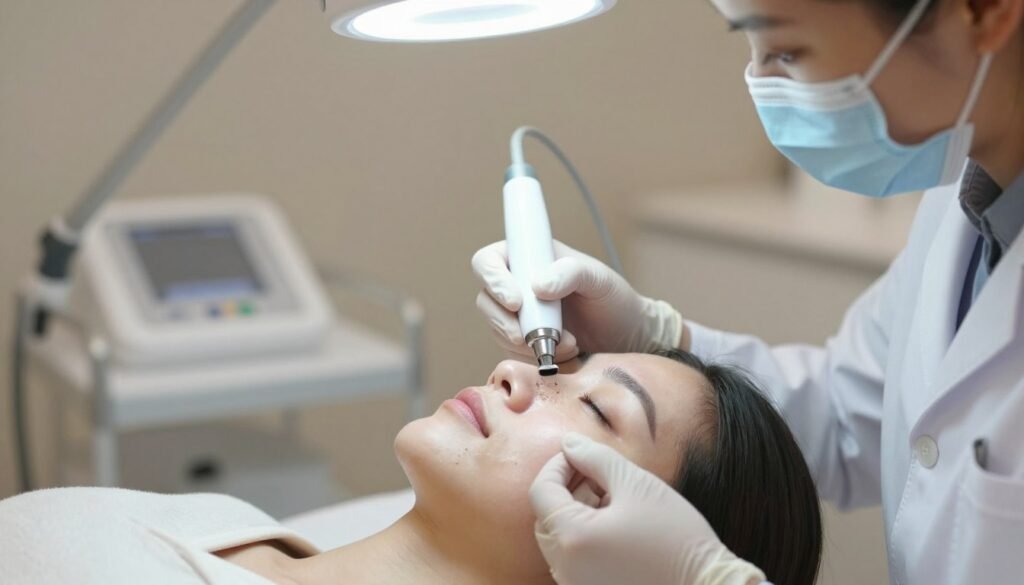
- Dermabrasion is a powerful treatment that removes damaged outer cells to even the surface.
- When the skin repairs itself over 10 days to 3 weeks, a fresh, smoother layer appears.
- We perform the procedure with precision to reduce the visibility of scars and protect surrounding areas.
| Feature | What it does | Expected healing time |
|---|---|---|
| Instrument | Spinning diamond or wire brush abrades outer cells | 10 days–3 weeks |
| Result | Removes uneven surface to reveal new skin | New layer forms within weeks |
| Aftercare | Gentle cleansing, sun protection, follow-up | Monitored until full healing |
| Best for | Stubborn scars and textural irregularities | Single or combined treatments |
At Boss Multispeciality Hospital we explain the expected recovery time and tailor the treatment plan to your needs. You will have clear guidance through every step so healing goes smoothly and results meet your goals.
Understanding Fractional Laser Therapy for Deep Tissue
Fractional laser treats damaged tissue at a deeper level while leaving the top layer intact. This focused approach stimulates collagen remodelling without large surface wounds.
Because we do not remove the outer layer, healing time is shorter for most patients. You may look sunburned for a day or two. That redness typically settles quickly.
- Fractional laser is an advanced treatment that targets deep tissue with minimal surface damage.
- Shorter recovery lets you return to routine faster compared with full resurfacing.
- We use this laser therapy to improve texture and reduce stubborn marks, session by session.
| Feature | Fractional laser | Resurfacing / Dermabrasion |
|---|---|---|
| Depth | Deeper columns within tissue | Primarily surface and upper layer |
| Surface damage | Minimal, intact outer layer | Removes outer layer |
| Typical healing time | Short (few days) | Longer (1–3 weeks) |
At Boss Multispeciality Hospital we select the right treatment based on your skin and goals. Our team guides you through expected results, downtime, and comfort measures so you feel supported at every step.
Surgical Options for Severe Indented Scars
For deep, sunken marks, surgical repair can offer lasting change when other methods fall short. We consider surgery only after conservative care and laser sessions have been tried or when tissue loss is significant.
In some cases a surgeon removes the indented area and closes the wound with precise techniques to smooth contour. For rolling depressions, we may inject filler or other material beneath the pit to lift it to the level of normal skin.
- Surgery is often best for severe indented marks that resist topical or light laser treatment.
- We plan each procedure to preserve surrounding skin and restore a natural contour.
- Our team uses pain control and careful anaesthesia to keep you comfortable during surgery.
| Issue | Common approach | Expected benefit |
|---|---|---|
| Deep, tethered pits | Surgical release or excision | Improved contour and texture |
| Rolling depressions | Subcutaneous filler or graft | Lifted surface, smoother look |
| Extensive tissue loss | Reconstruction with local flaps | Restored volume and reduced visibility |
We explain each step, likely results, and aftercare so you can make an informed choice. When surgery is the right approach, it can deliver a meaningful improvement in how your skin looks and feels.
Why You Should Avoid Over the Counter Masks
Many over-the-counter masks promise quick fixes, but they can harm delicate healing skin.
Loading your face with strong packs or trendy lotions may irritate fragile areas. That irritation can make scars more noticeable and slow natural repair.
A red or brownish mark from a bad zit can take 12 months or longer to fade. Using the wrong products raises the risk that the mark darkens or lasts longer.
- We strongly advise against OTC masks; they often irritate and reveal marks more.
- Protecting your face from extra irritation helps skin heal more effectively.
- Seek professional treatment rather than relying on unproven home masks that pose a risk.
| Product | Risk | Recommended action |
|---|---|---|
| Store-bought masks | Irritation, increased redness | Stop use; consult clinic |
| Harsh peels at home | Tissue damage, pigment change | Professional assessment |
| Gentle routine | Low | Clinical guidance for treatment |
If you worry about the appearance of scars, please consult our team. We guide safe care and tailor a treatment plan for your face and long-term skin health.
Expert Care at Boss Multispeciality Hospital Bangalore
At Boss Multispeciality Hospital, Bangalore, we offer clear guidance and proven treatment acne plans tailored to your skin history.
Our dermatology unit uses modern tools and evidence-based methods. We explain options in simple terms so you can choose with confidence.
- We provide expert care and personalised treatment acne solutions at our Bangalore facility.
- Our clinic has the latest technology to deliver safe, effective dermatological care.
- We focus on comfort, respect, and clear communication during every visit.
| Service | Benefit | When to consider |
|---|---|---|
| Clinical assessment | Accurate plan for your skin | Initial visit |
| Laser & resurfacing | Improve texture and tone | After inflammation controlled |
| Surgical options | Correct deep contour loss | Resistant cases |
Choosing our hospital in Bangalore means partnering with a caring team. We guide long-term skin health and support you at every step.
Consulting Dr. Varsha D.V. for Personalized Treatment
Seeing a specialist lets you move from guesswork to a targeted treatment pathway tailored for you. Dr. Varsha D.V. (MBBS, DDVL) is our Consultant Dermatologist & Dermatosurgeon at Boss Multispeciality Hospital.
When you meet Dr. Varsha, we review your history and current skin in detail. She explains the options for treating acne and how each approach may affect any remaining scar. This helps you choose realistic, evidence-based care.
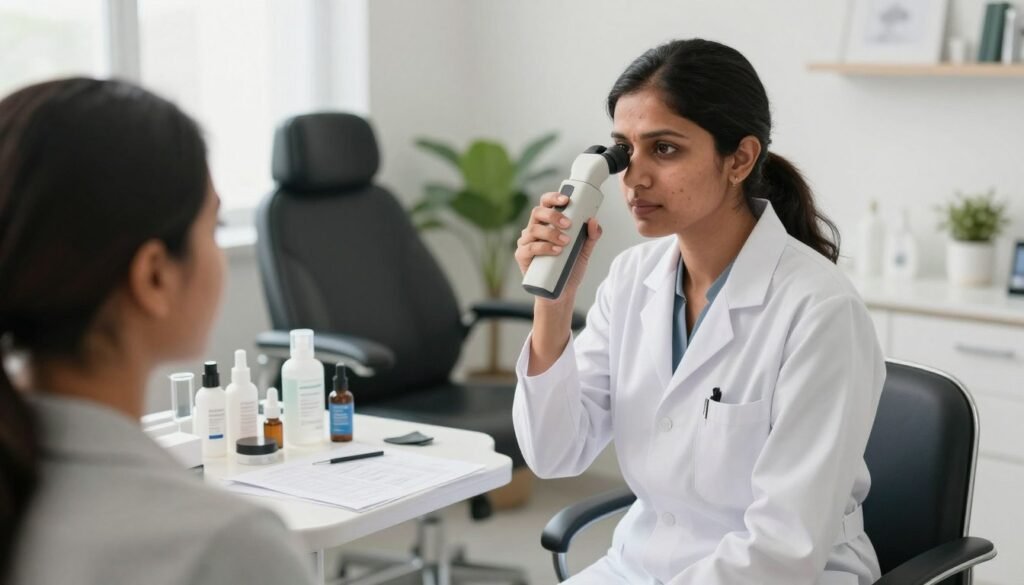
- Dr. Varsha D.V. (MBBS, DDVL) creates personalised treatment acne plans for each patient.
- You get clear guidance on treating acne and on methods that reduce scar visibility.
- Her years of experience ensure focused, compassionate care and safe follow-up.
| Step | Focus | Benefit |
|---|---|---|
| Assessment | Clinical review & history | Accurate plan |
| Plan | Combined therapies | Targeted results |
| Follow-up | Healing support | Long-term skin health |
We invite you to discuss your concerns with Dr. Varsha D.V. Consult Dr. Varsha at Boss Multispeciality Hospital, Bangalore — Call +91 9986607601 to Book an Appointment.
Conclusion
A focused approach and caring support make restoring healthy skin achievable. We are honoured to guide you through each step at Boss Multispeciality Hospital in Bangalore.
With the right professional plan, you can manage acne and improve texture over time. Our team creates personalised treatments that match your needs and lifestyle.
Your skin deserves expert care and steady follow-up. Reach out to our clinic to begin a tailored program with our specialists today. Understanding your options is the first step toward lasting results.
FAQ
What are the main types of post-pimple marks and how can I tell them apart?
Marks after breakouts usually appear as shallow depressions, wider rolling indentations, or narrow, deep pits. Shallow depressions are smoother and feel flat, rolling indentations give the skin an uneven, wave-like look, and narrow pits are small but deep. A dermatologist can examine your skin and recommend treatments based on the pattern and depth of these changes.
How do inflamed breakouts lead to permanent skin changes?
When a lesion becomes inflamed, the body sends immune cells and repairs damaged tissue. Sometimes this repair over- or under-produces collagen. Too little collagen leaves an indentation; too much can create raised tissue. Preventing strong inflammation early reduces the chance of lasting marks.
Can mild breakouts cause lasting marks, or is it only severe cases?
Mild breakouts usually heal without permanent change if not picked at and if inflamed reactions are controlled. However, repeated or infected lesions—even when individually mild—can lead to surface changes over time. Severe nodules and cysts carry a higher risk of deep, lasting damage.
What treatment options do dermatologists commonly recommend for shallow versus deep defects?
For shallow surface changes we often recommend resurfacing methods such as chemical peels or microdermabrasion. Deeper defects respond better to fractional laser therapy, dermabrasion, filler injections, or surgical techniques like punch grafting depending on depth and size. A tailored plan considers your skin type and healing ability.
How does fractional laser therapy help with deep tissue defects, and what is the recovery like?
Fractional lasers create controlled micro-injuries that stimulate new collagen in targeted areas, improving texture and reducing indentations. Recovery varies by laser strength: milder sessions cause a few days of redness and flaking, stronger treatments may need one to two weeks of visible healing. Multiple sessions spaced weeks apart often give the best results.
Is dermabrasion still used, and when is it preferred over laser treatments?
Dermabrasion mechanically sands the surface layer to smooth texture and can be effective for broader, shallow defects. We may prefer it when the goal is uniform resurfacing across larger areas or when laser access is limited. Both approaches carry risks and require proper aftercare to promote even healing.
Are over-the-counter masks safe to use for improving post-pimple texture?
Many over-the-counter masks provide temporary smoothing or brightening, but some contain harsh exfoliants or irritants that can worsen inflammation and delay healing. Avoid strong home peels without professional guidance and choose gentle, non-comedogenic products. If you have sensitive or darker skin tones, consult us before trying active treatments at home.
When should I consider surgical options for indented lesions?
We consider surgery for deep, narrow pits that don’t respond to non-surgical therapies. Procedures like punch excision or grafting can remove the defect and repair the area with a smaller, less noticeable scar. A surgical approach is chosen after careful assessment and discussion of expected outcomes and downtime.
How long until I see improvement after starting a treatment plan?
Timelines vary: topical regimens and mild peels may show subtle change in weeks, while lasers and surgical repairs can take months for full collagen remodeling. Most patients notice progressive improvement over three to six months; some treatments need multiple sessions for optimal results.
What should I expect during the healing process and how can I support recovery?
Expect temporary redness, swelling, scabbing, or flaking depending on the procedure. Protect healing skin from sun with a broad-spectrum sunscreen, follow wound-care instructions, avoid picking, and use gentle cleansers and moisturizers. Proper nutrition, hydration, and quitting smoking support better outcomes.
Are there risks or side effects I should know about with laser resurfacing and other therapies?
All procedures carry some risk: pigment changes, infection, prolonged redness, or textural irregularities. Risks are lower with experienced clinicians and proper pre- and post-care. We perform an assessment to choose the safest modality for your skin tone and condition.
How do we personalize a treatment plan at Boss Multispeciality Hospital in Bangalore?
We begin with a detailed skin evaluation, medical history, and discussion of your goals. We then recommend a combination of treatments—topicals, in-office resurfacing, lasers, or procedures—tailored to lesion type, skin type, and lifestyle. We emphasize realistic expectations and evidence-based choices.
Why is early professional care important rather than waiting to self-treat at home?
Early professional care reduces extended inflammation, prevents worsening damage, and allows interventions that limit long-term marks. DIY methods can delay proper healing or cause additional harm. Timely guidance helps you avoid unnecessary procedures later and achieves better cosmetic outcomes.
How can I book a consultation with Dr. Varsha D.V. for a personalized plan?
You can contact Boss Multispeciality Hospital Bangalore through their official website or phone to schedule an appointment. During your visit, Dr. Varsha D.V. will review your concerns, examine your skin, and outline a clear, compassionate treatment roadmap that fits your needs and schedule.