
When Should You See a Dermatologist for Hair Loss?

Have you ever wondered if the shedding you notice is normal or a sign that you need expert help?
We know that uncertainty can feel worrying. Early action often protects your scalp and boosts confidence. At Boss Multispeciality Hospital in Bangalore, we focus on gentle, evidence-based care.
Dr. Varsha D.V (MBBS, DDVL) leads our dermatology and dermatosurgery team. She works with you to understand causes and suggest clear options tailored to your history.
Many people delay a visit and miss a better outcome. You can call +91 9986607601 to Book an Appointment and start a focused evaluation today.
We aim to guide you calmly, explain choices simply, and support each step of treatment. Read on to learn signs that merit prompt attention and what to expect at your first consult.
Understanding the Natural Hair Growth Cycle
Every scalp follows a rhythm of growth and rest; some daily shedding is expected. On average, a person loses between 50 and 100 hairs a day as part of this cycle.
When shedding rises beyond that range, it may signal an underlying condition or lifestyle factor. We look at patterns to determine whether the cause is genetic, environmental, or linked to internal health changes.
Stress, thyroid changes, and major body changes can disrupt the cycle. We assess how follicles behave and whether the scalp offers a healthy environment for steady growth.
- Normal daily shedding: 50–100 strands
- Disrupting factors: stress, thyroid, lifestyle shifts
- What we check: pattern, follicles, medical history
| Phase | Duration | Effect on growth | Clinical note |
|---|---|---|---|
| Anagen (growth) | 2–6 years | Active shaft production | Healthy follicles support density |
| Catagen (transition) | 2–3 weeks | Stops active growth | Shortens with stress or illness |
| Telogen (rest) | 2–4 months | Shedding phase | Prolonged telogen can cause thinning |
By reviewing your lifestyle and medical history, we can tell if shedding is temporary or a persistent condition. That clarity helps guide next steps and preserves long-term scalp health.
When to See a Dermatologist for Hair Loss
Noticing a sharp increase in strands on your pillow or brush often marks a change worth evaluating. We aim to act early so small problems do not become permanent.

Sudden Changes in Shedding
Sudden spikes in shedding or new bald patches can point to specific conditions such as alopecia areata.
Telogen effluvium often shows up about three months after major surgery, high stress, or a change in medication.
- Heavy shedding on pillows or clothing
- Clear patches or rapidly thinning areas
- Widening part line, especially in women
Persistent Scalp Discomfort
Ongoing itching, burning, or pain may precede scarring. Scarring can cause permanent loss of follicles if untreated.
Early evaluation helps restore confidence and opens options for effective treatment tailored to the cause.
| Sign | Likely cause | Suggested action |
|---|---|---|
| Patchy spots | Alopecia areata | Prompt clinical review |
| Wider part line | Female pattern change | Medical assessment |
| Sudden heavy shedding | Telogen effluvium (3 months) | History and tests |
Recognizing Early Warning Signs of Thinning
Small shifts in texture or shine often come before visible thinning and deserve attention. We focus on these early signs so care can be gentler and more effective.
Look for strands that feel brittle, dry, or break easily. Those subtle changes can precede clear thinning and widening parts.
Many patients ignore mild shedding or a dull scalp. Early professional treatments can stabilise density and improve scalp health.
- Fragile strands or split ends
- Less volume, finer texture over months
- Periods of increased shedding after stress
| Early sign | What it may mean | Action |
|---|---|---|
| Brittle strands | Nutritional or environmental stress | Targeted treatment and diet review |
| Finer texture | Progressive thinning | Root cause assessment |
| Increased shedding | Recent health change | History and tests |
By monitoring these cues we aim to protect growth and offer personalised plans that keep your hair resilient. Early action often preserves more options for long-term care.
The Role of Medical History and Physical Exams
A structured medical history paired with a focused scalp exam gives clear clues about underlying causes. We ask about recent body and health changes, medicines, and family patterns. These details point us toward likely triggers.
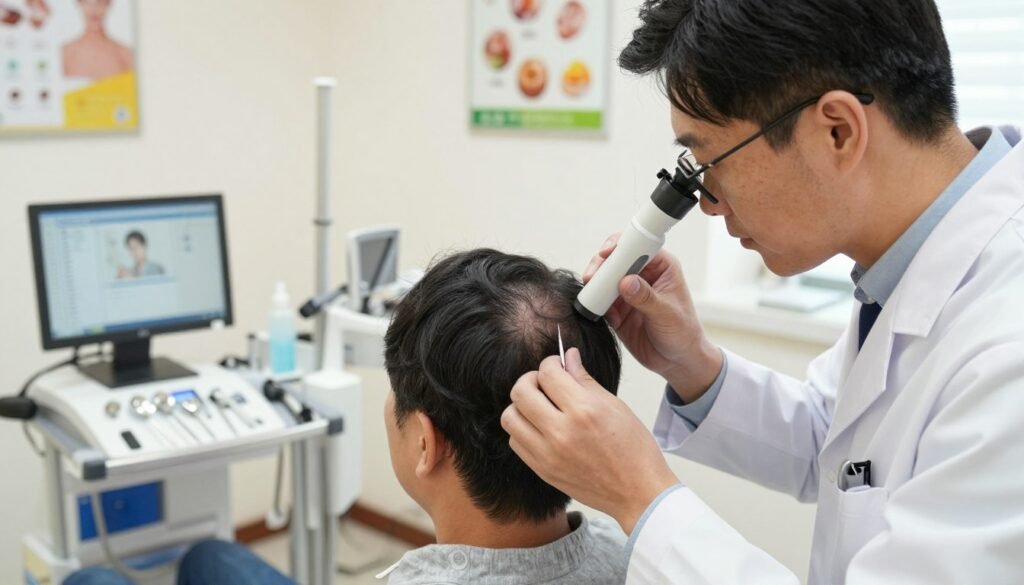
Clinical Scalp Check
During your appointment we do a careful physical exam of the scalp and skin. We look for redness, inflammation, or early scarring signs. Noting the pattern of thinning helps us identify the type of hair loss and related conditions.
The Pull and Tug Tests
The pull test is simple and informative. A clinician grasps about 40 strands gently and measures how many come away. That count shows whether active shedding is present.
The tug test checks shaft strength. We tug a strand lightly to see if breakage causes symptoms or if follicles are affected. This helps separate breakage from true follicle loss.
- Review of medical history and recent health changes.
- Scalp exam for inflammation, scarring, and pattern observation.
- Pull test using ~40 strands to assess active loss.
- Tug test to evaluate shaft integrity and breakage.
| Assessment | What it shows | Next step |
|---|---|---|
| History review | Possible triggers and factors | Targeted tests or lifestyle changes |
| Pull test | Active shedding severity | Monitor or treat based on count |
| Tug test | Shaft breakage vs follicle loss | Hair care advice or further evaluation |
This clear, stepwise evaluation ensures we understand the exact type and cause before we suggest a plan. When needed, we book further testing or an appointment for treatment options tailored to you.
Advanced Diagnostic Techniques for Scalp Health
High-definition tools can reveal subtle scalp changes that a naked eye often misses. We use focused tests when routine checks leave questions.
Trichometric Analysis
We use the Folliscope®, which magnifies the scalp up to 100 times. This device shows hair follicles, shaft thickness, and miniaturisation clearly.
High-resolution imaging helps us identify the exact type of hair loss and plan tailored treatment. We can track hair growth and regrowth over several months.
Fungal Culture Testing
A fungal culture confirms if an infection drives scalp symptoms. Accurate identification avoids unnecessary treatments and speeds recovery.
- Sample collection from affected sites
- Lab identification guides targeted antifungal therapy
- Follow-up testing checks response over months
Scalp Biopsy Procedures
When scarring is suspected, a small skin sample gives definitive answers. A biopsy helps differentiate scarring alopecia from other types.
Our dermatologists review tissue under the microscope and recommend precise treatments based on findings.
| Test | What it shows | Typical next step |
|---|---|---|
| Folliscope® | Follicles, shaft detail, miniaturisation | Imaging-guided treatment plan |
| Fungal culture | Presence of infection | Targeted antifungal therapy |
| Scalp biopsy | Scarring vs non-scarring changes | Specific medical or surgical options |
Common Underlying Causes of Hair Shedding
Hidden medical issues, nutrition gaps, or stress can shift the growth cycle and cause noticeable shedding.
Many people have an underactive or overactive thyroid that shortens growth phases. Nutrient shortfalls, especially iron and vitamin D, weaken follicles.
Hormone shifts, pregnancy changes, new medications, or a recent surgery often trigger diffuse thinning that shows after a few months.
- Autoimmune patches that need specific immune‑modulating care.
- Female pattern thinning at the crown or part may need hormonal balancing.
- Chronic stress and lifestyle factors that prolong shedding.
| Cause | Typical signs | Usual action |
|---|---|---|
| Thyroid disorder | Diffuse thinning, texture change | Blood tests, endocrine referral |
| Nutritional deficiency | Brittle strands, excess shedding | Diet review, supplements |
| Autoimmune patching | Round bald areas, sudden patches | Targeted medical therapy, monitoring |
| Medication or surgery | Widespread shedding after months | History review, plan for regrowth |
We identify the root cause and then guide a personalised treatment plan. Addressing the driver often restores scalp health and encourages regrowth over months.
Why Early Professional Intervention Matters
Prompt evaluation lets us spot treatable conditions and protect existing follicles. Acting early often stabilizes shedding before permanent damage takes place.
We review lifestyle, stress, thyroid status, recent medications, and any surgery that may affect growth. Addressing these factors helps steady regrowth over the coming months.
Starting treatment sooner can reduce the need for aggressive procedures later and restore confidence more quickly. Our team explains simple steps you can follow at home and medical options we recommend.
We identify the root cause and tailor a plan that may include medicines, topical care, or supportive therapies. This targeted approach gives the best chance of keeping density and promoting healthy growth.
| Early action | Benefit | Usual next step |
|---|---|---|
| Stabilise shedding | Protect follicles | History, exam, basic tests |
| Manage lifestyle and stress | Improve growth | Guided plan and follow-up |
| Review medications or surgery | Clear recovery path | Adjustments and monitoring |
Conclusion
Early recognition of change on the scalp gives you the best chance of keeping density and restoring confidence.
We encourage you to notice small signs of shedding and act promptly. Simple tests often identify a clear cause and guide gentle, effective treatment.
Our dermatologists at Boss Multispeciality Hospital focus on a personalised plan that treats the root issue. We explain options clearly and support your skin and hair health every step of the way.
Do not wait for progression. Consult Dr. Varsha D.V at Boss Multispeciality Hospital, Bangalore — Call +91 9986607601 to Book an Appointment.
FAQ
When should I consult a dermatologist about sudden shedding?
Sudden, heavy shedding over a few weeks or the appearance of many loose strands after showering or brushing suggests an underlying trigger. If you notice rapid changes in density or new patches on the scalp, seek evaluation promptly. Early assessment helps identify causes like telogen effluvium, medication reactions, or autoimmune conditions and speeds up recovery.
How does the normal hair growth cycle affect daily shedding?
Hair follows phases: growth (anagen), transition (catagen), and rest (telogen). It’s normal to lose 50–100 hairs daily as part of this cycle. Increased shedding beyond that, lasting several months, may reflect a disrupted cycle from stress, hormonal shifts, nutritional gaps, or illness and deserves medical attention if it persists.
What constitutes persistent scalp discomfort that needs a clinic visit?
Ongoing itching, burning, pain, or flaking that doesn’t respond to over-the-counter remedies warrants a professional exam. These symptoms can signal dermatologic issues—psoriasis, severe seborrheic dermatitis, or infections—that harm follicles and hinder regrowth without treatment.
When are early signs of thinning concerning?
Noticeable widening of the part, reduced ponytail thickness, or visible scalp through normally covered areas are early red flags. If these changes progress over months rather than fluctuate, schedule an evaluation so targeted treatments can preserve follicle health and improve outcomes.
How does my medical history influence diagnosis?
We review medications, recent illnesses, childbirth, weight changes, thyroid function, and family patterns. These details help pinpoint causes such as androgenetic patterning, autoimmune disease, thyroid disorders, or medication-induced shedding and guide appropriate testing and therapy.
What is the pull and tug test and what does it show?
The pull test is a gentle technique where the clinician extracts a small bundle of hairs to estimate active shedding. A high number of hairs coming out suggests increased telogen shedding. It’s a quick, useful bedside tool that complements history and other exams.
What is trichometric analysis and why is it useful?
Trichometry uses magnified imaging to measure hair density, shaft diameter, and miniaturization. It produces objective baseline data and tracks response to treatment. This helps tailor therapies such as topical minoxidil, oral medications, or procedural options.
When is fungal culture testing performed?
If we suspect tinea capitis or resistant scalp infections, we may collect scales or hair for fungal culture. Detecting fungal organisms guides antifungal selection and duration, which differs from treatments for noninfectious thinning.
Why might a scalp biopsy be needed?
A biopsy provides microscopic insight into follicle structure and inflammation. We recommend it when diagnosis is unclear—especially to distinguish scarring from non-scarring alopecia—so we can choose appropriate medical or surgical approaches.
What common medical causes should be considered?
Important contributors include androgenetic patterning, telogen effluvium from stress or illness, thyroid dysfunction, iron deficiency, autoimmune alopecia areata, and scalp infections. Identifying the exact cause directs specific treatments and improves chances of regrowth.
How does early professional care change outcomes?
Timely diagnosis and targeted therapy protect follicles from permanent damage, reduce emotional impact, and increase the likelihood of regrowth. Early intervention can halt progression, address reversible causes, and let us craft a personalized treatment plan that fits your lifestyle and goals.