
The Role of Weight Loss in Managing Knee Arthritis

Have you ever wondered if changing your body mass could really ease joint pain and help you move better?
I’m Dr. Lokesh Chowdary R, MBBS, MS (Orthopaedics), Managing Director and Senior Orthopedic Surgeon at Boss Multispeciality Hospital on Magadi Main Road, Bangalore near Kamakshipalya and RR Nagar.
In my clinic, I focus on correct diagnosis and non-surgical care first. I’ll explain why body weight is one of the most practical, modifiable factors I discuss with patients with knee pain or suspected osteoarthritis.
I will set the goal of this guide: show how weight reduction may help, what improvement is realistic, and how to approach changes safely when your joints already hurt.
Recovery varies for each person. This article is informational and not a substitute for an individual evaluation. If you want a personalized plan, you can visit my team at Boss Multispeciality Hospital for an orthopedic assessment.
Why excess weight worsens knee osteoarthritis and joint pain
I often explain to patients that even small changes in body mass can change how much force your joints take with every step. Understanding this helps you see why simple measures can matter over months and years.
The knee load effect: how a small gain multiplies pressure
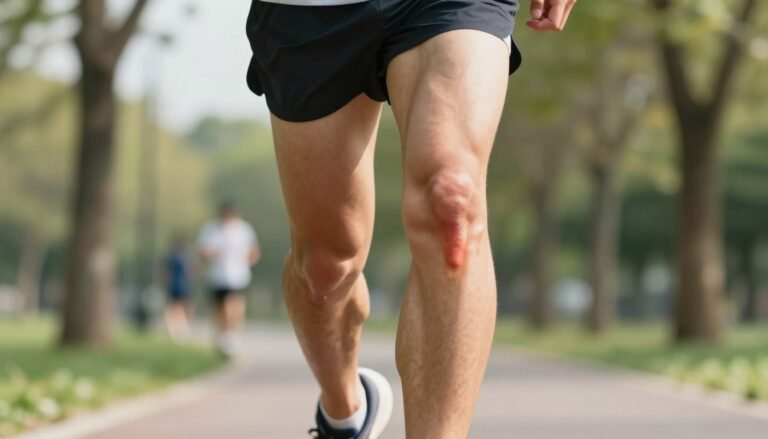
When you walk, the force through the knee is roughly three to six times your body weight. That means a small increase on the scale becomes many more pounds of pressure at the joint each step.
For example, being just 10 lb over your ideal can add about 30–60 lb of force per step. Repeated steps pile up and stress cartilage, especially with poor leg alignment or weak hip and thigh muscles.
What research shows about obesity and higher risk developing knee OA
Large population studies, including HANES I, found obese women had nearly four times the risk and obese men nearly five times the risk of knee osteoarthritis compared to non-obese groups.
Higher body weight over decades raises the chance of later disease, so early prevention matters even if symptoms are mild now.
Beyond load: how fat tissue can increase inflammation and amplify symptoms
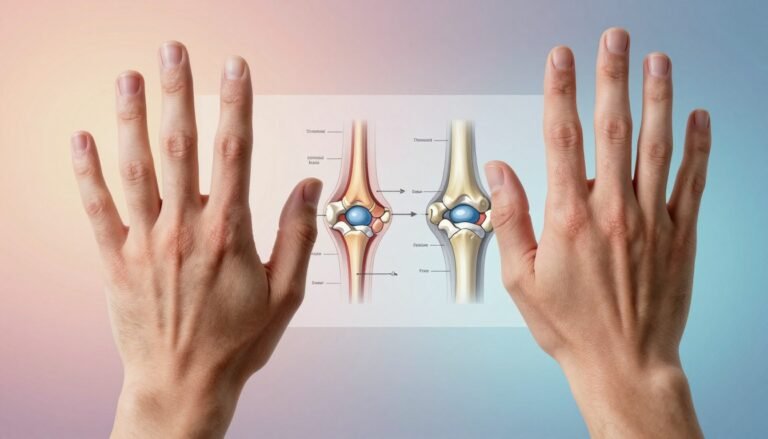
Fat is active tissue that releases pro-inflammatory chemicals. This low-grade inflammation can make joint pain and stiffness worse and may explain links seen in non‑weight-bearing joints like the hands in some studies.
Knowing both mechanics and biology gives practical targets: movement, muscle strengthening, and metabolic health all help reduce risk and symptoms.
| Measure | Approx. effect | Clinical note |
|---|---|---|
| Walking load | 3–6 times body weight | Small gains multiply joint pressure |
| 10 lb extra | ~30–60 lb per step | Repeated steps increase cartilage stress |
| Obesity (HANES I) | Women ~4x, Men ~5x risk | Long-term body mass raises odds of knee OA |
How weight loss knee arthritis relief works in real life
A few pounds less on the scale often translates to noticeably less load across the joint with each step.
Losing one pound can reduce multiple pounds of joint pressure
In a key study of adults with knee osteoarthritis, losing one pound removed about four pounds of pressure through the joint.
That means a 10‑pound reduction can cut roughly 40 pounds of pressure during walking and stair use. Small changes add up fast during daily movement.
What modest loss can change for pain, walking, and quality of life
Medically, modest losing weight means about 5–10% of starting mass. Many people notice less pain, easier walking, and fewer flare days with this change.
A 2018 study found that a 10–20% weight loss gave bigger gains in pain relief, function, and overall quality than smaller reductions did.
How larger changes affect cartilage and long-term disease progression
Longitudinal MRI work showed adults who reduced mass over several years had lower cartilage deterioration. Greater loss linked to slower progression.
- Functional gains: less morning stiffness, longer walking tolerance.
- Therapy gains: better tolerance for strengthening and activity.
- Biologic gains: reduced fat mass lowers inflammatory levels that can worsen symptoms.
| Change | Approx mechanical effect | Clinical benefit |
|---|---|---|
| 1 lb loss | ~4 lb less pressure | Noticeable during steps, stairs |
| 10 lb loss | ~40 lb less pressure | Improved walking tolerance, reduced pain days |
| 10–20% loss | Variable by person | Better pain, function, quality of life (study evidence) |
I use these numbers to set realistic goals with patients. Losing mass is not a guaranteed cure, but it meaningfully eases load and helps other treatments work better.
How I assess whether you should lose weight for knee pain
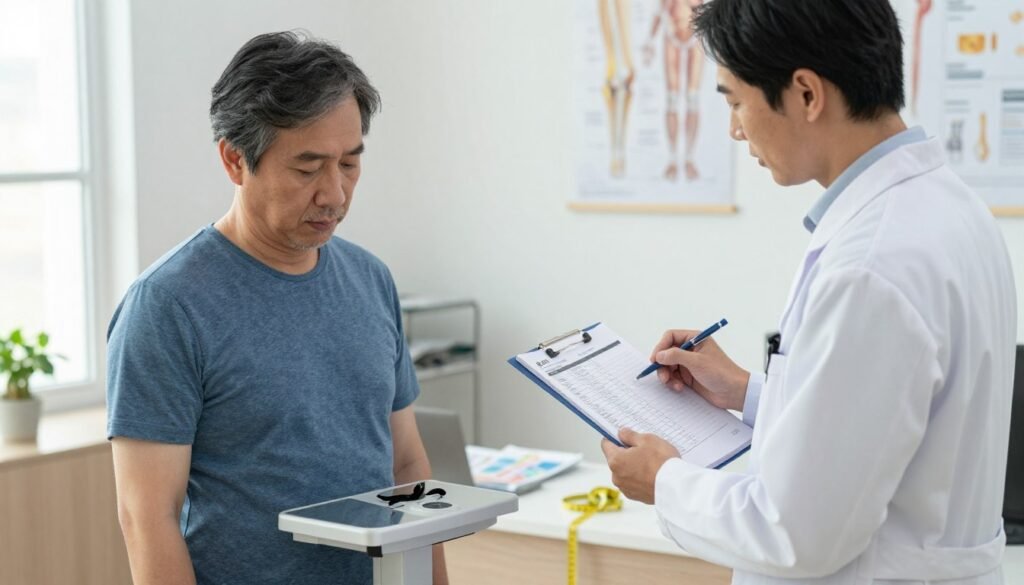
In clinic, I begin by measuring objective numbers so choices are based on data, not assumptions.
Using BMI as a screening tool
I use body mass index as a quick screening step for adults. The index gives a simple ratio of mass to height and helps flag overweight (BMI 25–29.9) and obesity (BMI ≥30).
BMI is useful but imperfect. Two people with the same index can have different muscle and fat content. I treat it as a first filter, not a final diagnosis.
Why waist circumference matters
Waist measurement adds important context. Central fat raises metabolic and inflammatory risk.
Clinically, values over 40 inches for men and 35 inches for women indicate higher health risk when BMI is 25–34.9.
Reviewing the full picture
I then check blood pressure, cholesterol, diabetes risk, sleep, activity tolerance, prior injuries, and pain patterns.
This full review guides whether a plan should include dietary change, supervised physiotherapy, or referral for further medical care. I avoid shaming and focus on practical, personalized steps.
| Measure | Common cutoff | Clinical meaning |
|---|---|---|
| BMI (body mass index) | 25–29.9 = overweight; ≥30 = obesity | Screening tool for overall mass-related risk |
| Waist circumference | >40″ men; >35″ women | Higher metabolic and inflammatory risk |
| Cardio‑metabolic checks | BP, cholesterol, glucose levels | Determine broader health risk and guide treatment |
Once we understand your baseline risk and limitations, we can agree on safe, physiotherapy-led steps that reduce joint load and improve function without causing harm.
How to lose weight safely without aggravating knee pain
Begin with a clear, gentle target so you protect your knees as you change habits. I usually recommend an initial goal of about 10% of your starting body mass. This is realistic for many adults and often enough to reduce joint pressure and ease pain.
Setting a safe pace
A steady rate of about 1–2 pounds per week is prudent. Faster drops can be hard to sustain and may need medical supervision.
Diet changes that work
Focus on a modest calorie deficit and portion control rather than extremes. Use smaller plates, cut fried and ultra‑processed foods, and choose balanced meals with less added fat.
- Drink water before meals to help fullness.
- Avoid sugary drinks and slow your eating pace.
- Meal planning reduces impulsive choices.
Low-impact exercise and therapy
Low-impact options include flat-surface walking, cycling, swimming, and water aerobics. Start gently and increase activity as tolerated.
Why diet, sleep, and behavior matter
Diet usually drives early weight changes; exercise helps keep gains off and strengthens joints. Poor sleep raises hunger hormones and increases cravings. Addressing stress and joining a support group boosts adherence.
| Focus | Practical tip | Expected benefit |
|---|---|---|
| Diet | Smaller portions, fewer processed foods | Steadier pounds dropped, less joint pressure |
| Activity | Swimming, cycling, graded walking | Improved fitness, mood, and maintenance |
| Physiotherapy | Target quads, hip abductors, core | Better stability and reduced step pressure |
Finally, work with a physiotherapist for guided strengthening. Consistency beats perfection—small, repeatable changes protect your joints while you progress toward a healthy weight.
When lifestyle changes aren’t enough: medications, programs, and orthopedic options
If steady improvements do not come despite good habits, additional medical or programmatic support can be appropriate. I assess each person for pain, activity limits, and metabolic risks before suggesting next steps.
Choosing a structured program and avoiding quick fixes
A credible program mixes nutrition, activity, and behavior therapy. Look for qualified staff, individual plans, and ongoing follow-up rather than fad diets or miracle supplements.
A safe program adapts to mobility limits and links with physiotherapy for gradual gains.
What to know about medications and who may be considered
Drug options are not first-line. Guidelines usually recommend at least six months of lifestyle therapy first.
I may consider adjunct medications for people with BMI above 30, or BMI above 27 with multiple risk factors. We monitor early response and side effects closely.
If you’re not ready to change now: prevent further gain
If readiness isn’t there, my immediate goal is to prevent further increases and keep you active within pain limits. Small step changes can preserve function until you revisit goals.
How mass affects arthritis care and surgery planning
Body mass can influence medication effect, rehab speed, and surgical planning. When replacement is considered, we optimise strength, nutrition, and medical fitness first.
Surgery is an option only when non-surgical care has been tried and the balance of pain, function, and imaging supports it.
- I add extra support if pain blocks activity, repeated attempts stall, or metabolic risk rises.
- A good plan is gradual, evidence-based, and tailored to the person.
- I avoid hype and focus on safe, monitored choices.
| Option | When considered | Key point |
|---|---|---|
| Structured program | Stalled progress, needs support | Qualified staff, long-term follow-up |
| Medications | BMI ≥30 or ≥27 with risk factors | Use with lifestyle plan, monitor early response |
| Orthopedic review / replacement | Pain, poor function despite care | Optimize fitness first; surgery only if benefits outweigh risks |
Conclusion
Overall, modest changes to your size often bring real improvements in comfort and function. Even small reductions can cut mechanical load and help you move with less pain.
The goal is relief and better mobility, not perfection. Combining sensible diet, physiotherapy, and joint-friendly activity gives the best benefits for daily life.
Every joint and person is different. Alignment, cartilage status, muscle strength, and other medical issues affect results, so I cannot promise identical outcomes.
If you have persistent swelling, locking, instability, or difficulty walking, seek a proper orthopedic evaluation. To discuss a personalised plan, book an appointment with me, Dr. Lokesh Chowdary R, MBBS, MS (Orthopaedics), Managing Director and Senior Orthopedic Surgeon at Boss Multispeciality Hospital, Magadi Main Road, Bangalore, near Kamakshipalya and RR Nagar.