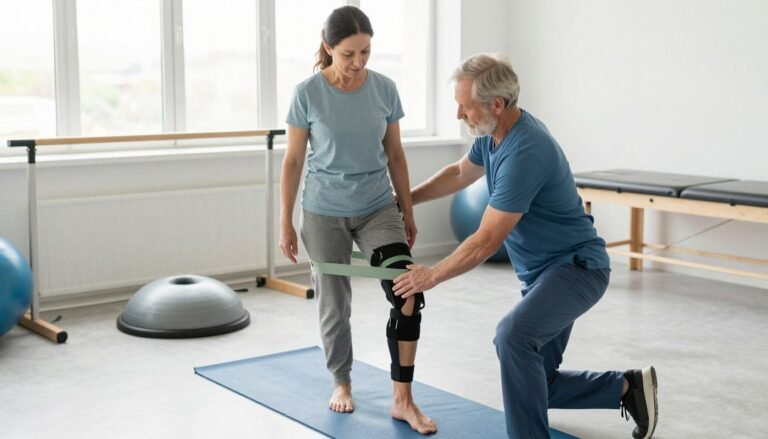

How to Sleep Comfortably After Hip Replacement Surgery
Hello, I’m Dr. Lokesh Chowdary R, MBBS, MS — Managing Director and Senior Orthopedic Surgeon at Boss Multispeciality Hospital on Magadi Main Road, Bangalore (near Kamakshipalya and RR Nagar).
Have you wondered why a new joint can make nights feel harder than days?
I know that sleep is vital for recovery and that trouble sleeping is common after major surgery. In the first weeks, simple bedtime precautions lower dislocation risk and ease pain while you heal.
I’ll explain why sleeping after hip replacement can feel unexpectedly difficult and how small changes to position and routine help nights be more comfortable without risking your new joint.
My goals are clear: protect the hip, manage pain safely, and support rehabilitation with better rest. This guidance complements your surgeon’s specific precautions and your physiotherapy plan.
Why sleep feels difficult after hip replacement surgery and why position matters
Nighttime can feel unfamiliar while your new joint and soft tissues settle. Rest supports healing, reduces stress, and gives you energy for the daily exercises your physiotherapist prescribes.
How rest helps healing and rehab
I tell patients that good rest helps tissue repair, boosts immune response, and lowers anxiety. Better rest makes it easier to do walking practice and physiotherapy, which speeds recovery.
Why the early weeks carry higher risk
In the first 6–12 weeks the joint is stabilizing and soft tissues are fragile. Small movements—rolling in bed, crossing legs, or twisting—can increase the risk of dislocation. That is why simple precautions from your surgeon matter.
Common reasons people wake at night
Waking is often normal. Incision soreness, swelling, stiffness from one position, or trying a different posture can all wake you. Pain that slowly improves over weeks is part of healing and not a sign of failure.
If pain suddenly worsens, you feel instability, or you cannot bear weight as planned, contact your surgical team for advice rather than pushing through.
| Night issue | Common cause | Simple self-care |
|---|---|---|
| Incision discomfort | Healing tissues and dressing sensitivity | Use prescribed analgesics, gentle repositioning, and pillow support |
| Stiffness | Prolonged posture and inflammation | Gentle evening walks, light stretches as advised by physiotherapy |
| Fear of movement | Worry about dislocation or pain | Follow surgeon precautions, use pillows, and practice safe turns |
Best sleeping positions for sleeping after hip replacement
Choosing a safe night position makes recovery easier and lowers risk during the early healing phase. I advise positions that keep the joint neutral and reduce twisting while you rest.
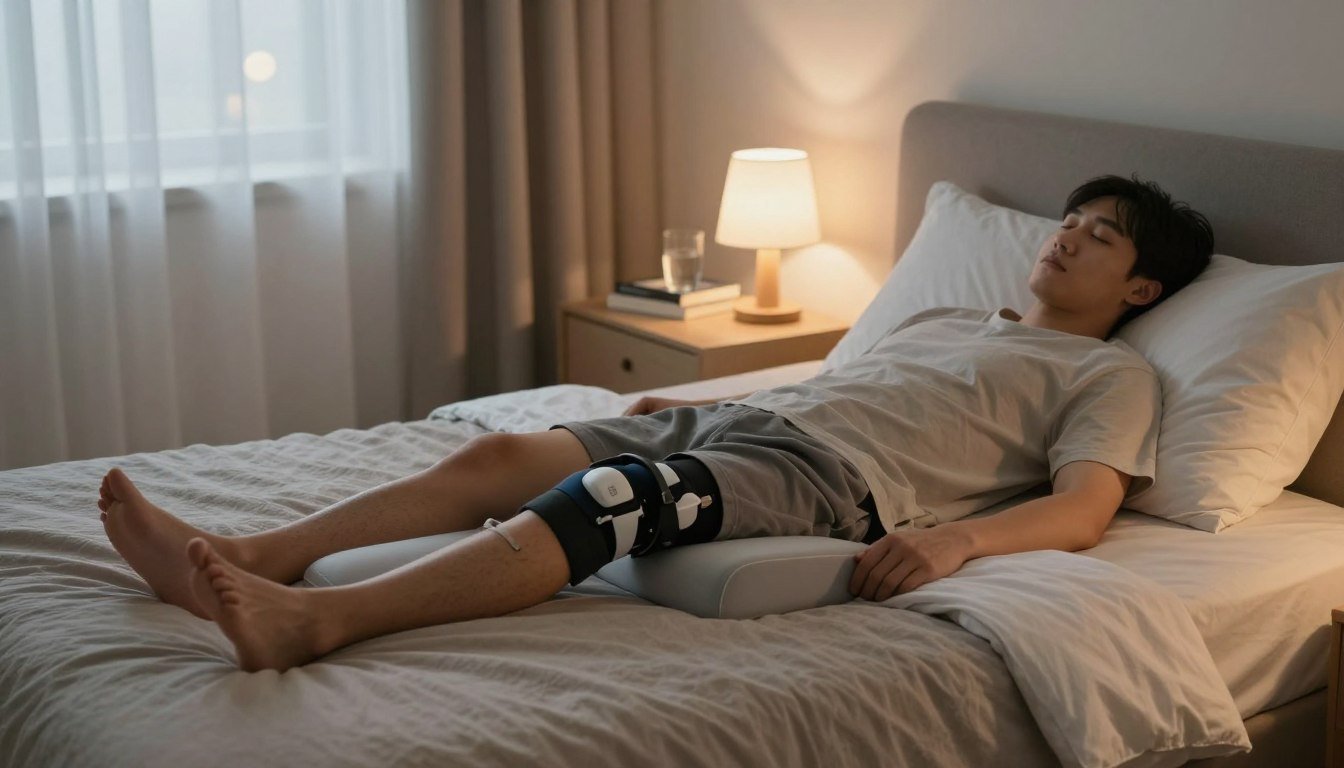
Back with a pillow between the legs
Lying on your back is the safest default for most patients after replacement surgery. Place a firm pillow between your legs so the hips stay aligned and the operated leg cannot cross midline.
Make sure you do not cross ankles or knees and keep feet pointed naturally upward to lower dislocation risk.
Non-operated side with two pillows
If you prefer side rest, use the non-operated side early on. Stack two pillows—one between knees and one between ankles—to stop the top leg from drifting forward.
Choose pillows that hold shape; very soft pads collapse and let the leg rotate.
Avoidances, timing, and transitioning
- Avoid crossing legs or ankles, twisting toes inward, or pulling the knee up too high.
- Stomach positioning is discouraged because it allows uncontrolled rotation at the hip joint.
- Many patients avoid lying on the operated side for about six weeks, but I guide the timing based on pain, stability, and surgeon clearance.
| Position | How to set up | Cautions |
|---|---|---|
| Back | Pillow between legs; feet neutral | Do not cross ankles or knees |
| Non-operated side | Two pillows between knees and ankles | Use firm pillows; avoid top leg drifting |
| Stomach | Not recommended | High rotation risk; avoid in early weeks |
Setting up your bed and pillows to protect your new hip
A firm bed surface helps keep spine and hips aligned so the joint can settle with less stress. I ask patients to avoid saggy mattresses for the first months of recovery.
Start with mattress firmness, then add stable support. Place a pillow between the legs when you lie on your back. On the non-operated side, use one pillow between knees and another supporting the ankle so the top leg cannot roll forward.

Where pillows help and where they increase stress
- Help: Between legs to prevent crossing or rotation and to keep knees aligned.
- Harm: Under the knees—this can flex the hip and tighten tissues, which increases stress.
- Check: When on your back, toes and knees should point upward; on the side, legs stay separated with firm support.
| Item | How it helps | Notes |
|---|---|---|
| Firm bed | Spine and hip alignment | Choose medium-firm for comfort |
| Pillow between legs | Prevents crossing and rotation | Use firm pillow that keeps shape |
| Pillow under knees | May feel comfy short-term | Avoid for long periods; it can add stress |
Keep water, phone, and medicines within reach to avoid sudden turns. If you wake uncomfortable, make small adjustments rather than forcing one posture. Better night alignment usually means less morning stiffness and easier physiotherapy work the next day.
How to get into and out of bed safely after replacement surgery
Safe bed transfers are a key skill I teach every patient to cut risk and build confidence at home. Use your walker or aid and move slowly. Follow your surgeon and physiotherapy precautions for the best timing and limits.
Getting into bed with a walking aid
Back up to the bed until you feel it behind your legs. Sit on the edge while keeping the operated leg extended forward to protect the joint angle.
Use your arms for support, scoot back using short pushes, and bring one leg at a time onto the bed. Position pillows so the operated leg stays neutral.
Getting out of bed safely
Clear loose sheets and remove excess pillows. Bend the non-operated knee, use elbows or hands to slide to the edge, and push up using the stronger leg.
Keep the operated knee from rising past a safe angle and avoid twisting your body. Keep the walker within reach and make sure someone is nearby if you feel unsteady.
| Step | Why | Caution |
|---|---|---|
| Back up to bed | Prevents misjudging distance | Avoid turning trunk |
| Extend operated leg | Maintains safe hip/knee angle | Do not bend past 90° |
| Scoot and push up | Uses stronger leg and arms for support | Move slowly to lower risk |
Comfort and pain control at night without overdoing it
A clear plan for night pain makes sleep easier and keeps your joint safer. I encourage using your prescribed pain strategy to allow rest and steady recovery without pushing medicines beyond guidance.
Using your surgeon-guided pain plan so you can sleep and heal
Follow the medication plan your surgeon prescribes for the first few weeks. Proper pain control often improves sleep quality and helps you do physiotherapy the next day.
If you have concerns about side effects or dose, call your surgical team rather than changing the plan on your own.
Ice, gentle stretches, and changing positions safely when pain wakes you
Apply ice for 15–20 minutes before bed to ease inflammation and reduce discomfort. Do gentle stretches shown by your physiotherapist to limit stiffness without stressing the hip joint.
If pain wakes you, move slowly, keep alignment, and return to lying on your back or the non-operated side. Avoid stomach sleeping, twisting, or deep flexion when drowsy.
Optimizing the room for better sleep: cool, dark, and quiet
Keep the bedroom cool, dark, and quiet. Limit screens before bed and consider white noise if outside sound raises stress. Light changes to sleep often improve as swelling and pain fall.
| Action | Why | Note |
|---|---|---|
| Follow surgeon plan | Safer pain control | Contact team for adjustments |
| Ice and stretch | Reduce inflammation and stiffness | Use physiotherapist-approved moves |
| Room setup | Better sleep quality | Cool, dark, quiet, limit screens |
Conclusion
Protecting alignment while you rest is one of the simplest ways to lower risk and support recovery. Use the best sleeping positions — lie on your back with a pillow between the legs or rest on the non-operated side with firm support — to keep the operated joint neutral.
Do not cross ankles or legs, avoid inward toe rotation, and skip stomach sleeping in the early weeks. Make sure your bed setup and how you get in and out matter just as much as your night position.
Recovery timelines vary; many patients avoid the operated side for about six weeks and follow surgeon and physiotherapy guidance. Treat pain as feedback and seek prompt advice for increasing pain or instability.
I invite you to book an appointment with me, Dr. Lokesh Chowdary R (MBBS, MS – Orthopaedics) at Boss Multispeciality Hospital, Magadi Main Road, Bangalore (near Kamakshipalya and RR Nagar), so we can evaluate your hip replacement surgery recovery and tailor support and physiotherapy to your needs.