
Post-Op Complications to Watch For After Orthopedic Surgery
Have you ever wondered which warning signs after an operation truly need urgent attention?
I am Dr. Lokesh Chowdary R, MBBS, MS – Orthopaedics, and I guide patients through recovery at Boss Multispeciality Hospital, Magadi Main Road, Bangalore.
By “post-op complications” I mean any recovery issue that strays from the expected healing pattern after orthopedic surgery. Most people heal well, but knowing what to watch for helps you act early and avoid larger problems.
Common concerns include wound or infection issues, bleeding or clots, nerve symptoms, stiffness or swelling, and implant-related problems. Pain and swelling are normal, yet worsening pain, spreading swelling, fever, or new drainage should prompt a call to your care team.
This short guide explains these warning signs, the relative risk for patients, and why regular follow-up and physiotherapy matter. It is informational and does not replace an in-person exam, since every body and procedure heals differently.
What I mean by “post-op complications” and what’s normal after orthopedic surgery
Not every ache after an operation means trouble; the key is spotting unusual patterns early. I expect some pain, swelling, bruising and stiffness right after most procedures. These should ease gradually over time with rest and guided movement.
Normal pain, swelling, and stiffness vs symptoms that are not expected
Normal soreness improves each day or stays steady while you begin physiotherapy. Call me if pain increases over days, if new burning or stabbing pain appears, or if wound drainage, pus, fever, or redness develops.
How the type of procedure changes recovery expectations
Arthroscopy often has less early swelling than joint replacement. Fracture fixation and spine work can show more stiffness at first. Comparing your recovery to someone else can mislead you.
Why most complications are uncommon, but early action matters
Most bad outcomes are rare. Yet infections and clots are easier to treat when found early. Track location, severity, and how symptoms change so you can explain them clearly at follow-up.
| Procedure type | Expected early signs | When to call |
|---|---|---|
| Arthroscopy | Moderate pain, mild swelling, quick range return | Escalating pain or persistent drainage |
| Joint replacement | Higher initial swelling, controlled pain with meds | Rising fever, spreading redness, new sharp pain |
| Fracture fixation / spine | Stiffness, bruising, activity-limited movement | Worsening numbness, sudden swelling, severe pain |
post surgical complications orthopedic: warning signs I ask my patients to watch for
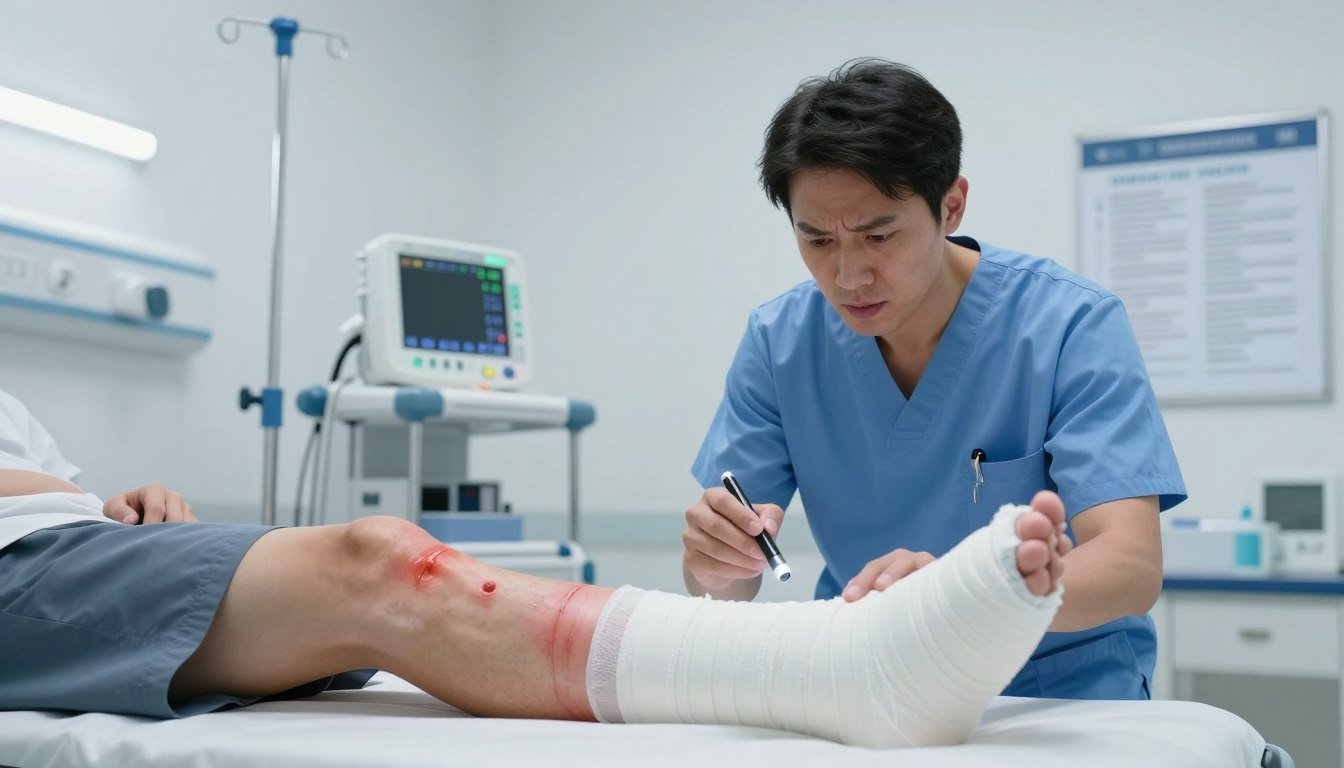
Simple changes at the wound or limb can tell us when to act fast. I want patients to check the incision and nearby limb daily for the first two to three weeks.
Watch for these specific symptoms and call your care team if you see them. Early phone advice often prevents a bigger problem.
Wound drainage that doesn’t stop, pus, or a bad smell
Any increasing wetness through dressings, yellow-green pus, or a foul odor is a red flag. Small spotting early on is common; persistent soaking or smelly discharge is not.
Redness, warmth, and fever after surgery
Mild redness around the cut can be normal at first. But spreading redness, growing warmth, or a fever suggests infection and needs review.
Burning or stabbing pain that keeps worsening over time
New, severe, or steadily worsening burning or stabbing pain that does not ease with your prescribed medicines requires assessment.
Swelling beyond the surgery site
Swelling that spreads past the incision into the calf, foot, or entire limb is concerning. Sudden, unexplained limb swelling needs prompt attention.
- Don’t change antibiotics or pain drugs without advice.
- Call so we can arrange an exam, labs, imaging, or dressing care if needed.
| Warning sign | Why it matters | What I advise |
|---|---|---|
| Persistent wound drainage or pus | Raises infection risk and delays healing | Contact team for dressing change and possible antibiotics |
| Spreading redness or fever | May indicate deeper infection at the surgical site | arrange clinical review and blood tests |
| Worsening burning/stabbing pain | Could signal nerve irritation or infection | Review pain control and examine the site |
| Swelling past the incision | Risk of clot or impaired drainage | Assess for clotting and start appropriate measures |
When to seek urgent help after surgery
Recognizing urgent symptoms early helps you get fast treatment and avoid serious harm. I want you to be calm but decisive if certain problems appear.
Chest pain, coughing, fast heart rate, or trouble breathing
Sudden chest pain, new coughing, trouble breathing, or a very fast heart rate can mean a pulmonary embolism. This happens when clots travel to the lungs and block blood flow.
These signs require immediate emergency care. Go to the nearest emergency department or call local emergency services and tell them you recently had surgery.
Leg or calf pain and swelling not part of the surgery site
New, one-sided leg or calf pain and swelling that is not at the operation area can suggest a DVT. If you notice this, seek urgent evaluation because a DVT can lead to a pulmonary embolism.
| What to do now | Why it matters | Who to contact |
|---|---|---|
| Chest pain, breathlessness, rapid pulse | Possible pulmonary embolism; blocks blood flow to lungs | Go to emergency services immediately |
| New one-sided leg swelling or calf pain | May indicate DVT, a source of dangerous clots | Seek urgent medical review or ED assessment |
| Milder wound changes, low fever | Often needs clinic review but not always emergency | Call the clinic for same-day advice |
Why this happens: reduced mobility after surgery, dehydration, and individual risk factors raise clot and blood flow issues. Acting quickly protects your long-term health and recovery. Urgent evaluation is not overreacting—it’s the safest choice for patients.
Infection and surgical site problems: how to spot them early
Small changes at the incision often give the first clue that an infection is developing. I tell patients to watch for growing redness, new warmth, pain that is worse than expected, fever, or drainage that turns cloudy or pus-like.
Superficial wound infection affects skin and soft tissue and usually stays near the cut. A deeper surgical site infection can involve tissues under the skin, the joint, or an implant and needs more urgent testing.
Common causes and factors that increase risk
- Poor wound care or hygiene at home.
- Medical conditions such as diabetes, high blood pressure, and obesity.
- Smoking, older age, and longer procedures in the hospital.
Delayed wound healing after a joint replacement or fracture repair can raise the chance of deeper infection. Prolonged drainage may harm bone or implant healing and lengthen recovery.
| Problem | How we confirm | Typical action |
|---|---|---|
| Suspected superficial infection | Wound swab, local exam | Dressings, oral antibiotics |
| Possible deeper site infection | Blood tests, ultrasound, CT/MRI, X-ray | IV antibiotics, possible return to OR |
| Poor wound healing | Serial wound checks, imaging for bone | Targeted care to protect implant or fracture repair |
Early reporting lets me tailor treatment and often protects the implant and speed of wound healing. If you are unsure, call the clinic so we can advise the best next step for your procedure and health.
Blood-related complications: bleeding, anemia, and blood clots
Bleeding and clotting issues are among the blood-related risks I watch closely after surgery. I explain what I monitor and what action I take when signs appear.
Bleeding and bruising: what I monitor in the first few days
Early bruising and mild oozing are common. I worry when swelling expands quickly, dressings soak through, or you feel dizzy or faint.
Anemia after orthopedic surgery and when a transfusion may be needed
Blood loss can cause tiredness, breathlessness on exertion, or weakness. We check hemoglobin in selected cases and decide on transfusion based on symptoms and overall clinical status, not a single number. Studies report anemia needing transfusion as a frequent issue after major procedures.
DVT and pulmonary embolism: symptoms, timing, and why mobility matters
DVT means a clot in a leg vein; a pulmonary embolism happens if a clot travels to the lungs. New calf pain, sudden breathlessness, chest discomfort, or fast pulse need urgent review. These risks are highest in the weeks after surgery.
How we prevent clots: blood thinners, compression stockings, hydration, and walking
- Early, guided walking and ankle pumps to boost circulation.
- Hydration and avoiding long bed rest unless advised.
- Compression stockings and, when appropriate, blood thinners based on your risk.
| Sign | Why it matters | Action |
|---|---|---|
| Soaking dressings or fast swelling | Possible active bleeding | Contact clinic for review |
| Fatigue, breathlessness | May indicate anemia | Check hemoglobin and assess need for transfusion |
| Calf pain or sudden breathlessness | Possible DVT/PE | Urgent medical evaluation |
Nerve issues, stiffness, and swelling that slow recovery
I watch for changes in feeling or motion that delay recovery after a procedure. Small numbness or tingling near the incision often comes from swelling or minor skin-nerve irritation and usually improves with time.
Numbness, tingling, and weakness near the surgery area
Temporary pins-and-needles or altered sensation is common. Most of these nerve problems settle as swelling falls and movement returns.
Red flags are worsening weakness, spreading numbness, or loss of control that does not match the expected pattern for your procedure. If that happens, contact my care team for an earlier review.
Stiffness after knee, hip, and back procedures
After knee and hip work, or spine fusion, stiffness can limit range of motion. Early guided range-of-motion prevents long-term restriction.
I recommend gentle, regular movement within pain limits. Gradual progress is normal; sudden severe pain with activity should prompt a call.
How physiotherapy-guided movement reduces swelling and improves outcomes
Physio-led exercises boost circulation, reduce swelling, and restore muscle control. Simple walking, ankle pumps, elevation when advised, and icing if permitted help control swelling.
- Start with gentle mobility and build time and intensity each week.
- Report if exercise causes sharp increased pain or swelling that worsens.
- Follow the rehab plan to improve recovery and long-term outcomes.
| Symptom | Likely cause | Initial care |
|---|---|---|
| Local numbness or tingling | Swelling or small nerve irritation | Observe, ice, gentle movement; physio review if persistent |
| Increasing weakness | Possible nerve compression or rare nerve injury | Urgent clinical assessment and nerve testing if needed |
| Stiff joint with swelling | Scar tissue, immobilization, or fluid buildup | Guided ROM exercises, elevation, and physiotherapy plan |
My goal is steady, safe recovery. Keep me informed if symptoms change or fail to improve so we can adjust care.
Implant- and procedure-specific issues in hip knee replacement, fracture repair, and spine fusion
Different procedures bring distinct risks, so I review specific signs tied to the implant or repair you had.
Joint replacement concerns: dislocation, instability, and unusual clicking
After hip or knee replacement, some early instability or a single click can be harmless as tissues settle. I ask patients to call if they feel sudden giving-way, repeated instability, severe pain, or a new grinding noise that limits walking.
Movement precautions early—care with transfers, bending, and twisting—reduce risk of dislocation and protect long-term outcomes of your replacement surgery.
Fracture repair concerns: delayed union and non-union on X-rays
Fracture repair sometimes heals slowly. We use serial X-rays to spot delayed union or non-union so we can act before final results are affected.
Smoking, poor nutrition, and uncontrolled diabetes slow bone healing. I address these issues early to improve outcomes and avoid further procedures.
Spine surgery and fusion: warning symptoms that need evaluation
After back fusion, watch for new or worsening numbness, increasing weakness, severe escalating pain, fever with wound changes, or loss of bladder/bowel control. These signs need prompt review and imaging.
Many odd sensations are normal as nerves recover. Persistent or worsening symptoms, however, warrant evaluation to rule out implant failures or nerve compression.
| Type of surgery | Common early sign | When I review/imaging |
|---|---|---|
| Hip replacement | Clicking or brief limp | Repeated instability, severe pain, or suspected dislocation |
| Knee replacement | Swelling, occasional noise | Persistent instability or functional loss |
| Fracture repair | Slow pain reduction, delayed weight bearing | X-ray shows limited callus—consider bone stimulation or revision |
| Spine fusion | Stiffness, transient numbness | New weakness, fever, or worsening pain—urgent review |
- I tailor follow-up schedules to the exact type of surgery and implant used.
- Early imaging and timely clinic visits protect long-term results and reduce need for repeat procedures.
Risk factors that can increase complications and how I reduce them
Some health and lifestyle factors make recovery riskier; we can often reduce that risk with careful planning. I review each patient’s history and tailor a prevention plan with my anesthesia and surgical team.

Age over 60 and breathing or clot risk
Age matters: people over 60 have higher likelihood of pneumonia and blood clots after surgery. To reduce this, I arrange pre-op breathing exercises, early mobilization plans, and targeted clot prevention.
Diabetes, high blood pressure, obesity, and smoking
Conditions like poorly controlled diabetes slow wound healing and raise infection risk. High blood pressure and obesity also increase clot and infection chances.
Quitting smoking, improving nutrition, and better glucose or blood pressure control before surgery lowers these risks.
Medications and hormones
Estrogen exposure from oral contraceptives or HRT can increase clot risk. I review all medications and may adjust them before an operation to improve safety.
My pre-surgery checklist and team planning
My checklist includes a focused exam, blood tests, imaging when needed, and individualized anesthesia planning. The anesthesia team and I use this information to decide on medicines and monitoring during the hospital stay.
| Risk factor | Why it matters | How I reduce it |
|---|---|---|
| Age >60 | Higher pneumonia and clot risk | Breathing exercises, early walking, clot prevention |
| Diabetes / HTN / obesity | Infection, poor healing, clot risk | Optimize control, nutrition, delay elective surgery if needed |
| Smoking / estrogen use | Higher wound and clot risk | Stop smoking, review hormones, adjust meds pre-op |
- I explain that risk factors don’t mean trouble will occur; they guide prevention and monitoring.
- Follow-up, shared decision-making, and simple actions at home boost safety.
- If you are near Boss Multispeciality Hospital on Magadi Main Road, Bangalore, my team and I will support pre-op optimization and recovery plans.
Conclusion
Early recognition of warning signs often keeps a small issue from becoming a major problem. Most people do well after orthopedic surgery, but a few develop a complication that needs timely care.
Watch for concerning wound changes, fever with spreading redness, worsening burning or stabbing pain, new swelling beyond the site, or any chest and breath symptoms. Reporting these symptoms early helps me diagnose and treat infection, clot risk, or other problems and improve final results.
Recovery time and complication rate vary by the type of procedure, your health, and how closely you follow rehab plans. If you are in Bangalore, book an appointment at Boss Multispeciality Hospital, Magadi Main Road, near Kamakshipalya and RR Nagar, so I can review your symptoms and guide safe recovery.
— Dr. Lokesh Chowdary R