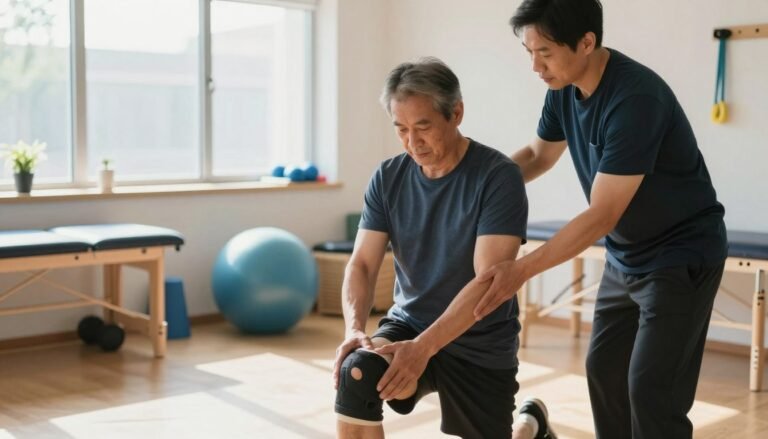

Physical Therapy After Knee Surgery: What to Expect
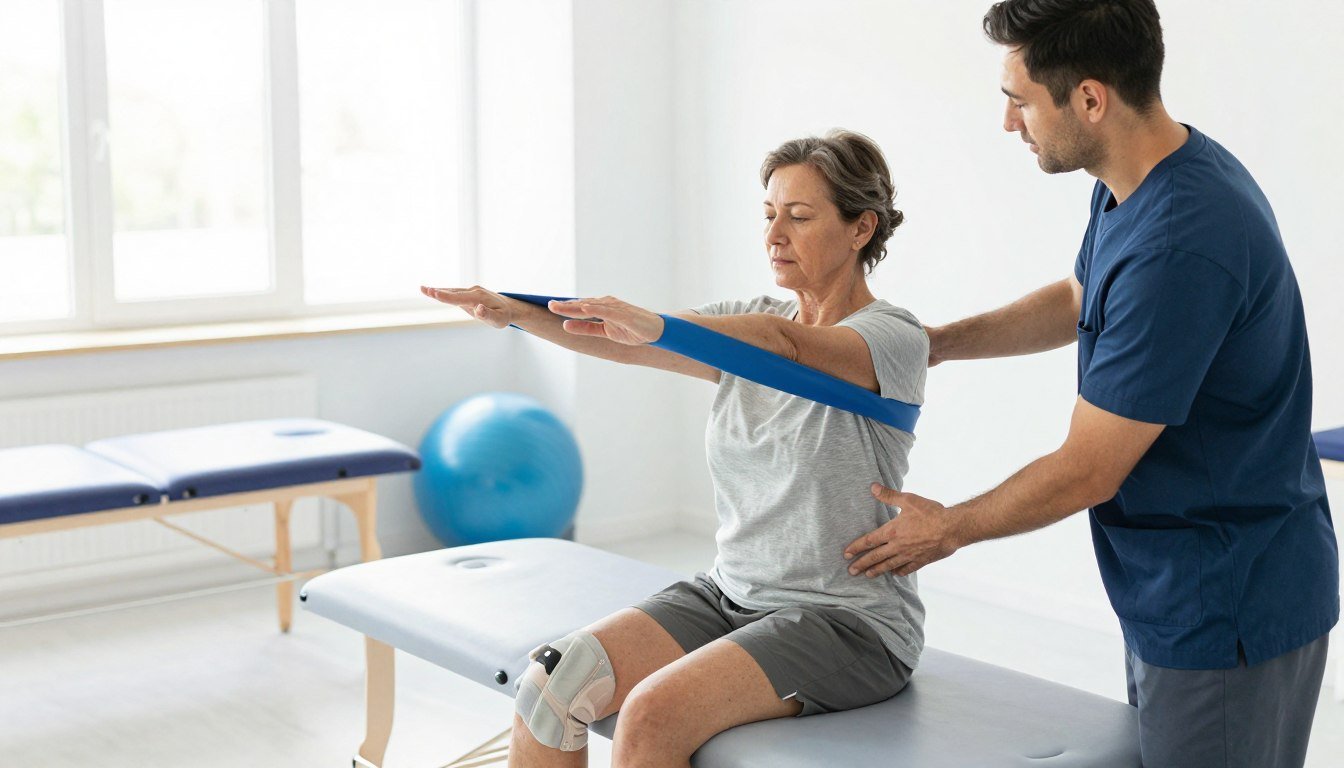
Have you wondered how recovery really feels once you leave the operating room and face the first steps at home?
I am Dr. Lokesh Chowdary R, MBBS, MS (Orthopaedics), Managing Director and Senior Orthopedic Surgeon at Boss Multispeciality Hospital on Magadi Main Road, Bangalore, near Kamakshipalya and RR Nagar.
I will explain what most patients can expect during rehabilitation so you feel prepared, not anxious.
Early movement and steady exercises are the backbone of recovery after a total knee replacement. I guide patients with a clear, structured plan that protects the new joint while building strength.
Expect three phases: the early hospital stage, the early home stage, and the longer outpatient phase. Discomfort, stiffness, and tiredness can occur, but steady progress follows consistent care.
My aim is simple: safer walking, better mobility, improved knee control, and a return to meaningful daily life. I individualize plans for age, fitness, and the exact type of replacement performed.
Why I recommend physical therapy after knee surgery for a safer, stronger recovery
I explain recovery as a stepwise program that balances safe motion, gradual strengthening, and circulation work. When surgery is needed, this plan protects the joint and improves everyday function.
How guided work improves motion and muscle strength
Controlled bending and straightening reduce stiffness and help you return to tasks like sitting, standing, and getting in and out of a car. We link motion drills directly to building muscle strength.
Your thigh and surrounding muscles often weaken before surgery due to pain and less activity. Deliberate rebuilding helps walking, balance, and confidence.
Why early circulation work matters
I start simple foot and ankle pumps soon after the procedure. Better circulation supports healing and lowers the risk of blood clots when activity is limited in the first days.
Risks of delaying or stopping care too soon
Stopping early can mean more stiffness, slower walking progress, and difficulty reaching functional milestones. Consistent short sessions through the day work better than one long effort.
As your surgeon I coordinate with your therapist to keep the plan safe for wounds, pain control, and overall health. Each patient progresses at their own pace.
What to expect in the first hours and hospital days after surgery
In the first few hours you will meet your care team and begin gentle movement under close supervision. I practise at Boss Multispeciality Hospital in Bangalore and coordinate closely with my physiotherapists to tailor the plan to you.
Getting started a few hours after you wake up: standing, walking, and basic mobility
Most patients begin supervised mobility within hours of waking when safe. We work on sitting, standing, and short supported steps to build confidence. The focus is safety and correct posture rather than distance.
Using a walker or crutches safely in the room and hallway
My therapist team trains transfers, balance checks, and correct weight bearing for your specific procedure. We practise in the room and short hallway walks to confirm safe ambulation before discharge.
Early exercises I commonly start with
- Ankle pumps and foot movement: 2–3 minutes, 2–3 times per hour to reduce swelling and improve circulation.
- Quadriceps sets: tighten the thigh, hold 5–10 seconds, repeat several times each session to “wake up” the muscle.
- Straight-leg raises and supported knee bends are added as pain control and wound checks allow.
Typical hospital timeframe and discharge goals
Hospital stay is commonly 1–3 days depending on pain, healing, and mobility progress. Discharge goals include safe transfers, toilet use, short hallway walking, and stair practice if needed.
Soreness is expected; we adapt the plan so the knee is protected while still moving enough for a good recovery.
Pain, swelling, and stiffness: what’s normal and when to call me
Early recovery can feel odd: brief relief one moment and soreness the next as numbness wears off. I want you to understand common patterns so you know when to act and when to wait.
Why you may feel better than expected in the first day
Many patients report low pain on day zero and day one. This usually reflects residual anaesthesia and strong pain medicines, not the final result.
I tell patients that discomfort can increase as drugs fade. That change is common and expected.
Managing pain and swelling after exercise
After short bouts of exercise, use elevation and ice to reduce swelling and ease pain. Apply ice 20 minutes on, 20 minutes off, for around two hours when needed.
Gentle movement usually helps stiffness more than complete rest. Balance activity and rest to avoid flare-ups that slow progress.
When to call me right away
- Worsening swelling or increasing redness around the wound
- New calf pain, especially with warmth or tenderness
- Fever, clear wound drainage, or sudden shortness of breath
Calf pain or breathlessness may point to clot risks involving blood flow. I prefer you call early so we can check and protect your health. My advice: report anything that feels worse than expected—early review is safer than delay.
Your first month at home: building knee movement and confidence day by day
Your home routine in the first month is about smart consistency, not big leaps. I want patients to focus on steady gains in range and comfort. This phase reduces swelling, improves pain control, and sets the stage for later strengthening.
My main goal for weeks one to four
My priority is steady range of motion progress in both bending and straightening. Small gains each day matter more than pushing hard once. Aim for gentle practice multiple times through the day under guided supervision when needed.
Practical home routine
- Short walks twice daily, increasing distance as tolerated.
- Frequent movement breaks—simple ankle and knee-set repeats for a few minutes several times.
- Safe activities: careful sitting, slow standing, planned rest with elevation to control swelling.
A realistic early milestone
Work toward about 90 degrees of bend by the end of week four to help with sitting and basic tasks. Timelines vary. Excess swelling, poor pain control, or skipped therapy sessions can slow progress; we correct course calmly.
Keep pathways clear, wear stable footwear, and accept family help early. My aim is gradual independence and improved mobility with safe, guided steps.
Physical therapy after knee surgery exercises I usually prescribe (with safety notes)
Here are the core exercises I prescribe early on, shown in a safety-first order you can follow. These are common drills, but your exact plan depends on wound healing, pain, and my therapist’s assessment.
Circulation and swelling control
Ankle pumps and gentle foot movement keep blood flowing and reduce heaviness in the leg. I ask patients to do pumps for 2–3 minutes, 2–3 times each hour in the first days.
Quadriceps strength starters
Quadriceps sets: tighten the front thigh, hold 5–10 seconds, relax and repeat. Straight-leg raises follow when pain and wound checks allow—hold 5–10 seconds each rep.
Range of motion drills
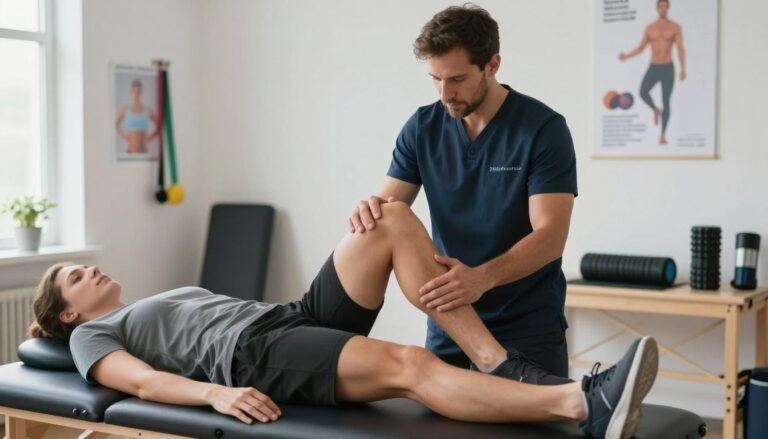
To straighten the joint, rest a small rolled towel under the heel and relax the leg. For bends, use bed-supported and seated knee bends, moving slowly to the point of gentle stretch.
Progressions and resistance
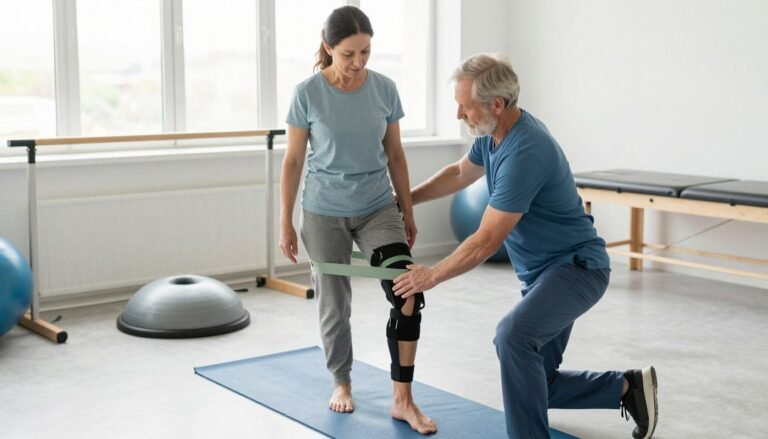
When balance and motion are steady, I add standing knee bends and assisted bends using a towel or rail. Resistance usually starts at weeks 4–6 with light bands or 1–2 lb ankle weights, only if swelling and pain remain controlled.
- Frequency: short sets several times daily (3–6 times) rather than one long session.
- Goal: correct form, calm knee response, gradual load increase.
- Stop and call me if sharp pain or lasting swelling follows exercise.
Walking, stairs, and balance training: returning to everyday activities safely
Regaining steady walking and safe stair use is a key milestone I coach every patient to reach. I start with simple cues so family members can help with practice and safety checks.
Stand tall with weight evenly on your walker or crutches. Step with the operated leg heel first, then foot flat, then toe-off. This pattern protects the joint and cuts down limp.
We usually move to a cane at about 2–3 weeks if you can stand and walk more than 10 minutes without leaning or limping. Hold the cane in the hand opposite the operated leg.
Stairs and simple balance rules
Use the handrail and go one step at a time. Remember: up with the good, down with the operated. Keep step height low early—around 7 inches—until strength improves.
| Stage | Typical Cue | Safety Tip |
|---|---|---|
| Walker/Crutch | Heel → flat → toe | Stand erect; clear pathway |
| Cane | Opposite hand hold | Progress when walking >10 min steady |
| Stairs | One step at a time | Use rail; lead with stronger leg up |
Work on balance by standing tall, doing slow turns, and avoiding sudden pivots. Increase time on your feet gradually and watch for limp, swelling, or pain as signals to slow down.
Your therapist and I will set activity limits based on progress. Smooth mobility comes with reduced swelling and steady strengthening—practice in short, regular times wins over big efforts.
Weeks six to sixteen: the strength phase after knee replacement surgery
Between weeks six and sixteen the focus shifts to rebuilding reliable strength in the leg. This is where many patients start to feel more capable and independent.
Why the thigh muscles need focused rebuilding
The quadriceps and surrounding thigh muscles are often weak before surgery from pain and reduced activity. The surgical approach and incision can add temporary loss of muscle control.
Rebuilding these muscles reduces limp, improves climb and descent of stairs, and protects the new joint.
Common strengthening patterns I use
- Knee extending movements to retrain straightening under control.
- Sit-to-stand squats from a chair to build practical strength for daily tasks.
- Step-ups to restore single-leg control and balance when safe.
Stretching for flexibility and safe motion
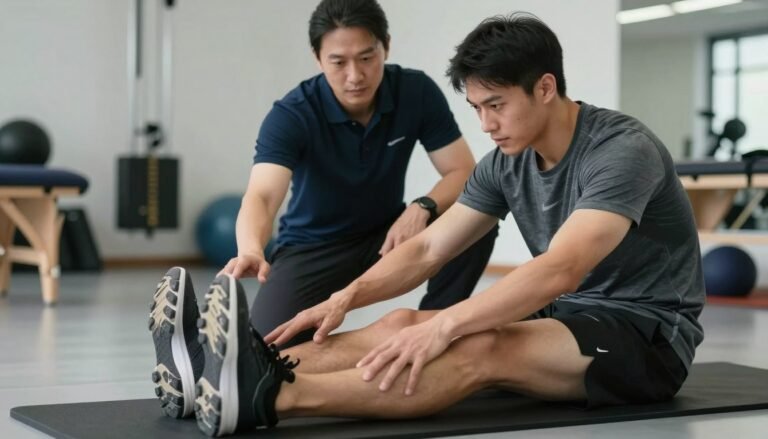
Hamstring tightness is common and limits bend and gait. Gentle, timed stretches help without stressing the joint.
I teach slow holds and controlled breathing. Stretch within comfort, not to pain.
How progress usually looks
We start with body weight, move to resistance bands, then add light ankle or handheld weights and, when appropriate, machines such as leg press for controlled loading. Quality of movement matters more than load.
Expect gradual gains. If swelling or pain flares, we reduce volume and adjust the plan. I individualize progression to your mobility, muscle control, and overall health.
Months three to twelve: long-term recovery, cardio, and getting back to what you enjoy
Months three through twelve focus on steady gains — endurance, confidence, and returning to activities that matter. Progress slows compared with early weeks, but meaningful recovery continues as you build strength and stamina.
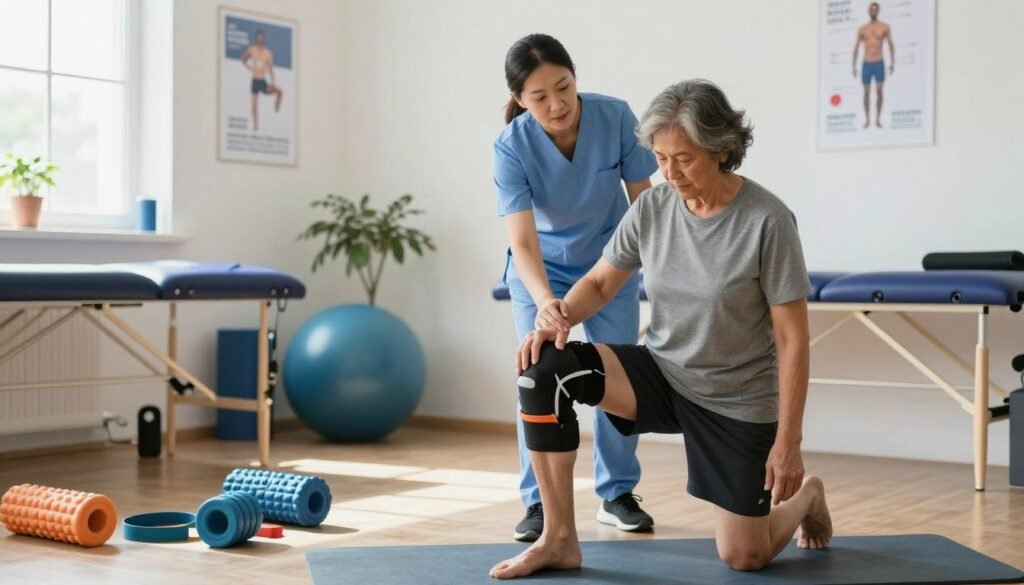
Why outpatient care often finishes the job
Outpatient sessions commonly continue up to four months. These visits target higher-level strength, balance, flexibility, and real-world function that home programs alone may miss.
Cardio choices that support healing and circulation
Gentle cardio warms tissues, improves circulation, and helps control swelling. Good options I recommend include:
- Walking — start on flat ground and increase distance gradually.
- Stationary bike — low resistance for pedal motion and bend control.
- Swimming and water aerobics — buoyancy reduces load while building endurance.
Activities I often delay early on
I usually advise avoiding elliptical-type machines for the first twelve weeks. Their motion can place uneven stress on the joint.
Long-term maintenance and realistic expectations
Expect mild pain or swelling after longer activity at first; pace work and use ice or elevation briefly if needed. Continue a structured exercise plan 2–3 times weekly through months eight to ten, then move to weekly maintenance by months ten to twelve.
Follow-up visits matter if pain increases or progress stalls. I tailor the plan to your goals — walking comfortably, travel, or light sport — and adjust based on exam findings and overall health.
Conclusion
I believe successful healing depends on consistent care, realistic goals, and timely adjustments by your team.
After knee surgery, a plan of safe movement, structured therapy, and gradual strengthening restores real‑world mobility for most patients. Some pain and swelling are common, but they should ease with the right program and follow‑up.
There is no single timeline — progress varies with baseline strength, other health issues, and the exact procedure. Measure wins by function: walking smoother, bending more, standing longer.
I favour accurate evaluation first, non‑surgical care when possible, and guided rehab when surgery is needed. If symptoms worsen or red flags appear, contact your care team promptly.
For a personalised plan, visit me at Boss Multispeciality Hospital on Magadi Main Road, Bangalore (near Kamakshipalya and RR Nagar). Book an appointment for persistent knee pain, arthritis concerns, sports injuries, fractures, back or neck pain, posture issues, or questions about recovery.