
How to Manage Pain and Swelling After Orthopedic Surgery
Have you ever wondered what true recovery looks like when discomfort peaks in the first few days?
I am Dr. Lokesh Chowdary R, MBBS, MS (Orthopaedics), Managing Director and Senior Orthopedic Surgeon at Boss Multispeciality Hospital on Magadi Main Road, Bangalore, near Kamakshipalya and RR Nagar.
My approach focuses on accurate diagnosis, trying non-surgical choices when suitable, guided physiotherapy, and surgery only when it is truly needed. I aim to help you sleep, breathe deeply, and move safely while healing.
Remember that normal post-operative soreness tends to peak in the first 2–3 days and then eases. Swelling often adds to discomfort and limits motion, so we treat both together.
I usually combine medicines with simple home methods and physiotherapy because this blend gives better pain relief than a single strategy. If symptoms suddenly worsen or you notice red-flag signs, contact my team for review rather than pushing through.
What I want you to know about pain and swelling after orthopaedic surgery
Understanding what to expect in the first few days helps you recover with confidence. I will explain healing in simple terms, as I do in my clinic in Bangalore.
Why this happens as tissues heal
When I repair tissues, the body makes inflammation to remove debris and start repair. That process brings fluid, warmth, and stiffness at the site.
Swelling is fluid and chemical signals collecting where the repair is happening. It can make the area feel tight and limit motion for a while.
Typical timeline and what “improving day by day” looks like
Discomfort is usually worst in the first 2–3 days and then eases. Over days you should need fewer rescue medicines, walk a little farther, and sleep longer stretches.
Some days will feel better than others. Small ups and downs are normal and do not always mean a problem.
My goal for pain control
- I aim for you to sleep without being woken by pain.
- To breathe deeply without guarding the chest or limb.
- To do safe movements: sit, stand, and take short walks as advised.
I tailor the plan to your age, procedure, and medical history so you can join physiotherapy and speed recovery with good control of symptoms.
How I assess your pain so we don’t miss the real cause
I begin by asking where in the body it hurts and how it feels. This brief history saves time and points me to the likely cause.
I examine the area and ask simple questions about the sensation. Tell me if it is sharp, burning, throbbing, or tight. Each description gives clues about muscle, nerve, joint, or wound-related causes.
- I check location: incision line, deep joint ache, muscle spasm, or calf discomfort.
- I note quality: sharp, burning, throbbing, cramping — these guide tests and treatment.
- I look for referral: some signals travel to nearby parts of the body and that can be normal.
Expected swelling is usually local to the joint and incision and settles with rest, elevation, and time. Whole-limb swelling, sudden tightness, redness, heat, or rising pain may signal complications and need urgent review.
| Expected | Concerning | What I do |
|---|---|---|
| Local swelling, worse with activity | Rapid swelling of whole limb | Examine, ultrasound, blood tests |
| Mild throbbing that eases | Worsening pain with fever | Urgent review to rule out complications |
| Minor numbness that improves | New weakness or pus at wound | Immediate assessment to reduce risk |
If you are unsure, contact my team at Boss Multispeciality Hospital. Early reporting lets me check for complications quickly and adjust care to reduce the effects on recovery.
Planning ahead for pain management after surgery
Before your operation, a few focused questions help me tailor your comfort plan. I want you to feel prepared and to know when to call me.
What to discuss with me before your operation
Tell me about past anesthesia, any drug allergies, and how you handled pain previously. Mention breathing issues, sleep apnea, stomach, liver, or kidney problems. This helps me pick safe options.
Medication and substance review that can affect control and safety
- List current medications, including pain medicines for arthritis or back issues.
- Include alcohol, tobacco, antidepressants, sleep aids, benzodiazepines, stimulants, opioids, and recreational substances.
- Baseline use changes how I plan doses and sedation safety.
Setting realistic expectations
Most people have the worst discomfort in the first 2–3 days and then improve. Exact timing depends on the procedure and the person.
| What you tell me | Why it matters | What I will do |
|---|---|---|
| Existing pain medicines or opioid use | Alters post-op needs and tolerance | Plan stepwise, non-opioid-first options and adjust doses |
| Alcohol, sedatives, stimulants | Raises sedation and breathing risks | Modify drugs, monitor closely, liaise with anesthesia |
| Allergies, organ issues | Limits safe medication choices | Choose alternatives and set refill plans |
I encourage questions and will explain what is normal for your specific procedure. Together we set safe prescriptions and refill plans so rehab can start smoothly.
Using medicines the right way for pain relief and swelling control
Smart drug choices reduce swelling and let physiotherapy work better. I use a simple, safe plan that matches your medical history and the operation’s needs.
NSAIDs: how ibuprofen, naproxen and celecoxib help
NSAIDs reduce inflammation and soreness at the surgical site. Common options include ibuprofen, naproxen, and the COX‑2 option celecoxib.
Traditional nsaids may cause stomach upset, ulcers, or increased bleeding risk. They can also affect kidneys in some patients. COX‑2 choices often cause fewer stomach side effects but require caution with cardiac history.
Acetaminophen as a base and pairing with NSAIDs
I use acetaminophen as a scheduled base medicine because it raises the pain threshold safely for many people. It pairs well with nsaids since they work by different mechanisms.
Why combination therapy often works better than a single drug
Using a combination reduces reliance on stronger opioids and improves overall analgesia. This supports earlier, safer movement and helps physiotherapy to be more effective.
Oral tablets versus IV medicines in hospital
I choose oral tablets for most patients who can eat and swallow. IV medicines are used when oral use is limited, the procedure is intense, or faster onset is needed.
| Medicine class | Key benefit | Common side effects |
|---|---|---|
| Ibuprofen (nsaid) | Good for swelling and soreness | Gastritis, nausea, kidney strain |
| Naproxen (nsaid) | Longer action between doses | Stomach upset, bleeding risk |
| Celecoxib (COX‑2) | Less stomach irritation for some | Watch cardiac risks, fluid retention |
Safety points I stress: follow my recommended doses, avoid doubling up acetaminophen from other products, and tell me about nausea or unusual effects. I individualize the plan so medicines support, not replace, your guided recovery.
Opioids after orthopedic surgery: when I use them and how I reduce risk
When severe discomfort spikes despite basic measures, a short, guided opioid course can help you move and sleep. I view these medicines as a limited tool, not the first choice.
When I prescribe an opioid
I consider an opioid only for severe breakthrough flare-ups that stop safe movement or prevent sleep. Examples include sharp spikes during physiotherapy or the first few nights when other medicines and home steps do not help.
Common side effects and what to watch for
Typical side effects include nausea, constipation, itching, sleepiness, and slow breathing. Mild nausea or drowsiness can often be managed at home; slow or hard breathing, new confusion, or fainting needs immediate medical attention.
Dependence, tolerance, and overdose in simple terms
Opioids act on receptors in the brain to reduce sensation, but repeated use can make the body need more for the same effect (tolerance). Dependence means withdrawal if stopped abruptly. Misuse can lead to addiction or overdose, so I set the smallest effective dose and short duration.
Safety rules, tapering, and tracking
- Do not mix with alcohol, benzodiazepines, sleep aids, or other sedatives.
- Start oral opioids only if you can swallow; taper frequency first as you improve, then stop.
- Write down doses and times to avoid errors, especially when tired.
| Issue | Usual action | When to call |
|---|---|---|
| Severe breakthrough flare | Short opioid course, lowest effective dose | Pain uncontrolled with prescribed plan |
| Drowsiness or constipation | Home measures, adjust prescription if needed | Excessive sleepiness or fainting |
| Leftover prescription opioids | Lock away, return to pharmacy or authorized drop-off | Missing pills or suspected misuse |
| Breathing slow or confusion | Stop opioid, seek urgent care | Immediate emergency response |
I will tailor any prescription to your medical history and check in if symptoms persist. Contact my team if control is not improving so we can adjust the plan safely.
Nerve blocks, local anesthetics, and “rebound pain” when numbness wears off
Targeted numbness from a block can make the early hours far more comfortable and easier to move.
I use local anesthetics such as lidocaine, bupivacaine, or ropivacaine to block signals in the nearby area. This gives focused analgesia and often reduces opioid needs and their breathing or bowel effects.
Regional options I commonly offer
- Spinal or epidural: numbs larger areas for procedures on the lower trunk and legs. Effects usually last hours; catheters can extend relief for 24–48 hours when needed.
- Limb nerve blocks: target a specific nerve or plexus to numb an arm or leg area for the immediate recovery period.
Why rebound can happen and how I plan for it
When numbness wears off, signals return quickly and a sharp spike may occur. This is called rebound pain.
I prevent it by scheduling base analgesia before the block ends. I coordinate with anesthesia so medicines, timing, and any catheter plans align with your condition and procedure.
| Method | Typical effect | What I advise |
|---|---|---|
| Single-shot limb block | 4–18 hours of numbness | Start scheduled acetaminophen/NSAID before fading |
| Spinal/epidural | Hours; catheter extends to 24–48 hrs | Use catheter for selected cases; monitor motor block |
| Local wound infiltration | Shorter, targeted relief | Combine with oral analgesia and early physiotherapy |
| Continuous catheter | 24–48+ hours controlled analgesia | Good for high early demand; plan home transition |
If you go home still numb, protect the limb from heat and sharp objects and avoid weight bearing until I clear you. Follow my walking and therapy guidance so recovery proceeds safely.
Non-medication methods I recommend at home for pain relief
Small, daily actions at home make a big difference in how your body feels while it heals. These methods are a key part of my plan to help you move, rest, and join physiotherapy sooner.
Ice or heat: choosing the right option
Use ice for the first 48–72 hours when swelling is new. Apply for 15–20 minutes with a thin cloth between skin and pack.
Use heat later for stiff, aching muscles or tightness. Limit heat to 15–20 minutes and avoid direct heat on wounds or numb skin.
Compression and elevation to reduce swelling
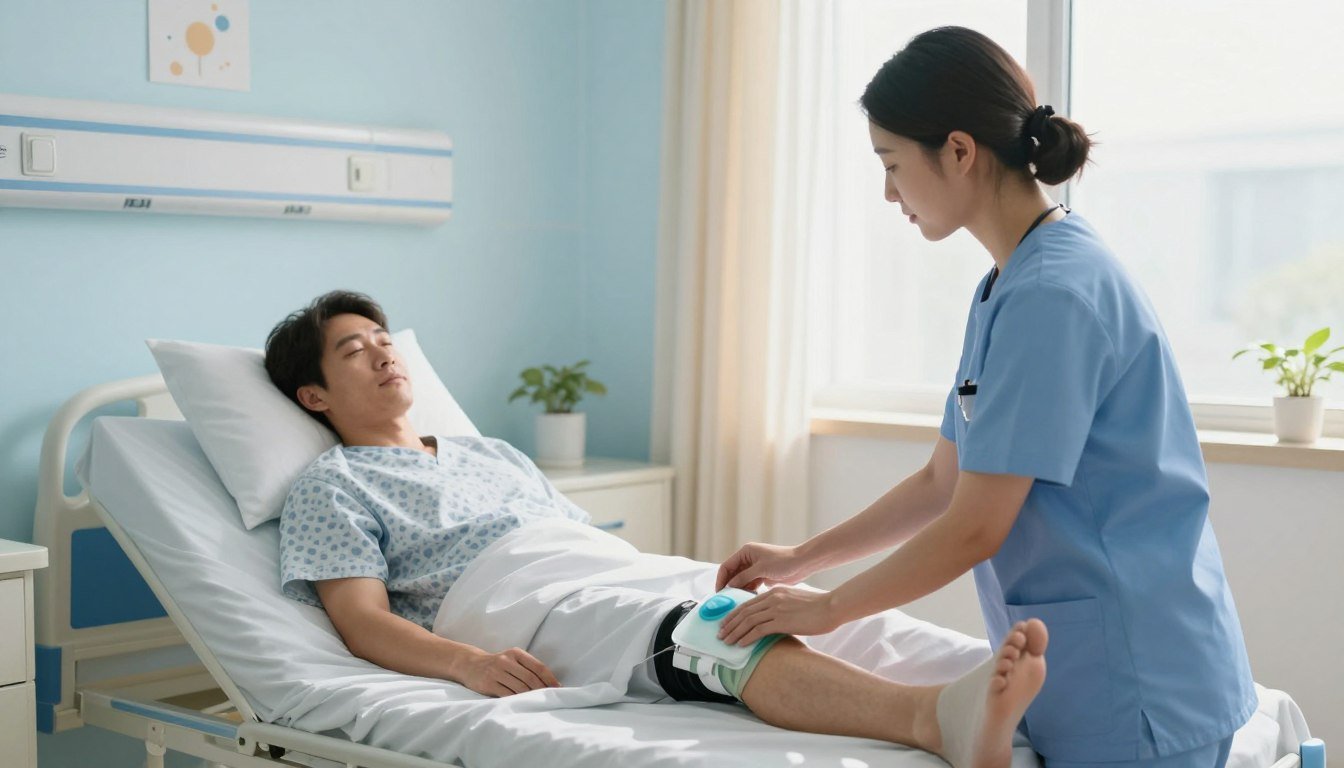
Gentle compression and raising the limb above heart level reduce fluid and tightness. Less swelling often means less discomfort and better mobility.
Calm breathing, music, and relaxation
Practice slow belly breaths: inhale for 4, hold 2, exhale 6. Repeat for five minutes to ease muscle tension.
Listening to music or guided breathing helps reduce anxiety and lowers how much medicine you may need.
Short walks to boost recovery
Short, frequent walks improve circulation, lift mood, and cut constipation risk. Start as I advise and use supports correctly.
| Method | Benefit | Simple tip |
|---|---|---|
| Ice | Reduces early swelling | 15–20 min, cloth barrier, every 2–3 hrs |
| Heat | Relieves stiffness | Use after 72 hrs, avoid wounds |
| Walking & breathing | Improves circulation and mood | Short walks, slow belly breaths daily |
Physiotherapy-guided recovery: using pain control to regain strength safely
Effective rehabilitation pairs targeted analgesia with guided movement so strength returns safely. I coordinate medicines, ice or heat, and hands-on therapy so exercises feel doable and protect healing tissues.

Why uncontrolled pain can delay movement and slow recovery
When discomfort is strong, patients guard the limb and move less. Guarding causes stiffness, weak muscles, and slower regain of range.
That delay increases the risk of long-term weakness after fractures, sports injuries, or joint repairs. I use medication and non-drug steps to prevent this.
Balancing rest with activity so you don’t overdo it
I teach pacing: short sessions, planned rest, and gradual progression. Use soreness and swelling as feedback and avoid doing too much on a good day.
Before therapy I ask you to take a base dose so exercises are productive. This pain control lets you work on strength without pushing past safe limits.
Posture, back and neck strain, and joint protection while healing
Altered walking or crutch use can cause back and neck pain or posture-related issues. I show body mechanics to protect the spine and nearby joints.
| Issue | Rehab tip | When to pause |
|---|---|---|
| Joint pain or knee pain | Low-load strengthening, range work | Sharp increase in swelling or warmth |
| Fractures or sports injuries | Protected weight bearing, progressive loading | New numbness or loss of movement |
| Back and neck strain | Posture drills, core activation | Severe radiating discomfort or weakness |
Recovery varies by person. I adjust the plan to wound status, swelling, and strength gains so you regain function safely and return to daily life or sport with fewer long-term problems.
Conclusion
A structured approach helps most people regain function while keeping risks low. Swelling and discomfort are common after surgery and usually ease over the first days as healing progresses.
I use clear steps: accurate diagnosis, non‑opioid first choices, and simple home supports. Medications are matched to your health and the procedure so you can start physiotherapy safely.
Combining medicines with ice, elevation, calm breathing, and short walks reduces reliance on stronger drugs. Dispose unused opioids safely and tell my team if symptoms change or worsen.
If you notice sudden swelling, fever, new weakness, or other worrying signs, seek urgent review. Book an appointment with me, Dr. Lokesh Chowdary R, at Boss Multispeciality Hospital, Magadi Main Road, Bangalore (near Kamakshipalya and RR Nagar), so I can evaluate you and guide a personalised recovery plan.