
Hip Replacement Recovery: What to Expect in the First 12 Weeks
Have you wondered how quickly life can feel normal again after hip surgery?
I am Dr. Lokesh Chowdary R (MBBS, MS – Orthopaedics) and I will outline what hip replacement recovery looks like in real life during the first 12 weeks.
This early phase is the foundation. Many patients see fewer restrictions by six to twelve weeks, while full benefit may take months to a year depending on health, rehab, and how closely you follow therapy.
I explain why walking aids, precautions, and daily exercises protect the new joint and speed safe healing. Recovery varies by age, fitness, surgical approach, and overall health.
At Boss Multispeciality Hospital on Magadi Main Road, Bangalore (near Kamakshipalya and RR Nagar), I counsel patients step-by-step so they can control pain, rebuild strength, and return to everyday activities without rushing.
Please remember this is general education and not a guarantee; your surgeon or treating doctor’s plan is the final word for your specific replacement and medical condition.
What I want you to know before you start your hip replacement recovery
Let me set realistic expectations so your first days after surgery feel more manageable. I speak plainly in clinic: progress is usually steady but not perfectly linear. You will have better movement than before surgery, but some days feel harder than others.
What “normal” early progress looks like
Normal means small daily gains, fewer painful limits, and gradual walking that becomes easier than pre-op. Two patients with the same procedure can follow different timelines.
Factors that change timelines include muscle strength before surgery, other joint pain, diabetes, anemia, and sleep quality. I tailor advice to each patient’s health and goals.
Outpatient versus overnight stay
Many procedures are outpatient with same-day discharge, but some patients stay one to two nights, or rarely up to three. Plan transport and a helper for the first night.
Usual hospital timeline and discharge goals
On surgery day we monitor vitals, start pain control, and begin early mobilization. A physiotherapist assesses your walking and transfers before discharge.
- Get in and out of bed safely
- Walk with an aid (walker/crutches/cane)
- Manage basic bathroom needs and eat/drink
- Practice 2–3 stairs and your home exercise plan
Discharge is about safety, not perfection. If goals aren’t met or home support is limited, a short rehab stay protects your new joint and confidence. Ask my team any questions early — understanding the process reduces anxiety and helps you follow precautions correctly.
What happens right after hip replacement surgery in the hospital
Waking from anesthesia can feel strange; I describe the steps we take to keep you safe and comfortable. The anesthesiologist watches breathing, blood pressure, and early signs of pain while nursing staff check your wound and circulation.
Waking up and early monitoring
I check you often in the first few hours. We inspect the dressing, test movement, and ensure pulses and sensation in the leg are normal. My team alerts me if anything needs attention.
Getting up within 24 hours
We aim to have you sit and stand the first day. A physiotherapist guides safe transfers, teaches bed-to-chair steps, and practices short walks. Early movement helps circulation and reduces stiffness.
Pain control and common medicines
We use a mix of drug types so you get better relief with fewer side effects. Typical home medicines include an opioid for short use, a non‑opioid analgesic, blood thinners, and stool softeners.
| Medication | Purpose | Typical duration |
|---|---|---|
| Opioid (short course) | Control moderate to severe pain | 2–7 days |
| Paracetamol/NSAID | Lower inflammation and pain | 1–4 weeks |
| Anticoagulant | Prevent blood clots | 2–6 weeks |
| Stool softener / anti-nausea | Reduce side effects of other meds | As needed |
Using a walker, crutches, or a cane
Training with an assistive device starts on day one. I coach posture, small steps, and safe turns to avoid twisting. Ask for help rather than rush; steady technique protects the new joint and supports therapy progress.
Preparing your home for a safer, smoother recovery
Preparing your living space ahead of time helps you move safely and feel supported in those first days. I recommend setting one easy “recovery space” where essentials stay within arm’s reach to limit bending and twisting.
Setting up a recovery space and reducing fall risk
Clear paths so a walker, crutches, or cane can pass without obstruction. Remove loose rugs and tuck cords along walls.
Keep a phone, water, medications, and a torch nearby. Fatigue and medicines raise fall risk, so simplify the environment.
Bathroom and seating changes that protect your new joint
Install grab bars, use a stable shower chair, and add a raised toilet seat if possible. These items cut slips and awkward bending.
Choose a firm chair with armrests and a higher seat to make standing easier and protect the leg while you heal.
Helpful assistive devices to avoid bending and twisting
- Reacher/grabber for picking items without bending
- Long-handled sponge and shoehorn to reduce hip flexion
- Non-slip mats and a stable bedside lamp
Planning caregiver support for the first several days to weeks
Many patients may need help with meals, dressing, and bathing for days or weeks. Plan who will assist and when.
I reassure families in my clinic in Bangalore that needing help is normal. Good planning reduces stress and protects your joint while you regain strength and health.
Week-by-week guide for the first 12 weeks after total hip replacement
This week-by-week roadmap shows common milestones and sensible guardrails for the first 12 weeks after your surgery. Use it as a guide, not a strict timetable; progress varies by age, fitness, and surgical approach.
Days to week one
Expect noticeable swelling and soreness around the wound. Short indoor walks and safe transfers are the priority on each day.
Call me if swelling or pain suddenly worsens, or if you have new numbness or fever.
Weeks two to four
You should walk more steadily with your aid and feel growing confidence in bathroom and kitchen tasks.
Physiotherapy builds basic strength and improves motion; stick with the program.
Weeks four to six
Pain often lessens and range of motion improves. Standing and light household activities become easier.
Weeks six to eight
Many precautions ease depending on your approach, but avoid sudden twisting and high-risk moves.
Weeks eight to twelve
Outdoor walks and routine activities usually increase. Full function may still take months, and ongoing strengthening helps long-term results.
| Time frame | What improves | Common guardrail |
|---|---|---|
| Day–1 week | Swelling, short walks, transfers | Limit standing long; use aid |
| Weeks 2–4 | Steadier walking, strength gains | Follow therapy; avoid heavy lifting |
| Weeks 4–8 | Better motion, less pain | No sudden twists; slow return to tasks |
| Weeks 8–12 | More routine activities, endurance | Gradual increase; report worsening signs |
Managing pain, swelling, and sleep without overdoing it
Managing pain, swelling, and sleep well makes the first weeks after surgery more comfortable and safer. I focus on simple, repeatable steps so you can rest and heal without risking a setback.

Ice, elevation, and stockings
Swelling is often moderate to severe early, then mild to moderate for several months. I advise short icing sessions with a cloth barrier—never directly on skin—combined with gentle elevation when resting.
If I prescribe compression stockings, wear them as directed for the first few weeks to lower fluid build-up and clot risk.
Medication guidance and safety
I guide medication use closely. Take medicines as prescribed, taper opioids as pain eases, and check with your doctor before using OTC drugs or supplements.
Common side effects include constipation, nausea, and drowsiness; stool softeners or anti-nausea drugs often help.
Sleep, positioning, and pacing
Sleep can be hard early on. A pillow between the legs may improve comfort and stability if I recommend it. Avoid positions your surgeon has warned against.
Alternate activity and rest. Overdoing walking or stairs increases swelling and delays comfort even when the implant is fine. Call me if pain suddenly spikes at rest or swelling becomes new or severe.
Physiotherapy and exercises to rebuild strength and range of motion
Consistent therapy is the engine that restores movement, balance, and confidence after surgery.
Why physical therapy matters
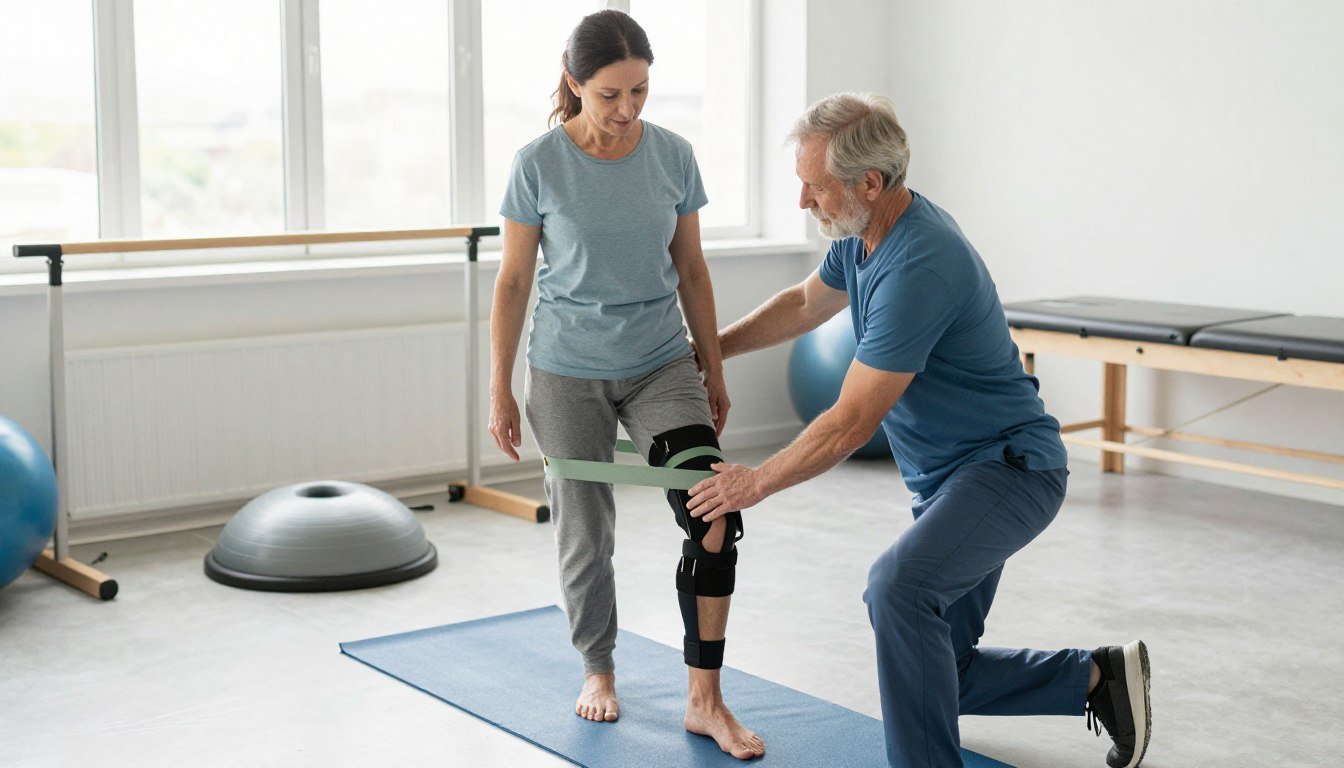
I prescribe physical therapy because it rebuilds muscle control around the joint. This improves balance and shortens the time to safe function when you follow the plan.
Common rehab exercises your therapist may teach
Your therapist starts with gentle drills: ankle pumps for circulation, heel slides to regain motion, and isometric thigh squeezes to protect the wound.
Progress includes standing hip and thigh strengthening, light resistance work, and mobility drills that match your precautions.
Walking vs targeted exercises
Walking is excellent for endurance, but it does not replace targeted exercises. Strength work stabilizes the joint and reduces limp or pain long term.
Low-impact options and safe progression
I often add stationary cycling once you can sit comfortably. Swimming is useful later, only after the wound is well healed and I say it’s safe.
Practice little and often, focus on good form, and scale back if muscles ache. Attend follow-ups so small technique fixes avoid weeks of avoidable symptoms.
Precautions and daily activities: bending, stairs, sitting, and safe movement
Simple movement choices in the first weeks make a big difference to how well your joint heals. I focus on practical actions that reduce dislocation risk while soft tissues tighten around the implant.
Movements I commonly restrict early on
- Avoid deep bending at the waist past 90°.
- Do not cross the operated leg over the other leg.
- Skip twisting motions and sudden pivots—turn your whole body instead.
- Keep the knee lower than the hip when seated or getting up.
Practical do’s for sitting, standing, and keeping the leg facing forward
Use a higher chair with armrests. Sit with the operated leg slightly in front when you stand.
Keep the foot and toes pointing forward during turns. Use a reacher for low items and avoid bending to pick things from the floor while seated.
Climbing stairs, bed transfers, and sensitive topics
Practice stairs with a therapist: step up with the good leg first, step down with the operated leg first.
When getting in and out of bed, slide toward the edge and push up using your arms; avoid reaching down to pull blankets. Most patients follow these precautions for about six weeks, but each surgical approach differs.
About sexual activity: timing varies. Ask me at follow-up so I can advise safe positions and comfort measures for your total hip situation.
| Activity | Do | Don’t |
|---|---|---|
| Sitting | Use high chair, keep leg forward | Lean forward or cross legs |
| Stairs | Use handrail; good leg leads up | Rush or skip steps |
| Bed transfers | Roll, slide, use arms to push up | Reach down to pull sheets while bending |
When you can drive, return to work, and travel after hip replacement
Knowing what to check before you sit behind the wheel or book a flight makes the weeks after surgery safer. I review practical steps so you and your family can plan leave, transport, and trips with fewer surprises.
Driving
You should be off opioid pain medicine, have good leg strength, and react quickly to brake. I confirm readiness during follow-up because side (left vs right), car height, and how confident you feel all matter.
If you still use strong pain drugs or limp significantly, wait and recheck with your doctor before you drive.
Return to work
Return work timelines vary. Desk jobs may allow a return in a few days to two weeks if you can sit comfortably and manage stairs.
Physically demanding jobs may take longer because lifting, climbing, or long standing stresses healing and may take several weeks to months. I advise planning modified duties and discussing leave with your employer in advance.
Air travel and airport screening
Air travel can increase leg swelling and clot risk from long sitting. Drink water, do ankle pumps often, and try to walk every hour on long flights.
Tell airport security about your implant; metal detectors may alert. Carry a clinic card if you have one and inform the staff politely.
MRI scans and metal implants
Inform any doctor or radiologist that you have a metal implant. Images near the device can blur, but many centres use MARS sequences to reduce artifact and give useful results without extra risk.
| Activity | Typical earliest time | What I check |
|---|---|---|
| Drive | Days to weeks | Off opioids, normal reflexes, safe transfers |
| Desk work | Days to 2 weeks | Pain control, sitting tolerance, travel to office |
| Physical work | Several weeks to months | Strength, no heavy lifting, gradual duties |
- I always stress individual clearance—your doctor decides when it is safe.
- These timelines may take longer or shorter based on pain, balance, and overall healing after replacement surgery.
Warning signs I don’t want you to ignore during recovery
Early detection of complications makes a big difference; here are clear signs you should not ignore. Read these with your caregiver so you both know when to call me or seek urgent help.
Infection red flags
Call if you have a fever over 100°F, shaking chills, growing redness, new drainage, or wound pain that gets worse with activity or rest. These signs may need a visit to the hospital for checks and tests.
Blood clot symptoms
Watch for calf or leg pain not linked to the incision, tenderness, or marked swelling of the thigh, calf, ankle, or foot that does not settle with elevation. These can indicate blood clots and need prompt assessment.
Emergency signs of a clot to the lungs
Get immediate help for sudden shortness of breath, sharp chest pain, or chest pain that worsens with coughing. These symptoms can signal a serious event and require urgent treatment.
Wound care basics and when to call me
Keep the wound clean and dry. Many dressings stay on 7–10 days; follow instructions. Take your medication, especially blood thinners, exactly as directed to reduce risk.
- Contact me immediately for new drainage, rising fever, or wound redness.
- Go to the emergency department for sudden breathlessness or severe chest pain.
- When in doubt, call early—it’s safer than waiting.
| Sign | What to do | Urgency |
|---|---|---|
| Fever >100°F | Call clinic, may need exam | High |
| Calf pain/swelling | Seek assessment for blood clots | High |
| Shortness of breath | Go to ER now | Emergency |
Conclusion
Healing after joint surgery is a stepwise process that rewards patience and smart choices.
I tailor care so most people regain meaningful function over months, with many seeing clearer gains by six to twelve weeks. Progress varies with age, fitness, and the exact procedure.
Follow physiotherapy, use your walking aid as instructed, and avoid bending or twisting until I clear you. Focus on safe walking, good sleep, and steady pain control rather than comparing timelines.
If you notice fever, new drainage, calf pain, or sudden breathlessness, seek help promptly. For personalised evaluation and guidance, book an appointment with me, Dr. Lokesh Chowdary R, at Boss Multispeciality Hospital, Magadi Main Road, Bangalore (near Kamakshipalya and RR Nagar). I will review your progress and help you return to normal activities safely and confidently.