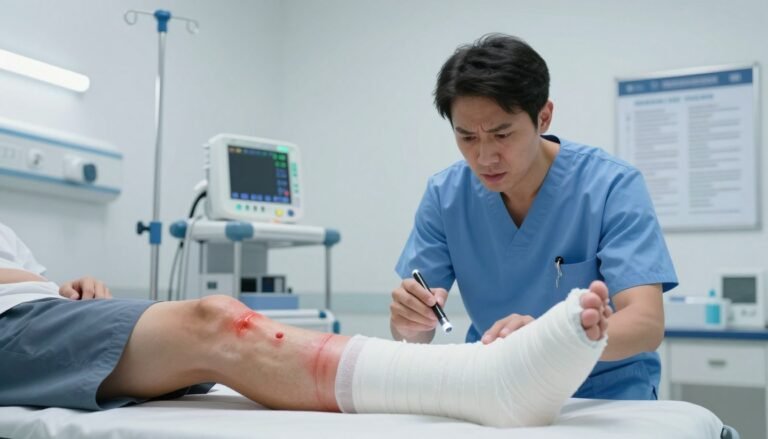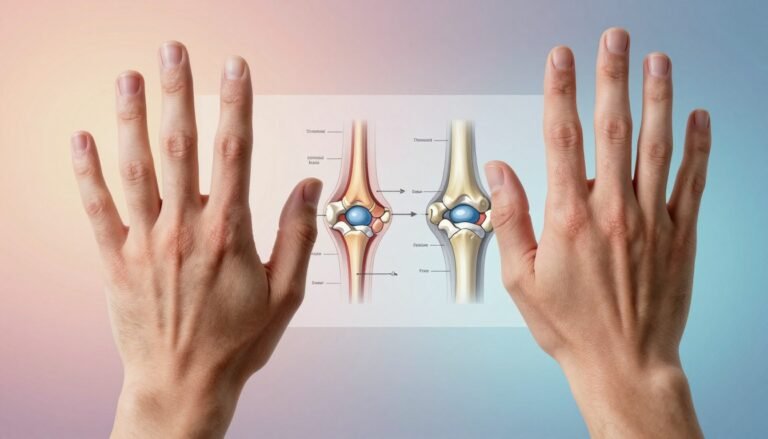

Hamstring Strain Recovery: Grades, Treatment, and Return to Sport
Have you ever wondered why some pulls heal fast while others keep you off the field for months?
I’m Dr. Lokesh Chowdary R, MBBS, MS (Orthopaedics). In my clinic at Boss Multispeciality Hospital on Magadi Main Road, Bangalore, I see this common muscle injury often.
My goal here is clear and practical. I explain how I assess grades of damage, why the grade changes the plan, and when non-surgical care is best.
Pain can ease quickly, but true tissue healing and fitness take longer. Returning too soon raises your risk of reinjury, so I rely on exam findings, targeted imaging, and physiotherapy checkpoints before clearance.
This guide will show step-by-step plans I discuss with patients: early protection, smart loading, strengthening, and staged return to sport. I’ll also note when tendon problems or avulsion need specialist care or surgery.
Understanding a Hamstring Injury and Why It Happens
When a sudden twinge stops your run, the mechanics behind it tell us what to fix. I explain the anatomy simply so you know what is injured and why it happened.
What these muscles do and where problems occur
The hamstrings are three muscles: semitendinosus, semimembranosus, and biceps femoris. They start near the pelvis, cross the knee, and attach lower on the leg. Their jobs are to bend the knee and drive the leg backward during walking and running.
How typical events cause overload
I often see tears in the thicker muscle belly or where muscle fibers join tendon. Common triggers include sprinting, kicking, landing from a jump, or a sudden change of direction.
Why eccentric load matters
Eccentric contraction is when the muscle lengthens while it contracts under load. During the sprint push-off the back leg is lengthened and loaded at once. Fatigue, tightness, or a strength imbalance raises the stress and the chance of injury.
| Site | Typical signs | Impact on healing |
|---|---|---|
| Muscle belly | Local soreness, bruising | Often quicker healing with rehab |
| Musculotendinous junction | Pain at the join, weaker contractions | Longer rehab, needs targeted loading |
| Tendon/avulsion | Severe pain, possible bone pull | May need imaging and specialist care |
Symptoms and Early Clues That Tell Me How Serious It Is
A sudden pull in the back of the thigh usually gives clear early clues about how bad the damage is. I look for a simple story: a sharp grab or pop during sprinting that forces you to stop. That first moment and what happens over the next few days matter most.
Typical signs I check first
I ask about immediate pain and whether swelling appeared in the first hours. Bruising or discoloration over the following days suggests more bleeding in the tissue and higher severity.
Walking pain and tenderness patterns over the first days
I watch walking pain at day 3 and day 5. If walking settles quickly and bruising is minimal, the strain is often milder. Persistent walking pain, worsening swelling, or marked weakness when climbing stairs raises concern for a larger tear or tendon issue.
| Early feature | What I look for | What it suggests |
|---|---|---|
| Sudden sharp pain | Stop or slow the activity | Classic acute muscle pull |
| Swelling in hours | Local fullness or tightness | Moderate tissue damage |
| Bruising in days | Visible discoloration | More bleeding; higher-grade injury |
| Weakness or giving way | Difficulty with stairs or sprinting | Functional deficit; needs assessment |
If pain is severe, you cannot bear weight, bruising spreads fast, or you feel a gap in the muscle, get examined promptly. I reassure patients that early assessment and a clear plan usually reduce the risk of repeat injury and speed safe return to sport.
Hamstring Strain Recovery Timeline by Grade and Severity
How long it takes to get back to play depends on the grade and whether tendon tissue is involved. I explain realistic timelines so you can plan rehab and avoid rushing back too soon.
Grade 1 — mild pull
Grade 1 is a mild pull with microscopic fiber damage. Most people improve quickly with early protection and guided loading.
Typical time: about 2–4 weeks for most athletes, but individual factors change this estimate.
Grade 2 — partial tear
Grade 2 is a partial tear that needs longer rehab to rebuild strength and tolerance to sprinting. Pain may drop before function fully returns.
Typical time: roughly 4–8 weeks depending on sport demands and adherence to physiotherapy.
Grade 3 and tendon issues
Grade 3 means a complete tear. Recovery can take months, and tendon avulsions may require specialist review or surgery. These raise the risk of prolonged healing and guarded loading.
Typical time: often 8+ weeks, with many needing structured rehab for several months.
| Grade / Severity | Key signs | Estimated time | Practical notes |
|---|---|---|---|
| Grade 1 | Mild pain, minimal bruising | 2–4 weeks | Early movement, strengthening; avoid early sprinting |
| Grade 2 | Moderate pain, bruising, weakness | 4–8 weeks | Progressive loading, targeted eccentric work |
| Grade 3 / Avulsion | Severe pain, gap, loss of function | 8+ weeks; possible surgery | Specialist assessment, protected rehab |
Why timelines vary: conditioning, fatigue, previous injuries, and flexibility deficits all influence healing. I tailor each plan and reassess if progress stalls. The goal is safe return — not just absence of pain.
How I Diagnose Hamstring Strains in the Clinic
When a player walks into my clinic clutching the back of the leg, my questions and exam set the treatment path. A clear history plus targeted tests usually tell me if imaging will change the plan.
History and focused examination
I start by asking what activity you were doing, whether the pain was sudden or gradual, and if you had to stop immediately. I also ask about prior hamstring injuries and current training load.
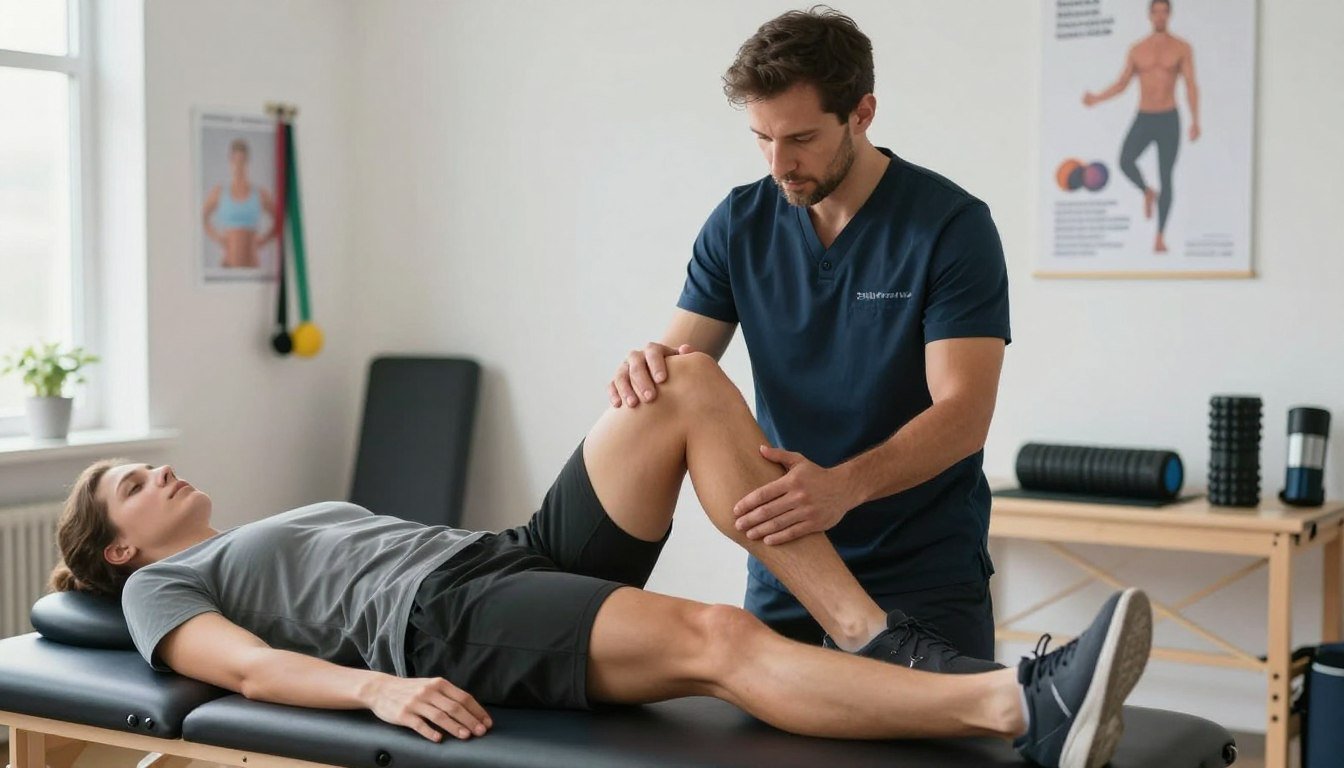
On exam, I inspect the back of the thigh for tenderness, swelling, and bruising. I palpate for gaps and check basic resisted movements to see how pain changes with load. I watch walking and simple tasks to judge functional limits.
When I order imaging
- I request an X-ray when I suspect avulsion injuries near the pelvis or a bony fragment.
- I order an MRI if I need to define soft-tissue severity, check tendon involvement, or plan a precise return-to-sport timeline.
- Imaging is not routine for every injury; I use it when the clinical picture suggests a higher grade or progress stalls.
| Finding | Likely action | Why it matters |
|---|---|---|
| Visible gap or severe weakness | X-ray ± MRI | Detects avulsion or full-thickness tears |
| Marked bruising, pain on stretch | MRI if high-grade suspected | Defines tissue and tendon involvement |
| Mild tenderness, good function | Clinical follow-up | Avoids unnecessary imaging |
Accurate diagnosis guides treatment and helps prevent chronic problems. The clearer the picture, the safer and more efficient the plan I recommend.
How to Treat a Hamstring Strain Without Surgery
Immediate steps after an acute pull make a big difference to how well and how quickly you return to activity. I focus first on symptom control and protecting the tissue so the injury does not worsen.
Immediate care (RICE) and protection
I advise rest from the provoking activity and short-term avoidance of high-load tasks. Ice for about 20 minutes at a time, several times daily with a barrier on the skin. Use compression and elevation to limit swelling and ease pain.
When to use crutches or a brace
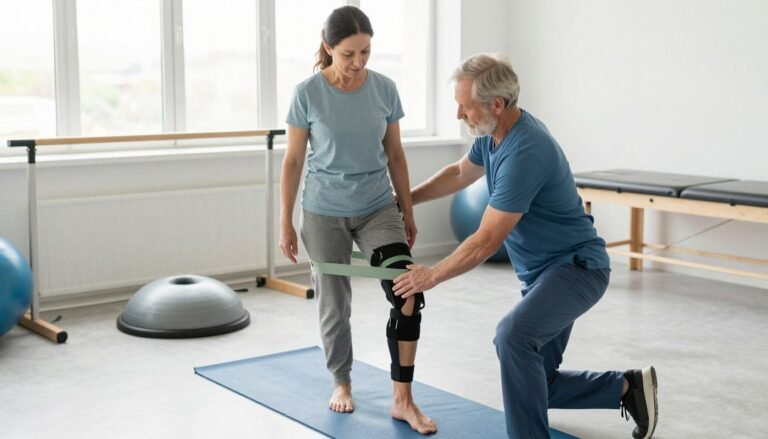
I suggest crutches if walking is painful or you limp badly. A neutral knee brace may help briefly to keep the leg safe while initial healing occurs.
Physiotherapy-led progression
Therapy begins once pain and swelling settle. First we restore comfortable range of motion and gentle stretching. Then we add progressive exercises to rebuild flexibility and normal movement.
Strength and controlled loading
Strength work is central. I start with low-load exercises (bridges, sliders) and move to eccentric training as tolerated. Nordic-style progressions are introduced only when strength and pain allow.
Return-to-activity principles
Gradual running exposure, stepwise speed work, and careful training load management guide return. I clear athletes when range, strength, and pain scores are near normal to reduce reinjury risk.
| Phase | Primary goal | Typical examples |
|---|---|---|
| Acute | Control pain and swelling | Rest, ice, compression, elevation |
| Early rehab | Restore range and flexibility | Gentle stretches, range exercises |
| Strengthening | Build controlled strength | Bridges, sliders, progressive eccentric work |
| Return to sport | Full function and load tolerance | Progressive running, speed drills, load management |
When Surgery Is Considered and What Rehabilitation Looks Like
Some injuries need an operation to restore strength and protect long-term function.
I recommend surgery only for specific patterns, most commonly tendon avulsion from bone where the tendon pulls away from the pelvis.
How I suspect the need for repair
Clinically I look for marked loss of strength, a visible gap, and heavy bruising. These signs plus poor function raise concern.
Imaging—usually MRI and sometimes X-ray—confirms tendon involvement and helps me plan timing and approach.
What the operation and early protection involve
Surgical repair means reattaching the tendon to bone, often with suture anchors after clearing scar tissue. The goal is to restore normal anatomy and load transfer.
After surgery patients use crutches, limited weight-bearing, and sometimes a brace to protect the repair during early healing.
Typical rehabilitation and timelines
Physiotherapy starts with gentle mobility and protected activation. Progression moves to strengthening, then sport-specific conditioning and high-speed tolerance work.
- Proximal repairs (near the pelvis): commonly many months before full return to sports; a practical timeline is around 6 months or more.
- Distal repairs: often faster, with many athletes returning near 3 months, depending on function and healing.
| Stage | Focus | Typical time |
|---|---|---|
| Protected healing | Control load, gentle motion | 0–6 weeks |
| Strength rebuild | Progressive resistance, physiotherapy | 6–12 weeks |
| Return to sports | Power, speed, endurance tests | 3–6+ months |
Emerging treatments and evidence
Patients ask about PRP and similar therapies. Current evidence is mixed and not strong enough to replace sound surgical or physiotherapy plans.
I discuss risks, costs, and realistic benefits before considering adjunct treatments. My priority is proven safety and long-term health.
In all cases my aim is a durable return to sports. Careful surgery when indicated, followed by staged therapy, gives the best chance to restore strength and reduce reinjury risk.
Conclusion
A thoughtful plan that balances rest and graded training protects long-term function. Take the injury seriously; incomplete rehab is the common reason hamstring strains come back.
Start with short rest and swelling control, then progress to flexibility and range work. Rebuild strength with guided exercises and add sport-specific drills before full return to activity. Healing time varies with grade, tendon involvement, conditioning, and prior issues—so your plan must be individualised.
If you are unsure about severity, not improving, or want a safe timeline for high-speed work, book an appointment. If you are in Bangalore, visit me, Dr. Lokesh Chowdary R, at Boss Multispeciality Hospital on Magadi Main Road near Kamakshipalya and RR Nagar for a proper assessment and tailored plan.