
Common Basketball Injuries and How to Prevent Them
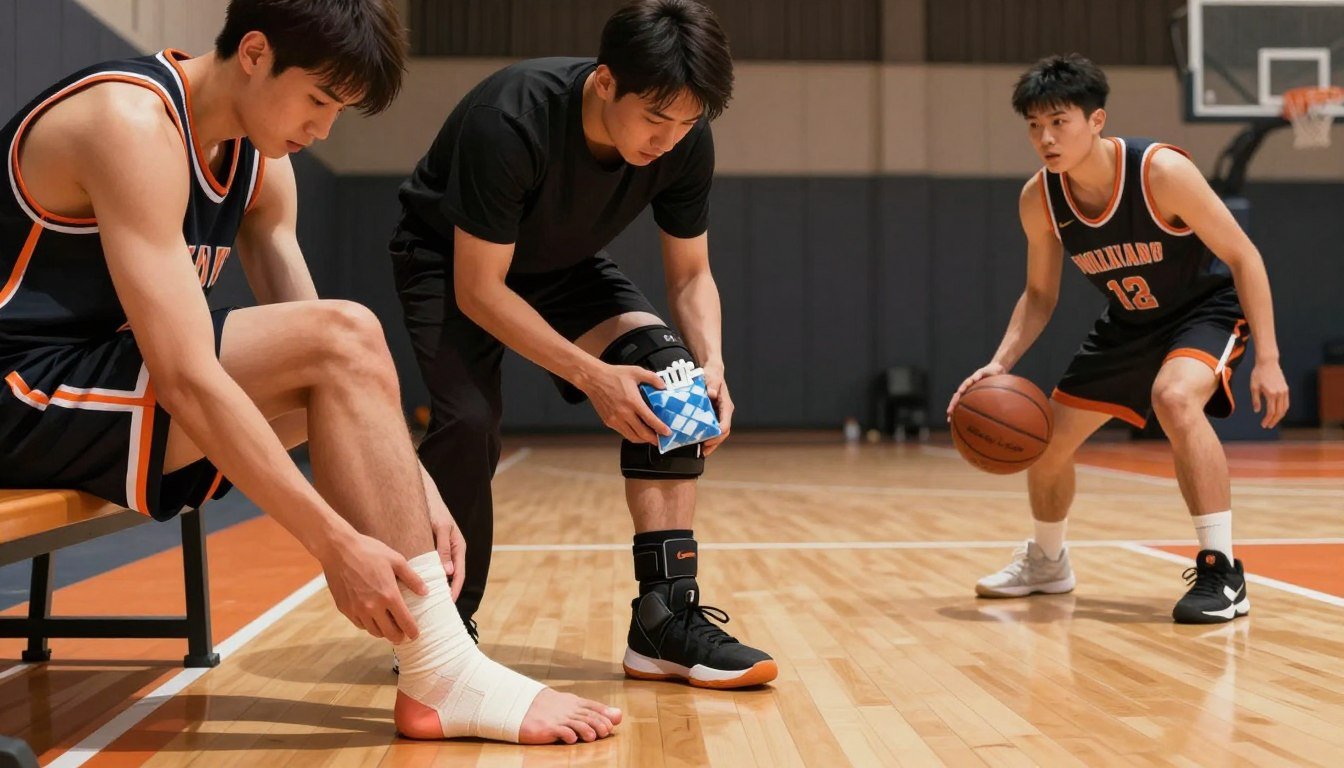
Have you ever wondered why a simple jump or quick cut can sideline a player for weeks?
I’m Dr. Lokesh Chowdary R, MBBS, MS (Orthopaedics), and I see that many problems start in routine play—landing, pivoting, and reaching more than big collisions.
In this short guide I’ll explain which basketball injuries I often treat, how early warning signs look, and practical steps to lower risk across a season.
My approach is clear: accurate diagnosis first to rule out fractures, ligament tears, or concussion, then stepwise care that leans on non-surgical treatment and physiotherapy when safe.
Most issues improve well with timely evaluation and guided rehab, but recovery varies by person. For parents and young players: pain that changes the way you run or jump is a signal to stop and get checked.
I practice at Boss Multispeciality Hospital on Magadi Main Road, Bangalore, near Kamakshipalya and RR Nagar, and I invite local families to seek evaluation when in doubt.
Why Basketball Injuries Happen and How I Assess Your Risk
Fast cuts, hard landings and sudden stops put steady strain on joints and soft tissues, even without a full-on collision.
Players face about 6–14 injuries per 1,000 hours of play. In 2022, nearly 314,000 ER visits were linked to the sport and many involved ages 5–14. That means a season of extra practice raises real risk for young athletes.
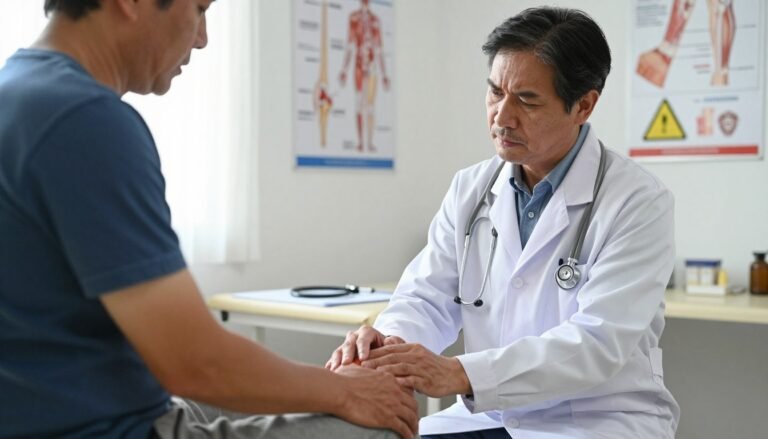
I assess risk the same way in clinic: clear history, focused observation, and simple tests to guide decisions.
How I take a history and examine
- Ask what happened and where the pain started.
- Check swelling, ability to bear weight, and joint stability.
- Watch movement patterns and landing mechanics.
Key risk factors I commonly see
Skipping warm-up, fatigue, poor landing technique, weak hip/core control, and repeated stress without recovery raise the risk of overuse and acute injury.
| Risk factor | Effect | Practical advice |
|---|---|---|
| Year‑round training | Overuse in growing athletes | Schedule rest weeks and cross‑train |
| Poor warm‑up | Higher strain on muscles | Use structured dynamic warm‑ups |
| Fatigue late in games | Technique breakdown | Monitor load and recovery |
Most early problems respond well to activity modification, physiotherapy and technique correction. If you see limp, sudden swelling, visible instability, or head symptoms, seek prompt evaluation rather than waiting.
Common Basketball Injuries I See Most Often in My Practice
From a twisted ankle to a sudden knee pop, a few patterns explain most time‑loss problems I treat.
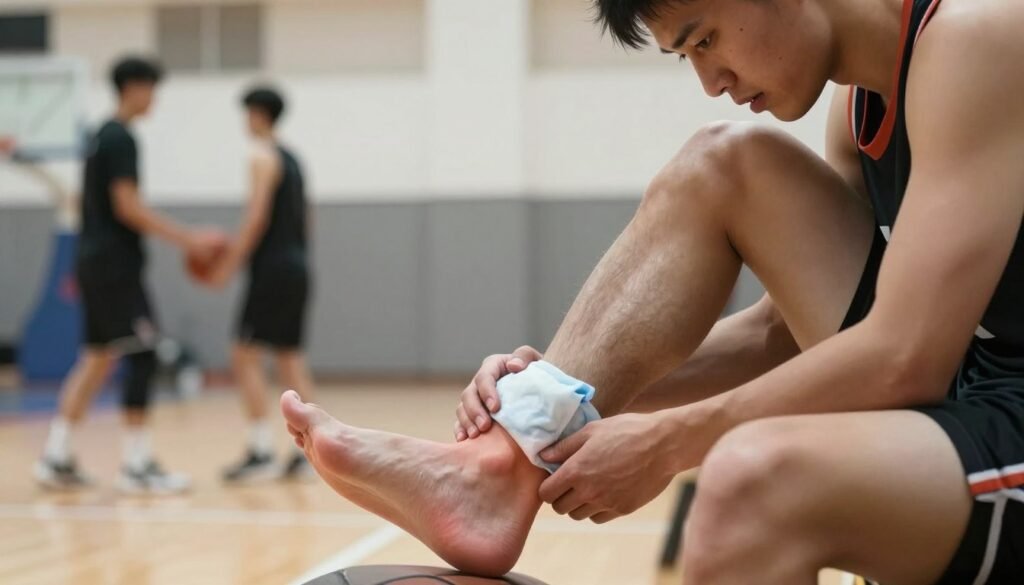
Ankle sprains
Often caused by landing on another player’s foot. Expect swelling, bruising, limited range, and trouble bearing weight.
I look for ligament laxity and ask if you felt a tear or heard a pop. Early care is rest, ice, compression, elevation and physiotherapy; severe cases need imaging and may take months to heal.
Knee issues: ACL, meniscus, jumper’s knee
Cutting and landing stress the ACL and meniscus. A pop, rapid swelling or instability suggests a serious tear.
I assess stability and motion. Some tears need reconstruction; others respond to rehab depending on goals and exam.
Finger, calf, stress fractures, contusion, facial cuts and concussion
- Finger: jammed fingertip—ice, buddy taping; X‑ray if deformity or persistent pain.
- Calf vs Achilles: a true tendon tear can mimic a strain; early exam guides boot or surgery decisions.
- Stress fracture: activity‑related pain that worsens—stop load and image early to avoid longer layoffs.
- Thigh contusion: deep bruise may take 4–6 weeks; rest and graded return.
- Facial cuts: control bleeding with pressure; stitches if deep. Concussion: watch for headache, dizziness, vomiting; return only after medical clearance.
How to Prevent Basketball Injuries with Smart Training, Gear, and Court Habits
Preventing time lost to pain or a tear begins with a simple, repeatable plan you can use before practice and on game day.
Warm-up and flexibility
Start with 3–5 minutes of light movement to raise body temperature.
Follow with gentle stretches held about 30 seconds each for hips, calves, quads and hamstrings so muscles handle jumping and cutting better.
Strength, balance and therapy
I recommend core, hip and lower-limb work to protect the ankle and knee chain.
A physiotherapist can tailor progressive exercises that improve control and performance while lowering late‑game fatigue risk.
Gear, hydration and recovery
- Choose snug, non‑skid shoes and consider ankle braces after a prior sprain.
- Hydrate: ~24 oz two hours before, ~8 oz just before, then ~8 oz every 20 minutes while playing.
- Plan rest days, sleep, and light sessions to avoid repeated stress and overuse pain.
Safer play and court checks
Keep court awareness, avoid pushing, and use clean landing technique. Good sportsmanship prevents unnecessary contact.
| Quick court scan | What to check | Fix or avoid |
|---|---|---|
| Surface | Traction, wet spots, debris | Clean area, delay play |
| Lighting | Even brightness, no glare | Adjust or move courts |
| Surroundings | Padded posts, clear walls | Add padding, mark danger zones |
If pain recurs despite these steps, seek a focused assessment rather than pushing through. Individual plans work best when guided by exam and therapy.
Conclusion
A timely check-up often keeps a short problem from becoming a season‑long setback. I urge players and parents to treat new swelling, a giving‑way feeling, or any head symptoms as reasons to stop and seek evaluation.
Correct diagnosis comes first. Many common basketball problems look similar but need different plans. Most respond well to activity modification and physiotherapy‑guided rehabilitation, while surgery is reserved for cases that truly require it.
Recovery varies by age, fitness, and injury severity, so timelines should be individual. For persistent pain, repeated sprains, suspected fractures or concussion, book an appointment or visit me at Boss Multispeciality Hospital on Magadi Main Road, Bangalore (near Kamakshipalya and RR Nagar) for a clear orthopedic plan and safe return‑to‑play advice.