
ACL Tear Recovery Timeline: What Athletes Need to Know
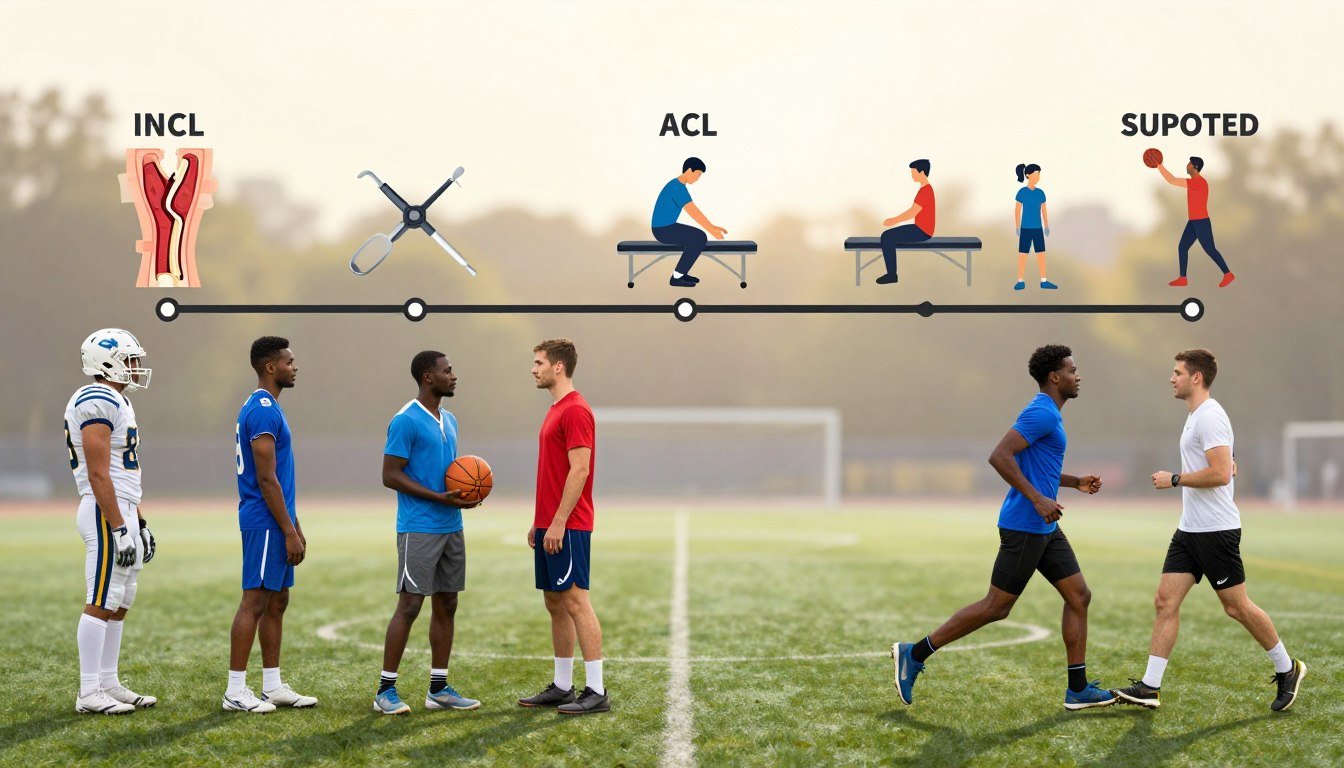
Have you ever wondered why some players return to sport sooner while others need many months away? I ask this because understanding the time after a knee injury changes how you plan training and care.
I am Dr. Lokesh Chowdary R, Managing Director and Senior Orthopedic Surgeon at Boss Multispeciality Hospital on Magadi Main Road, Bangalore. I will explain the essentials calmly and clearly.
I discuss what an ACL injury means for athletes, why the recovery timeline matters, and why I prefer step-by-step progress over quick fixes. Early diagnosis and a physiotherapy-led plan often help, and surgery is reserved when stability and sport demands require it.
You will learn how I confirm the diagnosis, the choices we consider, what reconstruction involves, and a practical week-by-week view. I will also note common setbacks and when to book an appointment for review.
My focus is realistic milestones, steady gains in strength and confidence, and tailoring the plan to your sport and goals in India. If you want a safe, evidence-based path back to play, start with a proper orthopedic assessment.
Understanding an ACL tear in athletes: what I look for in the clinic
When an athlete twists the knee suddenly, the first clinical question I ask is what the leg felt like in that instant.
What the anterior cruciate ligament does for knee stability
The anterior cruciate ligament is a key stabiliser inside the knee. It prevents the shin from shifting forward and controls rotation during cutting and landing.
Common sports mechanisms
In sports such as football, basketball, badminton, kabaddi, and tennis, non-contact pivots, awkward landings, and quick cuts often cause an acl tear. I ask whether you heard a pop, felt a sudden give, or had immediate swelling.
How I separate a sprain from a larger ligament injury
Minor sprains usually allow continued play with pain but without major instability. A significant tear or torn acl often gives way, swells fast, and leaves you unable to trust the knee.
| Finding | Likely sprain | Likely significant ligament tear |
|---|---|---|
| Immediate swelling | Delayed, mild | Rapid, large |
| Sense of instability | Rare | Common; giving-way episodes |
| Associated injuries | Uncommon | Meniscus or cartilage damage possible |
I focus on stability and function, not pain alone. A clear exam and timely imaging guide the right plan, which often begins with swelling control and guided therapy.
What to do immediately after a knee twist or pop
A sudden twist or loud pop at play calls for calm action and clear first-aid steps. I advise stopping activity right away and avoiding any more weight on the leg.
How to reduce swelling with rest, ice, elevation, and safe support
To reduce swelling, follow a simple rule: rest, ice, compress, elevate. Apply ice over a thin cloth for 15–20 minutes every two to three hours on the first day.
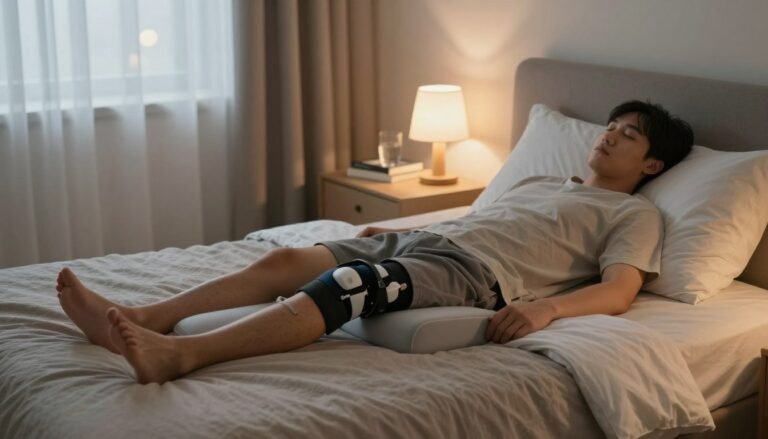
Keep the knee raised on pillows when sitting or lying. Use gentle compression to limit swelling but not so tight that circulation is cut off.
Why not pushing through pain can prevent a partial tear from worsening
Do not push through pain. Extra stress on an injured knee can convert a partial tear into a larger one.
When to use crutches or a brace to protect the leg
- Use crutches if you limp, feel unstable, or weight-bearing increases swelling or pain later in the day.
- Short-term brace use can give confidence and protect motion, but it is not a substitute for diagnosis and rehab.
- Avoid deep squats, running, jumping, or twisting for the first 24–72 hours.
I recommend prompt clinic review so I can examine stability and plan physiotherapy-led care tailored to your sport and daily needs.
How I confirm the diagnosis and rule out other injuries
I begin diagnosis by asking clear questions about the exact way the knee was injured. I record the mechanism, when swelling started, and any giving-way episodes. This history guides my next steps.
Stability checks I use in clinic
I then perform focused stability tests. The Lachman test feels for forward movement of the shin and gives a quick sense of ligament function.
The pivot shift assesses rotational stability and can reveal functional instability that matters for sport.
Looking for meniscus or cartilage problems
I check joint-line tenderness, locking, and catching. These signs raise concern for meniscus or cartilage injuries that change the treatment plan.
Role of imaging in a clear treatment path
| Use | What it shows | When I order it |
|---|---|---|
| X‑ray | Fracture, alignment | Initial severe injury or to rule out fracture |
| MRI | Soft tissue, torn acl, meniscus | When exam suggests ligament or cartilage damage |
| Repeat exam | Better view after swelling settles | If guarding limits initial testing |
Imaging supports but does not replace a good exam. For each patient I combine history, tests, and scans to make a personalised plan that matches sport, work needs, and long‑term knee stability.
Choosing the right treatment: non-surgical care vs ACL surgery
Deciding whether to manage a knee injury without an operation or to operate is a personal and clinical choice I guide carefully.
When physical therapy and activity modification may be enough
If the knee is stable and your daily activities or sports do not demand rapid pivoting, I often start with conservative treatment.
Structured physical therapy focuses on strength, balance, and neuromuscular control. Activity modification reduces risk while the muscle control improves.
When reconstruction is commonly recommended for active patients
For a complete ligament loss or recurrent giving-way in cutting sports, I usually recommend surgical reconstruction to protect the joint and allow safe return to play.
Surgery is only one step; most success comes from months of graded rehabilitation after the operation. Return to high-impact sports often takes close to a year.
Repair versus reconstruction: what evidence suggests
Modern repair techniques show promise but lack long-term data compared with reconstruction. Reconstruction remains the standard for most active patients.
- I decide based on stability, the degree of the tear, sport type, age, and patient goals.
- Shared decision-making helps patients understand benefits, limits, and the full process before choosing surgery.
| Approach | When I use it | Key point |
|---|---|---|
| Conservative therapy | Stable knee, low-demand activities | Improves function without surgery |
| Reconstruction surgery | Unstable knee, pivoting sports | Restores stability; needs rehab |
| Repair (select cases) | Carefully selected partial injuries | Limited long-term evidence |
Preparing your knee before surgery to improve recovery
Before any operation, I focus on steady preparation to make the process gentler and safer for you.
I usually wait until swelling settles and knee motion improves. A calmer knee at the time of surgery lowers the risk of stiffness and helps long-term range of motion.
Prehab goals I set with my patients
Prehab aims to restore range motion, reduce swelling, and activate the quadriceps. These steps speed the early recovery phase and make post-op therapy more effective.
Practical steps before the operation
- Typical timing: many patients wait about a month, but this varies with swelling and other injuries.
- Simple exercises under a physiotherapist: heel slides, quad sets, and gentle straight-leg raises.
- Practice using crutches, review medications (especially blood thinners), and arrange help at home.
- Wear loose clothing for an easier first day after surgery.
| Focus | Goal | Why it matters |
|---|---|---|
| Motion | Full knee bend/straighten | Reduces scarring and aids therapy |
| Strength | Quadriceps activation | Improves early weight-bearing |
| Practical | Crutch practice & med review | Safer first days home |
My plan is individualised. Good pre-surgery preparation often makes the recovery smoother and more predictable.
What happens during ACL reconstruction surgery (in simple terms)
Let me describe the key steps of reconstruction so you know what to expect on the day of surgery.
Arthroscopic approach and “minimally invasive” explained
I use arthroscopy — a small camera and tiny instruments through a few small cuts. This reduces soft tissue damage compared with open surgery.
The damaged ligament is removed and the joint is inspected for other injuries before reconstruction begins.
Graft options commonly used to replace a torn ligament
The goal is to replace the torn ACL with a graft that can act like a new ligament once it heals and integrates into bone.
- Hamstring tendon graft — common choice for athletes who need strong soft-tissue grafts.
- Patellar tendon graft — bone–tendon–bone option, often used in high-demand sport cases.
- Quadriceps or donor graft — selected when prior grafts or anatomy suggest alternatives.
| Graft | Key feature | When I choose it |
|---|---|---|
| Hamstring | Low donor-site pain | Many sports players |
| Patellar tendon | Strong bone fixation | Jumping athletes |
| Donor/quad | Less harvest impact | Revision or specific anatomy |
Fixation and what to expect after the operation
The graft sits in small bone tunnels and is fixed with screws or buttons so it stays stable while healing. This hardware is usually permanent and rarely needs removal.
Typical procedure time is about 2.5 hours under anaesthesia. Many patients go home the same day with a brace and crutches.
Surgery starts the healing process, but rehabilitation turns healing into function. I emphasise a safe, graded plan rather than rushing back to sport.
ACL tear recovery timeline: week-by-week milestones athletes can expect
I track practical weekly goals so athletes know what to expect after their knee operation. These milestones focus on safe progress, not rushing back to sport.
Early phase priorities
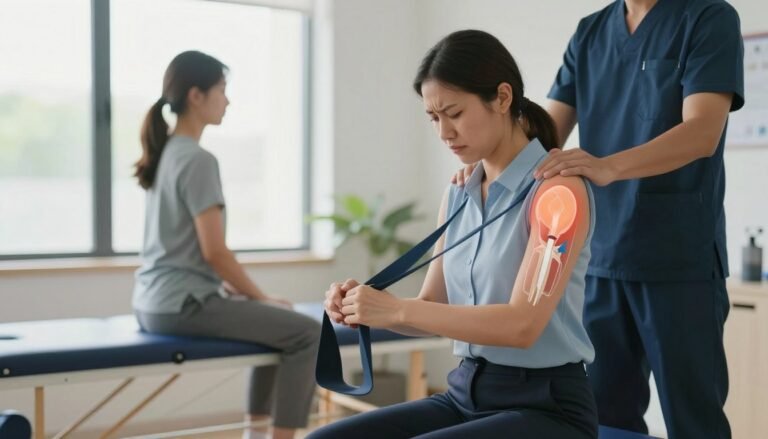
Weeks 1–2 focus on pain control, swelling control, protected weight-bearing, and gentle motion. Early effort prevents stiffness and sets up rehabilitation success.
Range of motion by two weeks
Many patients aim for about 90° of knee bend by the end of week two. Some reach this sooner; others need a bit more time under guided physical therapy.
Progressing gait and weight-bearing
Around week three patients often move to partial then full weight-bearing as gait normalises. I base crutch weaning on pain, swelling response, and how smoothly you walk.
Strength and balance at two months
By two months the focus shifts toward rebuilding quad, hamstring, and hip strength plus balance work. Rehab now includes more load and neuromuscular control drills.
Three-month check: what good progress looks like
At three months you should have much improved range of motion and growing strength. Low-impact activities are usually tolerated, but cutting and pivoting remain off limits until cleared.
| Phase | Typical goal | Why it matters |
|---|---|---|
| Weeks 1–2 | Pain/swelling control, 90° bend | Prevents stiffness, enables therapy |
| Week 3 | Partial‑to‑full weight-bearing | Restores gait and confidence |
| 2 months | Strength + balance progress | Builds foundation for sport |
Remember: rehabilitation and clinical checks guide return. Full return to high‑impact sports commonly takes many months and may approach a year depending on tests and function.
Rehab essentials that protect your graft and speed functional recovery
Protecting the graft while regaining function is the practical aim I set with most patients. Early work focuses on controlled motion, then on progressive loading and movement quality.
My therapy plan rests on three pillars: restore range of motion, rebuild strength around the knee and hip, and retrain neuromuscular control for safe sport movements. I insist on supervised physical therapy and correct technique to reduce reinjury risk.
Common exercises around the three-month stage
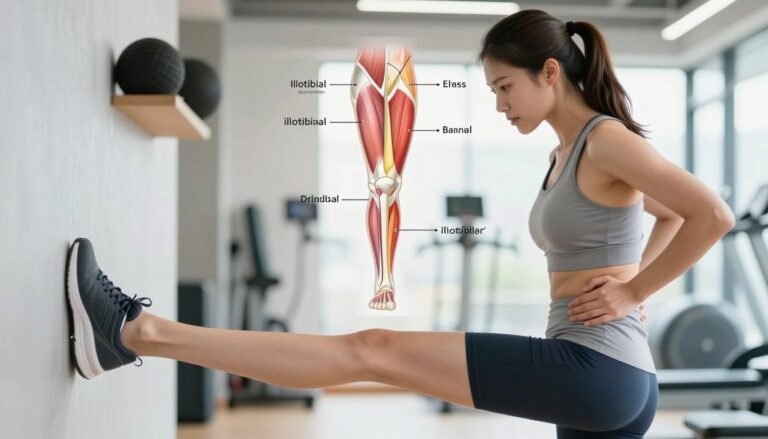
- Stationary bike — improves range motion and endurance with low load.
- Straight leg raises & bridges — target quadriceps and glute strength for knee support.
- Step-ups, mini squats, lateral step‑downs — build functional strength and control.
- Single‑leg balance and dynamic drills — retrain coordination and reduce valgus collapse.
- Heel/calf raises — restore calf strength for push‑off during sport.
Watching movement and managing symptoms
I and the physiotherapy team watch for compensation patterns such as hip drop or inward knee collapse. These signs guide exercise choice and intensity more than the calendar alone.
If swelling or mild discomfort follows activity, scale back intensity, use ice and elevation, and discuss changes with your therapist. Sharp pain, increasing swelling, or loss of motion should prompt clinical review.
| Goal | Typical exercises | What it improves | Warning sign |
|---|---|---|---|
| Range motion | Stationary bike, heel slides | Restores bend and straightening | Persistent stiffness despite guided therapy |
| Strength | Step-ups, mini squats, bridges | Builds knee and hip support | Worsening pain during basic tasks |
| Neuromuscular control | Single‑leg balance, lateral drills | Improves landing and cutting mechanics | Visible knee valgus or hip drop |
| Symptom management | Ice, elevation, activity scaling | Reduces swelling and discomfort | Increasing swelling after rest |
Consistency matters: short, regular sessions beat sporadic hard efforts. Rehab protects the graft, rebuilds confidence in the leg, and prepares you for safe return to sport‑specific training.
Returning to sports and high-impact activities safely
Safe return to high-impact play depends on measurable progress more than months alone. I use clear tests and a staged plan to decide when an athlete may resume sports.
I require demonstrated knee stability, near-symmetric strength, and good movement control before higher-risk drills. Time is part of healing, but strength and movement quality guide the decision.
Typical phased progression
- Base fitness: rebuild endurance and unloaded strength.
- Straight-line conditioning: running and acceleration without cutting.
- Controlled agility: planned changes of direction at low speed.
- Sport-specific cutting and pivoting: gradual speed, reaction, and contact.
| Phase | Key goal | Typical months |
|---|---|---|
| Base fitness | Endurance, quad activation, no swelling | 1–3 months |
| Agility prep | Straight-line running, strength symmetry ≥90% | 3–6 months |
| Sport return | Controlled cutting, hop tests, good movement quality | 6–12 months (often near a year) |
I coordinate closely with physiotherapists and use objective benchmarks: strength tests, hop symmetry, movement analysis, and swelling response. This approach lowers reinjury risk in demanding sports and other physical activities.
Every athlete is different. I encourage follow-up evaluations so we can adjust the plan if symptoms, performance, or stability change.
Common setbacks and warning signs that need medical review
I want you to recognise early signs that mean we should meet sooner rather than later.
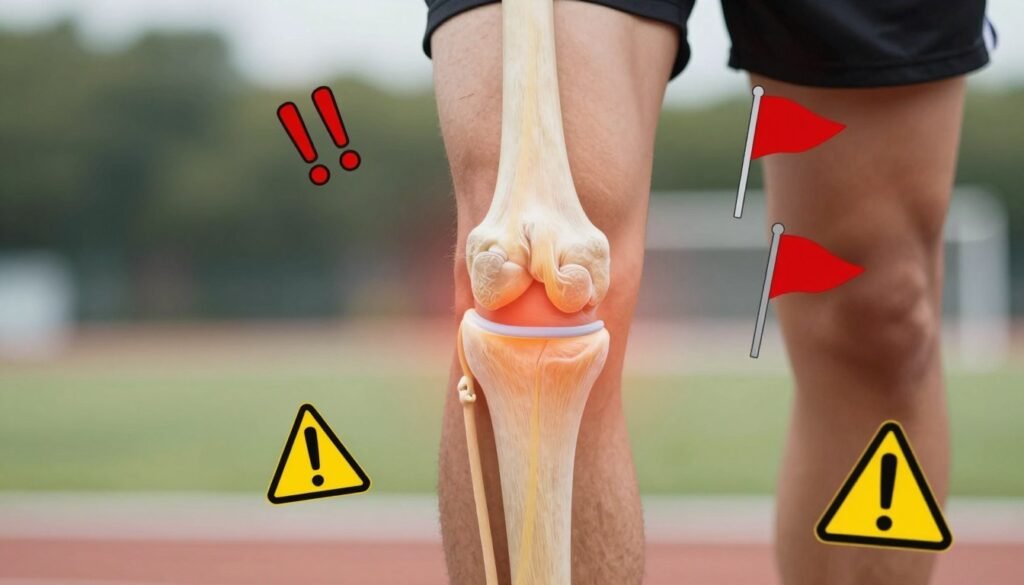
If pain or swelling increases, or motion does not improve after a few days of therapy, book an appointment. Mild swelling after activity is common. Worsening swelling, rising pain, or progressive stiffness is not normal and needs a hands‑on exam.
Instability, locking, or giving‑way sensations
A feeling that the knee slips or locks during activity can point to graft problems or an associated meniscus or cartilage injury. I assess these symptoms with targeted tests and imaging when needed.
Signs of infection or worrying pain patterns
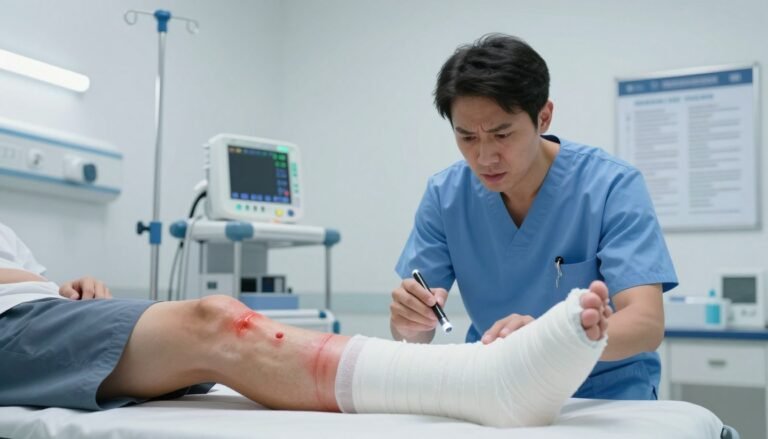
After surgery, watch for fever, growing redness, warmth, discharge, or escalating pain. These are concerning signs and require same‑day review.
- Common/manageable: mild pain after hard rehab sessions; brief swelling that settles with rest.
- See me if: persistent pain, loss of motion, repeated giving‑way, new locking, or infection signs.
- I may advise temporary support, like crutches, if gait worsens or swelling spikes.
| Issue | When to review | Why it matters |
|---|---|---|
| Persistent pain | Few days without improvement | May signal mechanical or infection problem |
| Limited motion | No gain after guided therapy | Risk of stiffness and delayed recovery |
| Instability/locking | Any giving‑way event | Could mean graft or meniscus damage |
Many setbacks are solvable if addressed early. If you feel stuck, schedule an appointment so I can examine the knee and guide next steps. The aim is a stable, confident leg — not just finishing the calendar.
Conclusion
I personalise care to each athlete. I match treatment to sport demands, body response, and your goals. Some patients do well with focused physical therapy and non-surgical options. Others need surgery for long-term stability in pivoting sports.
Healing is a stepwise process measured by swelling control, motion, strength, and sport-specific tests — not by a single date. Full return can take months and sometimes approach a year. Your leg may progress differently from a teammate or what you read online.
If pain, growing swelling, or loss of motion appears, tell your therapist early and book an appointment. I am Dr. Lokesh Chowdary R at Boss Multispeciality Hospital, Magadi Main Road, Bangalore (near Kamakshipalya and RR Nagar). Schedule an appointment for a clear evaluation and a personalised plan from day one.