
Female Hair Loss: Why It Happens & When to See a Doctor

Have you ever wondered why so many people notice thinning or shedding, and when it should prompt a visit to a doctor?
We know this can feel personal and worrying. About half of all women face some degree of scalp thinning during their lives. That makes it more common than most expect.
Growth starts deep in follicles, the tiny pores on your scalp. Changes to those follicles or to your body can speed up thinning at any age, though many notice it in their 50s or 60s.
We aim to guide you through what normal shedding looks like, what signs matter, and when a medical exam is wise. Our approach is practical and kind, so you can make clear choices.
By understanding the biology and available treatments, you can find the right path for your needs and feel supported every step of the way.
Understanding the Hair Growth Cycle
Each follicle on your scalp moves through active growth, transition, and rest in a steady rhythm. Knowing these stages helps you see why shedding happens and when it is expected.
Anagen, Catagen, and Telogen Phases
The anagen phase is the active growth period. About 90% of hair resides here and grows roughly 6 inches a year. For most people, anagen lasts 2–8 years.
Catagen is a short transition that lasts 2–4 weeks. During this time the strand stops growing and detaches from its blood supply.
Telogen is a resting stage of 2–4 months before the strand sheds naturally. Normal shedding happens as follicles renew.
Factors Interfering with Growth
Medications, illness, or sudden stress can push many follicles into telogen at once. When that happens, you may notice hair thinning over a short time.
Hormones, nutritional gaps, and skin conditions also affect how follicles cycle. We recommend seeing a clinician if shedding seems sudden or persistent.
| Phase | Duration | What Happens |
|---|---|---|
| Anagen | 2–8 years | Active growth; most follicles are in this phase |
| Catagen | 2–4 weeks | Transition; growth stops and the strand detaches |
| Telogen | 2–4 months | Resting; hair remains before shedding naturally |
Common Female Hair Loss Causes
It is normal to lose some strands each day; knowing what is typical helps you spot concern. The American Academy of Dermatology notes most people shed 50 to 100 strands daily. On wash days, up to 250 strands can be part of a normal cycle.
If you notice far more than 250 strands during washing, it may point to an underlying medical condition. We group primary causes so you can narrow what might be affecting you.
- Temporary triggers: severe stress, fever, or surgery often cause sudden, reversible thinning.
- Pattern-related: genetic tendencies lead to gradual thinning and require targeted care.
- Medical or nutritional: thyroid problems, iron deficiency, or medications can create persistent shedding.
| Group | Common Triggers | Typical Signs | Suggested Next Step |
|---|---|---|---|
| Telogen effluvium | Stress, illness, medication | Sudden, diffuse shedding | Review recent events; consult clinician |
| Androgenetic pattern | Genetics, hormone changes | Gradual thinning, wider parting | Discuss medical options and family history |
| Nutritional/medical | Deficiencies, thyroid, meds | Diffuse or patchy shedding | Do blood tests and correct deficits |
| Autoimmune/skin | Alopecia areata, scalp conditions | Patchy loss, scalp symptoms | See a dermatologist for diagnosis |
Identifying the specific type is the first step to an effective plan. If you are unsure, we recommend a clinic visit for evaluation and personalised advice.
Recognizing the Signs of Thinning Hair
Noticing that your part looks wider or your ponytail feels thinner are often the first clues. Early signs can be subtle, so we recommend watching changes over weeks rather than days.

Distinguishing Between Male and Female Patterns
Pattern baldness in men often shows as a receding hairline or a bald crown. In contrast, female pattern usually causes diffuse thinning across the top third to half of the scalp.
- You might notice more strands on the pillow, in the shower drain, or on your hairbrush—these are practical signals of hair loss.
- A widening part or a less-full ponytail are classic symptoms of female pattern hair thinning and deserve attention.
- Visible patches of scalp or sudden, uneven thinning in specific areas suggest a different type and need professional review.
We encourage you to track these signs and photograph your part and top scalp every few weeks. Early recognition of a pattern can improve outcomes and widen treatment options.
The Role of Genetics and Female Pattern Baldness
Genetic patterns often shape how thinning appears over time, and recognizing them helps plan early care.
Androgenetic alopecia, commonly called female pattern baldness, affects about 30 million American women. The tendency can come from either parent. It most often shows up in later middle age.
Over time, follicles shrink. New hairs grow back finer and shorter. This gradual pattern makes the part look wider and the top area less dense.
- It is unlikely you will lose all your hair.
- Early treatment slows progression and helps maintain density.
- Care focuses on scalp health and follicle support.
| Feature | What it means | Next step |
|---|---|---|
| Inheritance | Runs in families from mother or father | Review family history with a clinician |
| Follicle miniaturisation | Hairs become finer and shorter | Start medical or topical treatment early |
| Progression | Slow, over months to years | Monitor and treat to prevent worsening |
We can help you assess the pattern and discuss sensible treatment options. Early attention gives the best chance to preserve hairs and improve scalp health.
Impact of Hormonal Changes and Life Stages
Hormone swings at certain ages can alter hair strength and the pace of new growth. These shifts affect follicles, the cycle of growth, and how dense your part looks over time.
Menopause and Estrogen Levels
During menopause, estrogen and progesterone fall. This often leads to thinner, more fragile strands and slower growth.
We monitor these changes as a common pattern of ageing and discuss treatment options when density declines noticeably.
Pregnancy and Postpartum Shedding
Pregnancy raises estrogen and can make hair fuller. After delivery, estrogen drops and shedding usually peaks around three months.
Most people see regrowth within six to nine months as hormones stabilise. We reassure you that this is often a temporary phase.
- Hormonal shifts in menopause can weaken follicles and change growth rate.
- Postpartum shedding peaks near three months but commonly resolves by nine months.
- If you worry about persistent hair loss, we offer assessment and personalized treatment plans.
Lifestyle Factors and Styling Habits
Everyday styling choices can quietly stress follicles and change how full your scalp looks over time.
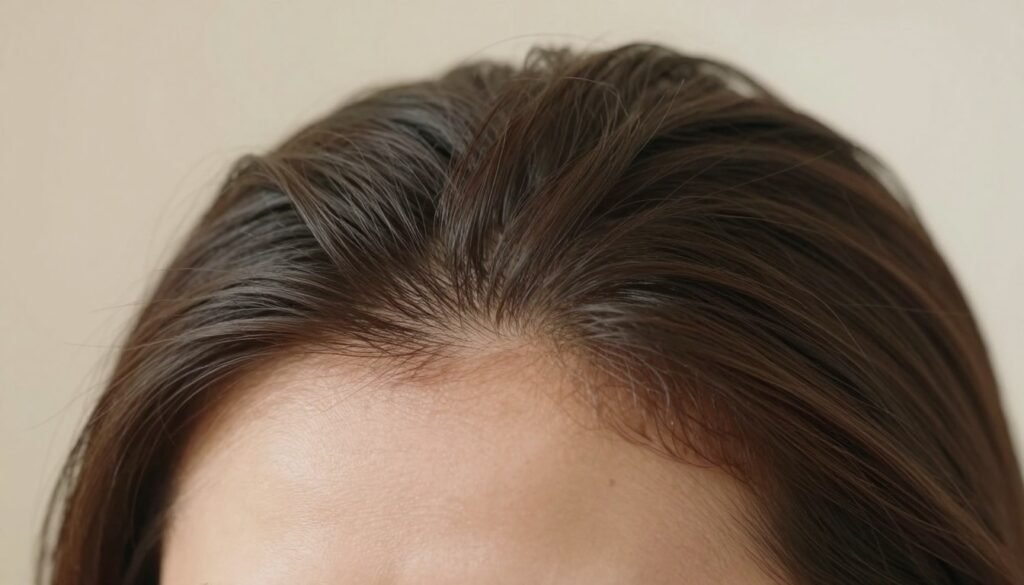
Tight braids, cornrows, or high ponytails can cause traction alopecia. Repeated tension pulls at follicles and may lead to lasting loss if not addressed.
High heat from blow dryers and flat irons and harsh chemical treatments weaken strands. Over time, this breakage contributes to thinning hair and reduced volume.
- Change tight styles and give your scalp regular rest days to reduce strain.
- Limit heat tools and use lower settings with a protectant when needed.
- If you spot unusual loss tied to styling, see a dermatologist soon to protect follicles.
- Many people see regrowth after months of gentler care and targeted treatment.
| Risk | How it affects the scalp | Practical remedy |
|---|---|---|
| Tight hairstyles | Pulls follicles, causes traction alopecia | Looser styles; alternate parting |
| High heat & chemicals | Breakage and increased thinning | Lower heat, milder treatments, protectants |
| Delayed care | Greater chance of permanent loss | Early dermatologist review and treatment |
Medical Conditions Linked to Hair Loss
Several medical conditions can quietly interfere with normal growth and lead to noticeable thinning over weeks or months.
Autoimmune disease such as alopecia areata occurs when the immune system attacks follicles. This often creates round patches on the scalp that are easy to see. We check for these patches and discuss options tailored to you.
Autoimmune and Skin-Related Triggers
Other medical problems — thyroid disorders, anemia, and scalp ringworm — also cause thinning. Skin issues like psoriasis or infections can damage follicles and slow regrowth.
- We look for visible signs on the scalp and ask about changes in your body or health.
- Blood tests help identify thyroid or iron problems so treatment targets the root cause.
- Early diagnosis improves outcomes and guides therapy choices for women concerned about thinning.
| Condition | Typical signs | Common tests |
|---|---|---|
| Alopecia areata | Round, smooth patches | Clinical exam, dermatologist referral |
| Thyroid disorder | Diffuse thinning, fatigue | TSH, T4 blood tests |
| Anemia | Thinning with fatigue | Complete blood count, ferritin |
| Scalp infections / psoriasis | Redness, scaling, patchy loss | Skin exam, culture or biopsy |
Diagnostic Procedures at Boss Multispeciality Hospital
At Boss Multispeciality Hospital, Bangalore, we use targeted diagnostics to find why your scalp is changing. Dr. Varsha D.V (MBBS, DDVL), Consultant Dermatologist & Dermatosurgeon, leads the clinic team and guides each step.
We begin with a careful review of your family history and recent health events. This helps us spot any pattern or inherited tendency that could point to baldness or other conditions.
Our tests include routine blood work to check nutrition and hormones. We also use light microscopy and scalp exams to inspect the shaft and skin. A gentle pull test measures how many strands are in the shedding phase.
When needed, Dr. Varsha D.V may perform a small biopsy to view tissue under the microscope. This gives a precise diagnosis so we can match treatment to the problem.
| Procedure | Purpose | What to expect |
|---|---|---|
| Blood tests | Check iron, thyroid, hormones | Simple blood draw; results in days |
| Light microscopy | Detect shaft disorders or infection | Noninvasive sample exam in clinic |
| Pull test & scalp exam | Assess shedding and scalp health | Quick, gentle in-office checks |
| Biopsy | Detailed skin histology for unclear cases | Minor procedure under local anaesthetic |
Effective Treatment Options and Medical Interventions
When thinning becomes noticeable, a combination of topical, oral, and in-clinic procedures often helps. We personalise plans after diagnostic tests and a clinical review with Dr. Varsha D.V at Boss Multispeciality Hospital, Bangalore.
Topical and Oral Medications
Topical minoxidil is available in 2% and 5% strengths. Expect visible improvement in 6 to 12 months of regular use. Oral options, such as spironolactone, may suit those with hormonal pattern concerns and are prescribed after assessment.
Nutritional Supplements
We recommend supplements only when tests show a deficiency. Iron or biotin can support growth when low levels are confirmed. A targeted approach avoids unnecessary pills and focuses on your results.
Advanced Procedures like Microneedling
Microneedling combined with PRP stimulates follicles and can boost regrowth in select pattern and alopecia cases. Treatments are spaced over months and complement topical work.
| Procedure | Benefit | Expected timeframe |
|---|---|---|
| Minoxidil 2% / 5% | Improves density | 6–12 months |
| Oral spironolactone | Reduces hormonal thinning | 3–6 months to assess |
| Microneedling + PRP | Stimulates follicles | Several sessions over months |
Consult Dr. Varsha D.V at Boss Multispeciality Hospital, Bangalore to design a clear plan. Call +91 9986607601 to book an appointment.
Conclusion
Starting a conversation about changes to your scalp often leads to clear, manageable options. Taking the first step toward addressing your hair loss can feel empowering.
By learning what contributes to thinning, you can make informed choices about wellness and treatment. Early intervention improves the chance of better long-term results and helps protect remaining hair.
We invite you to reach out to our team at Boss Multispeciality Hospital, Bangalore, for a personalised review. A short consultation can map next steps and give you support.
Call us at +91 9986607601 to book an appointment. We look forward to helping you regain confidence and care for your scalp health.
FAQ
What causes thinning at the crown and widening of the part?
Thinning at the crown and a wider part often reflect patterned thinning driven by genetics and hormones. Changes in follicle size and a shorter growth phase let shafts become finer over time. We assess your scalp, family history, and any recent health events to identify the likely trigger.
How do growth cycle phases affect thinning?
Hair grows in three phases: anagen (growth), catagen (transition), and telogen (rest). When more follicles enter telogen or anagen shortens, shedding increases and density falls. Treating the underlying interruption—nutritional gaps, hormones, or inflammation—helps restore a healthy cycle.
Can genetics be the main reason for progressive thinning?
Yes. Androgenetic alopecia runs in families and causes patterned thinning across the top of the scalp. It affects follicle function rather than causing complete baldness in most cases. Genetic influence guides treatment choices and expectations.
Do hormonal changes at menopause cause noticeable thinning?
Menopause can reduce estrogen and progesterone, shifting the hormonal balance and making follicles more sensitive to androgens. Many notice increased thinning months to years after menopause. Hormone-related evaluation helps tailor therapy safely.
Why do some people shed after pregnancy?
Pregnancy prolongs the anagen phase due to higher estrogen, so fewer hairs shed. After delivery, hormone levels fall and many follicles enter telogen, causing temporary shedding called postpartum telogen effluvium. It usually recovers within several months.
Can styling and hair care routines contribute to reduced density?
Yes. Tight hairstyles, frequent heat styling, harsh chemical treatments, and excessive brushing can damage shafts or cause traction on follicles. Gentle techniques, lower heat, and periodic breaks from chemical services reduce ongoing harm.
Which medical conditions should we screen for when noticing diffuse thinning?
We screen for thyroid disorders, iron deficiency, autoimmune diseases like alopecia areata, scalp infections, and chronic inflammatory skin conditions. Blood tests and scalp examination guide diagnosis and targeted treatment.
How do dermatologists diagnose the underlying problem?
Diagnosis includes history, scalp and hair shaft inspection, pull tests, trichoscopy, and selective blood work. In some cases, a scalp biopsy clarifies scarring versus non-scarring alopecia. This systematic approach determines the best plan.
What topical or oral medications are effective?
Topical minoxidil is widely used to increase growth and density. Oral options include anti-androgens like spironolactone for suitable patients, and sometimes finasteride in select cases off-label. A dermatologist tailors medicine choice to age, health, and reproductive plans.
Are nutritional supplements helpful for thinning?
Supplements can help when laboratory tests reveal deficiencies—iron, vitamin D, or biotin deficiency, for example. We recommend targeted supplementation rather than indiscriminate use and pair it with dietary advice for long-term benefit.
What advanced procedures support regrowth?
Procedures such as microneedling, platelet-rich plasma (PRP), and low-level laser therapy can stimulate follicles and improve response to medical treatment. In selected cases, hair transplant surgery restores density; a specialist determines suitability.
How soon should we see a specialist if noticing sudden or rapid thinning?
Prompt evaluation is best for sudden or rapid thinning, significant shedding, scalp pain, or bald patches. Early assessment at a clinic like Boss Multispeciality Hospital helps identify reversible causes and begin timely treatment.
Can lifestyle changes reduce progression?
Yes. A balanced diet, stress management, gentle hair care, avoiding smoking, and controlling chronic conditions support scalp health and slow progression. Combined lifestyle and medical strategies offer the best outcomes.
Is patterned thinning reversible?
Patterned thinning is often manageable rather than fully reversible. Treatments can thicken existing shafts, slow progression, and sometimes regrow hair. Early intervention improves results and long-term maintenance helps preserve gains.