
Tennis Elbow Rehabilitation Exercises (Step-by-Step Guide)
Have you ever wondered why outer elbow pain lingers despite rest and painkillers, and what truly helps it heal?
I am Dr. Lokesh Chowdary R, MBBS, MS – Orthopaedics, practicing at Boss Multispeciality Hospital on Magadi Main Road, Bangalore near Kamakshipalya and RR Nagar. My approach prioritizes accurate diagnosis and non-surgical care first, with physiotherapy-guided recovery.
This short guide explains how I assess pain on the outside of the arm, calm symptoms early with home measures such as relative rest and ice, and then rebuild strength safely using focused exercises. The aim is not only short-term relief but to increase tendon load capacity so the problem is less likely to return.
I set realistic expectations: most patients improve with structured rehab, but recovery time varies with tendon irritability and daily tasks. I will outline symptoms, diagnosis, early care, an exercise plan, technique cues, and a return-to-activity progression.
Stay safe—avoid pushing into sharp pain and seek medical evaluation if symptoms are severe or unusual. With the right plan many patients regain comfortable use of the arm for work and sport.
Understanding tennis elbow and why it happens
Many people with outer arm pain assume rest alone will fix it, but the real issue is how the tendon copes with repeated strain. I explain this simply in clinic so you can modify tasks and recover without rushing to invasive options.
What lateral epicondylitis means in simple terms
Lateral epicondylitis, often called tennis elbow, is a tendon-related overuse problem on the outer side of the elbow. The tendon attachment becomes painful after repeated gripping or wrist twisting.
Common causes in daily activities and sports in India
- Long hours of typing and mouse use at work.
- Carrying heavy grocery bags or lifting water buckets.
- Riding two-wheelers, carpentry, plumbing, painting, gym pulling, and racket sports like tennis or badminton.
Which tendon and forearm muscles are usually irritated
The usual site is the common wrist extensor tendon, especially the extensor carpi radialis brevis. Nearby forearm muscles that control wrist extension and grip are also involved.
| Structure | Typical problem | Why it hurts |
|---|---|---|
| Extensor carpi radialis brevis tendon | Tendon overload/degeneration | Repeated microstrain at its attachment causes pain and reduced load tolerance |
| Forearm extensor muscles | Fatigue and tightness | Excessive gripping increases stress on the tendon group |
| Lateral epicondyle area | Localized tenderness | Point pressure where tendons attach makes tasks painful |
Symptoms I look for in outer elbow pain
Outer elbow symptoms usually start during activities, not at rest. I listen for clear descriptions so I can direct care without alarm.
Where it usually hurts and how pain can travel
The classic spot is the bony ridge on the outer side of the elbow with tenderness to touch. Pain often appears when you use your hand rather than while resting.
Sometimes the pain moves into the forearm or a little up the arm. That spread is common and does not always mean a more serious problem.
Grip weakness, stiffness, and triggers
I ask about trouble holding a bottle, turning a key, opening jars, writing, or carrying shopping. These tasks show grip weakness and reduced hand function.
- Common triggers: twisting a screwdriver, wringing cloth, gym pulling, or racket-sport backhand.
- Stiffness may be worse in the morning or after rest, and the wrist/forearm can tire quickly.
When I suspect something else and you should see a doctor
Red flags: numbness or tingling into the hand, major swelling, locking, fever, sudden severe pain after a tear, or symptoms that worsen despite home care. If sleep is disturbed or weakness is significant, seek an in-person orthopedic review before increasing activity.
| Feature | Typical | Not typical |
|---|---|---|
| Location | Outer bony side | Widespread arm numbness |
| Trigger | Gripping or twisting | Low-grade fever or infection signs |
| Strength | Reduced grip strength | Complete loss of movement |
How I diagnose tennis elbow in the clinic
When a patient comes to my clinic with outer arm pain, I begin by listening to the story behind the problem. I ask about work tasks, daily hobbies, which activities trigger symptoms, and how long the problem has been present.
Physical examination and movement tests
My exam is hands-on and simple. I find the exact tender point on the outside of the elbow and compare both sides.
I assess wrist and elbow movement and test resisted wrist extension and gripping. Pain with these movements or reduced grip strength supports the diagnosis.
When imaging such as ultrasound may help
I screen nearby areas too — the shoulder, neck, and nerve signs — because not all outer arm pain comes from the same place.
Ultrasound is useful if symptoms persist, the diagnosis is unclear, I suspect significant tendon change, or I plan an injection or image-guided therapy. Imaging is not routine, but targeted scans can save time and avoid wrong treatment.
- I link the diagnosis to a clear plan: activity modification, bracing when needed, short-term medication, and physical therapy-guided loading of tendons and muscles.
Early care to calm elbow pain before you start exercise
When symptoms limit daily tasks, I focus on simple steps you can use at home to reduce pain and protect the tendon while we plan rehab.
Relative rest versus complete rest
I advise relative rest: cut down activities that cause sharp pain such as heavy gripping, twisting, or repeated end-range wrist positions.
Keep gentle movement and short uses of the hand so the tendon maintains tolerance. Avoid complete rest for long periods because tendons need gradual loading to recover.
Ice, compression, and bracing
Apply ice for 10–15 minutes after aggravating tasks to ease soreness and make therapy tolerable.
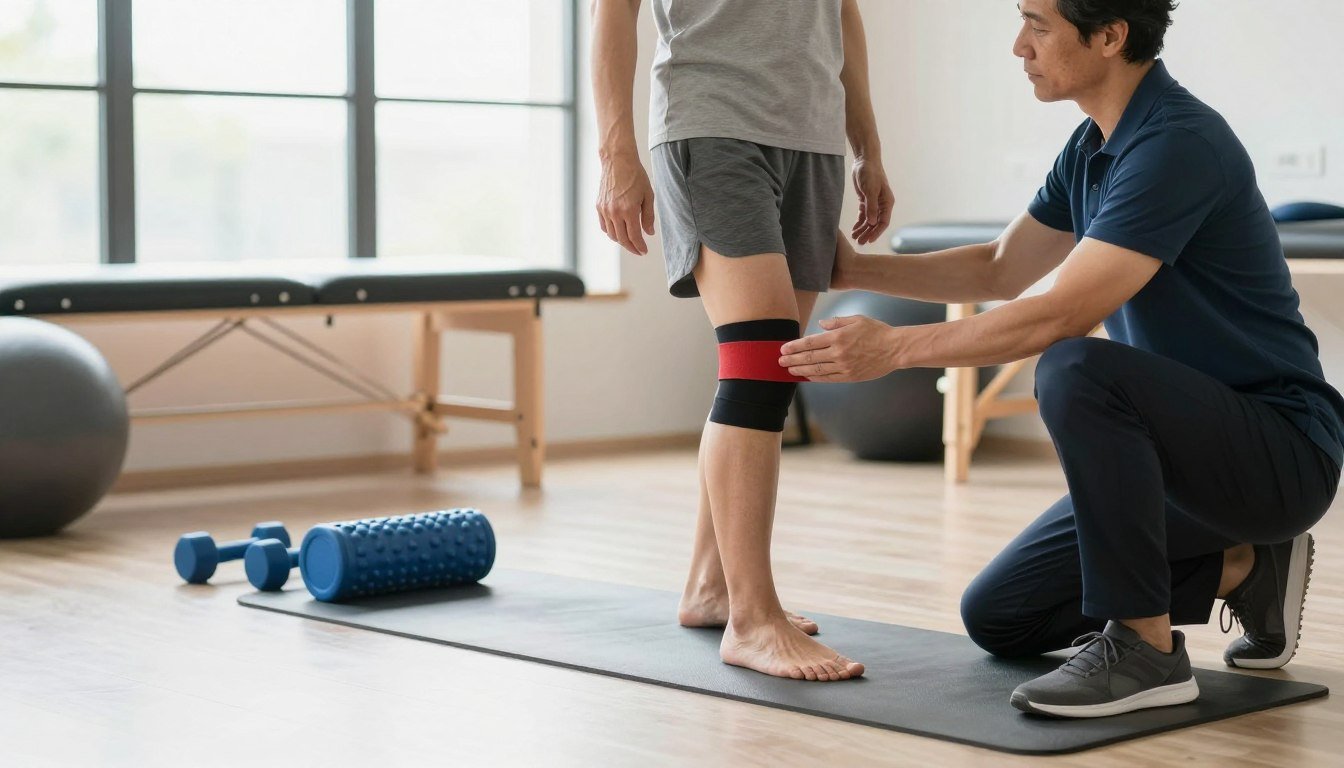
A counterforce strap or light compression can reduce strain during work. Use bracing and compression as a temporary aid, not a replacement for progressive strengthening.
Medicines and when I consider an injection
Anti-inflammatory medicines such as ibuprofen or naproxen may help short-term. I check your stomach, blood pressure, and kidney history before recommending them.
I consider a corticosteroid injection only when pain severely limits rehab and other measures fail. The goal is short-term relief to allow focused therapy, not a standalone cure.
| Measure | Purpose | When to use |
|---|---|---|
| Relative rest | Reduce harmful load while keeping movement | When activities cause sharp pain |
| Ice (10–15 min) | Short-term pain relief after activity | After aggravating tasks or before therapy |
| Bracing/compression | Lower tendon strain during work | Early phase, during repetitive tasks |
| Anti-inflammatory medicines | Control pain and inflammation | Short course after medical review |
| Corticosteroid injection | Break severe pain to enable rehab | Selected cases where rehab is blocked |
Tennis elbow exercises I prescribe for safe recovery
I teach a short set of targeted movements that calm pain, restore wrist motion, and then build forearm strength safely.
Begin with gentle stretches and range-of-motion work, then add static holds, light dynamic lifting, and functional tasks such as towel twists and grip work. I coach each move like I would in clinic and warn: sharp pain is a stop signal; mild discomfort is acceptable.
Key movements and starting doses
- Wrist extension stretch (palm facing down): hold ~15 seconds, repeat up to 3 times.
- ROM circles: slow circles up to 10 each direction to reduce stiffness.
- Isometric wrist extension on a table: hold ~15 seconds, up to 5 repeats.
- Grip squeezes with a ball, towel, or putty: hold ~15 seconds, up to 5 repeats.
- Isotonic wrist extension (5–10 reps): start without weight; progress to light weight or a dumbbell as tolerated.
- Resisted supination/pronation and towel twists: 5–10 reps each, avoid end-range motion.
| Exercise | Purpose | Start dose | Safety cue |
|---|---|---|---|
| Wrist extension stretch (palm facing down) | Reduce tightness at back of forearm | 15 sec × up to 3 repeats | Keep elbow straight; stop if sharp pain |
| Isometric wrist extension on table | Build tendon tolerance without movement | 15 sec × up to 5 repeats | Forearm supported on table; gentle effort |
| Grip squeezes (ball, towel, putty) | Improve grip strength and endurance | 15 sec × up to 5 repeats | Smooth squeeze, not maximal force |
| Isotonic wrist extension / towel twists | Dynamic strength and functional control | 5–10 reps × 1–3 sets | Avoid end-range bend wrist positions; use light weight |
Technique cues that prevent flare-ups during rehabilitation
I focus on simple, repeatable cues that patients can use at home or with a therapist. Good form protects the tendon and builds confidence while you regain strength and function.
Palm position and neutral wrist alignment
Keep the palm in line with the forearm. Do not let the wrist bend up or down during a lift. A neutral wrist position reduces strain on the forearm muscles and the tendon attachment at the elbow.
Controlled movement and tempo
Move slowly: a deliberate lift and a slow lower. Avoid jerky or sudden motion that spikes pain. If a movement causes sharp pain, stop and reduce load or range.
- Start without weight or use a very light weight for the first sets.
- Only increase weight when you can complete all reps without more pain the next day.
- Stop short of end-range pain in either direction and restore range gradually over time.
| Focus | How I check it | When to seek help |
|---|---|---|
| Wrist alignment | Hand in line with forearm during lifts | If pain increases despite reducing weight |
| Palm orientation | Keep palm facing neutral for most drills | If night pain or lingering soreness occurs |
| Load and tempo | Slow reps, light initial weight | If sharp pain or weakness appears |
I encourage supervised sessions when possible. A physiotherapist can correct small faults in position, grip, and movement that make a big difference over time.
Progression plan from pain relief to strength and return to activity
A clear, staged plan helps move from pain control to reliable strength without sudden setbacks. I use phases that protect the tendon early, then add load as symptoms allow.
Loading the tendon safely with isometric, eccentric, and concentric work
I begin with isometrics to reduce pain and build tolerance. These are static holds that do not move the wrist but increase load capacity.
Next, I add eccentric work so the tendon learns to absorb force while lengthening. Finally, concentrics train the muscle to generate force for everyday tasks.
How a physiotherapy-guided plan adjusts for symptom irritability
With high irritability I cut weight, reps, and range. On low-irritability days I increase the load a little, not suddenly.
A physiotherapist tracks pain after sessions and adjusts tempo, sets, or progression. This prevents flare-ups and keeps recovery steady.
When you can return to tennis, gym, or manual work
Return decisions are milestone-based, not calendar-based. I look for improved grip without sharp pain and no next-day increase in soreness.
For racket sport or gym work start with short, low-intensity sessions, tweak technique to avoid risky grips, and slowly raise volume. For manual trades use pacing, brief braces, and rotate tasks to cut repetitive strain.
| Phase | Purpose | Progression sign |
|---|---|---|
| Early protection & isometrics | Lower pain, build tolerance | Pain reduced during holds; daily tasks easier |
| Eccentric loading | Teach tendon to absorb load | Controlled pain, no worse next day |
| Concentric & functional loading | Restore power for work/sport | Full range, stronger grip, stable symptoms |
When to see an orthopedic doctor for tennis elbow treatment
Persistent outer arm discomfort sometimes hides a problem that needs more than self‑management. If pain, weakness, or function do not improve after careful home care, an in-person review is wise.

Red flags that need prompt review
- Sudden severe weakness or inability to lift or grip.
- A “pop” sensation, rapidly worsening pain, or marked swelling.
- Fever, spreading redness, or pain that persists despite relative rest and rehab.
Why persistent symptoms may need investigation
Sometimes symptoms come from a different injury such as nerve irritation or joint disease. Other times the tendon change is advanced and needs closer supervision.
What I do in clinic and possible next steps
I reassess the elbow and nearby joints, review workload and technique, and check if you are overloading the tendon unknowingly. I may recommend supervised therapy or modify bracing and activity.
| Concern | Investigation | Possible escalation |
|---|---|---|
| Unclear diagnosis | Ultrasound | Targeted treatment plan |
| Persistent pain | Clinical review | Structured physical therapy |
| Severe limitation | Imaging / specialist review | Considered injection or referral |
I may consider a corticosteroid injection for short‑term relief to allow focused therapy, but only when appropriate. My goal at Boss Multispeciality Hospital is safe, evidence‑based recovery with the least invasive treatment necessary.
Conclusion
A clear plan that calms symptoms first, then builds strength, is the safest route back to activity. Most cases of tennis elbow improve with early pain control (relative rest, ice) and progressive tendon loading under guidance.
Focus on good form: gentle stretches, controlled wrist work on a table, grip work with a towel or ball, and a gradual return to sport or work. Think about the whole body—desk posture, tool grip, and training volume—to avoid repeat flare-ups.
Recovery time varies by severity, workload, and consistency. If your elbow pain is severe, persistent, or you want a tailored plan, book an appointment with me, Dr. Lokesh Chowdary R (MBBS, MS – Orthopaedics) at Boss Multispeciality Hospital, Magadi Main Road, Bangalore (near Kamakshipalya and RR Nagar) for focused assessment and treatment.