
Groin Pull Recovery: Exercises and Timeline for Athletes
Have you ever wondered how soon you can safely return to sports after a muscle strain and what the smart timeline really looks like?
I am Dr. Lokesh Chowdary R, MBBS, MS – Orthopaedics, and I write from my practice as Managing Director and Senior Orthopedic Surgeon at Boss Multispeciality Hospital on Magadi Main Road, Bangalore.
In this short guide I explain what “groin pull recovery” means for an athlete: reducing pain, protecting healing tissue, rebuilding strength, and returning to play safely.
Exact time depends on how severe the tear is and where it sits, so I avoid one-size-fits-all promises. Many athletes do well with early self-care and a structured physiotherapy plan rather than complete rest.
I will outline how to assess symptoms, when to see a doctor, the first 48-hour approach, staged exercises, and practical return-to-sport criteria.
Stay active in the right way to keep fitness without overloading the injured area. If you are in Bangalore and symptoms persist, you can visit Boss Multispeciality Hospital for an orthopedic assessment.
Most cases improve with conservative care and guided rehab; surgery is uncommon and only for specific situations.
Understanding a Groin Pull and the Adductor Muscles
What I mean by a groin strain in athletes
In sport, inner-thigh strains often start with a sudden load when the leg is already stretched. I call a groin strain an overstretch or partial tear of the inner-thigh groin muscles, most commonly the adductors.
Muscle groups involved
The three groups I watch for are the adductor muscles, the iliopsoas, and the lower abdominal muscles. The adductor group pulls the leg inward and stabilizes side-to-side movement.
| Muscle Group | Location | Role & Common Mechanism |
|---|---|---|
| Adductor muscles | Inner thigh, attach to pelvis | Pull leg inward; injured by forceful contraction while lengthened (cuts, side steps) |
| Iliopsoas | Front of hip, from spine to femur | Hip flexion; strained during sprint starts or high kicks |
| Lower abdominal muscles | Front pelvis, near adductor tendons | Stabilize pelvis; can add load to adductors when fatigued |
How strain happens in play
A typical mechanism is a sudden, forceful contraction while the muscle is lengthened—reaching for a ball, a sprint take-off, or a quick direction change.
Fatigue, tight hips, or prior injury raises the chance of repeat groin strains. I advise athletes to stop on sharp pain; pushing through can worsen the tear and extend a later recovery.
Symptoms That Help Me Grade the Injury
Symptoms after an inner-thigh strain give me clear clues about the severity and the safe level of activity. I note when pain starts, how bad it is, and what movements trigger it.
Common signs I check
- Groin pain and inner-thigh tenderness — worse with squeezing the legs or lifting the knee.
- Swelling and bruising — these can appear within hours and suggest tissue damage.
- Weakness — if the muscle cannot push or hold, the risk of compensation rises.
- Difficulty bearing weight on the leg — may limit running or cutting immediately.
What a snap or “pop” means
A popping or snapping sensation at the moment of injury often points to a more significant tear. If this is followed by sharp pain and loss of function, I consider urgent clinical review.
Grading and activity guidance
| Grade | Key signs | Practical advice |
|---|---|---|
| 1 (Mild) | Minor pain, little weakness, no major swelling | Walk carefully; avoid sprinting. Monitor for worsening in 24 hours. |
| 2 (Moderate) | Moderate pain, strength loss, possible bruising | Stop high-load sport; rest, protect the area; consider brief crutch use for 24–48 hours. |
| 3 (Severe) | Severe pain, major weakness, noticeable swelling/bruising | Seek prompt assessment; expect significant activity restriction and imaging if needed. |
I tell athletes that soreness after training is different from a true pulled groin. With a real strain you feel pain during specific tests, not just later the same day. Increasing swelling or bruising over the next day is a red flag — stop playing and get evaluated.
Getting the Diagnosis Right and Ruling Out Other Problems
A careful clinic assessment tells me whether the problem is a muscle issue or something that needs different treatment.
I begin with a focused history and hands-on exam. I check hip range of motion, test adductor strength, and watch which leg movements reproduce pain. I never force a movement; I note pain level and exact location.

How I decide on imaging
If I suspect bony injury or an avulsion, I order an X-ray. If weakness is marked or pain persists despite rehab, I may request an MRI to look for a significant tear or tendon involvement.
When a lump changes the plan
A palpable lump that enlarges with coughing or straining suggests an inguinal hernia. That finding may also prompt surgical referral.
- I aim to confirm a groin strain and rule out other causes that need different care.
- Activity advice depends on the diagnosis — returning to sport with an undetected hernia or major tear can worsen outcomes.
- Most athletes do not need extensive tests; targeted imaging at the right time prevents repeated setbacks.
| Condition | Key sign | Usual management |
|---|---|---|
| Muscle strain | Localized inner-thigh pain, pain on resisted adduction | Conservative rehab, modify activity |
| Inguinal hernia | Palpable lump, changes with cough/strain | Surgical review if symptomatic |
| Bony or tendon injury | Point tenderness, possible radiographic change | X-ray or MRI; specialist opinion |
Groin Pull Recovery in the First 48 Hours: What to Do Immediately
Acting correctly in the opening 48 hours can cut swelling and stop a small tear becoming worse. I use a simple RICE plan to protect tissue while you rest and let early healing begin.
Rest and smart activity modification
Rest does not mean total shutdown. I tell athletes to stop sprinting, cutting, kicking, and heavy lifting for at least 48 hours.
Keep gentle walking and everyday movement as tolerated so your body does not stiffen.
Ice pack basics
Use an ice pack for 10–15 minutes every hour on day one, then every 3–4 hours for the next 2–3 days. Always wrap the pack in a towel to protect skin from cold injury.
Do not place ice directly on skin. Short, frequent sessions limit bleeding and pain without harming tissue.
Compression and elevation
Apply an elastic wrap or compression shorts to reduce swelling and give support. Elevate the limb above heart level with pillows while lying down to further limit swelling.
Pain relief and medication
I often advise acetaminophen for pain and consider NSAIDs like ibuprofen for inflammation, but avoid overuse. Do not take NSAIDs for more than about 10 days without medical advice.
Common mistakes to avoid
- Returning to high-intensity sport within 48 hours.
- Using heat, aggressive massage, or forceful stretching early.
- “Testing” the area with sudden lateral moves.
| Action | Why | Timing |
|---|---|---|
| Rest / modify activity | Limits further tear and bleeding | First 48 hours |
| Ice pack + towel | Reduces pain and swelling safely | 10–15 min hourly day 1; then 3–4 hourly |
| Compression & elevation | Controls swelling and comfort | Continuous while upright and when resting |
Expect less pain at rest and easier walking within 48 hours. See me if bruising or swelling worsens, you cannot bear weight, or sharp pain persists.
Physiotherapy-Guided Exercises for Each Stage of Healing
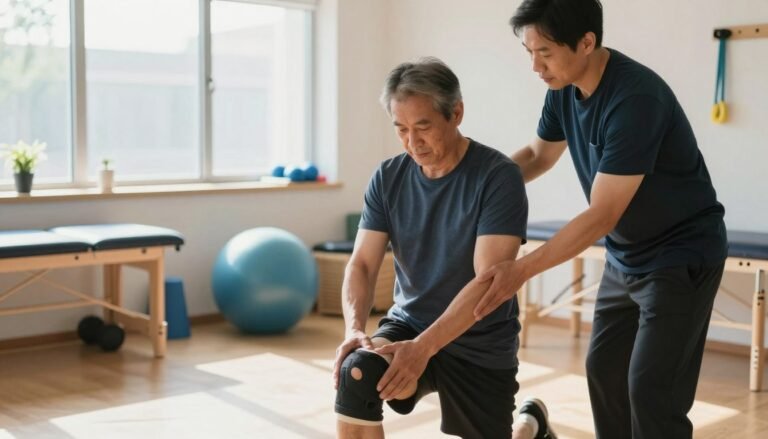
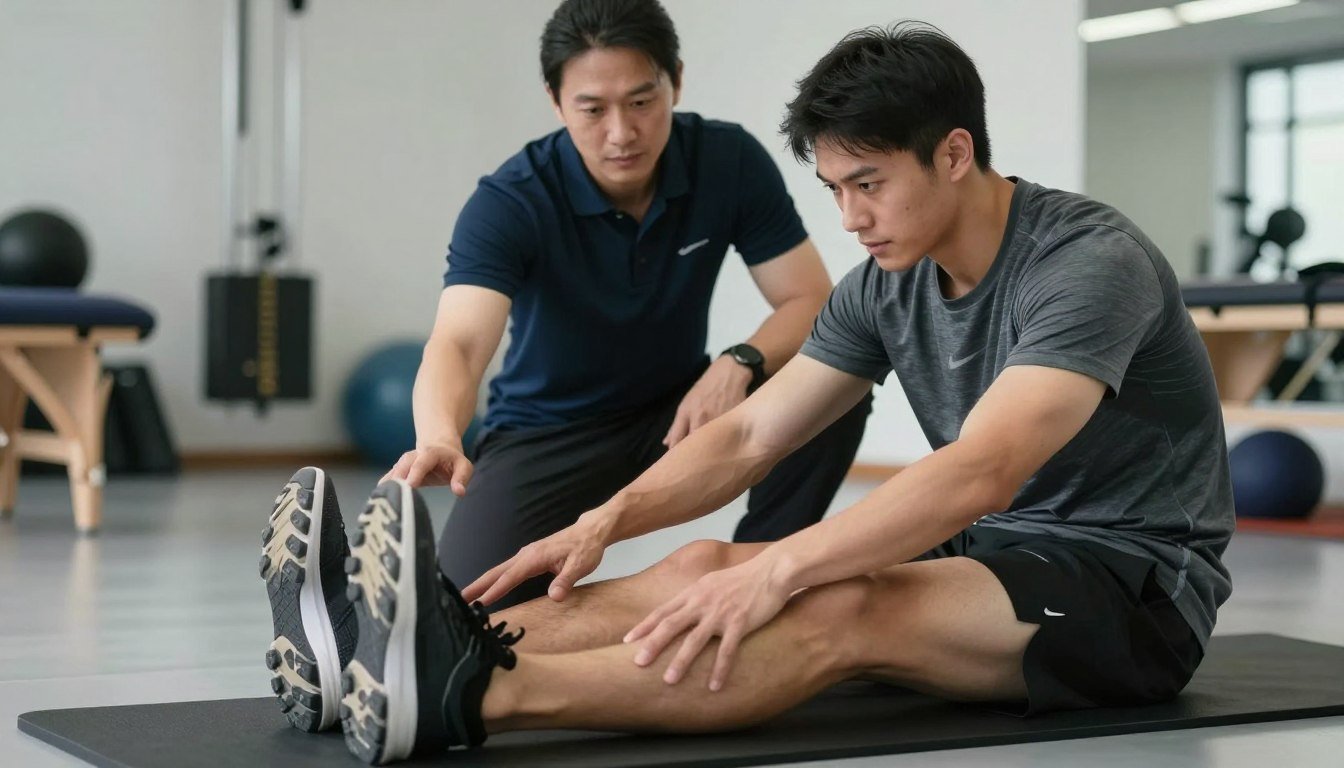
I guide athletes through progressive physiotherapy steps that protect healing tissue while rebuilding function. I usually begin movement after the first 48 hours, once pain is settling, swelling is controlled, and walking feels easier. Pain should be your guide for when to stretch or load the area.
Early mobility
Start with easy leg slides and supported hip and knee bends to restore gentle motion. These exercises limit tension on the injured muscle while reducing stiffness.
Light strengthening
Isometric adductor work is useful: place a ball or rolled towel between your knees, squeeze and hold ~30 seconds, rest, then repeat. This builds strength with minimal movement.
Progressive load and control
When pain stays low, add straight leg raises (15 reps × 2 sets) and bridges with a ball squeeze (hold 10 seconds; 6–8 reps). Move slowly and stop if discomfort rises.
Stability and flexibility
Include side-lying leg lifts and standing band hip adduction (10–12 reps) for pelvis control. Finish with a gentle hip adductor stretch and a hamstring wall stretch, holding 15–30 seconds and repeating three times.
I decide reps and sets conservatively. If an exercise causes sharp pain, increased swelling, or limp the next day, stop and seek therapist review. Progress only when you can complete sessions with steady control.
Recovery Timeline for Athletes and Safe Return-to-Sport Criteria
A staged return based on function, not a date, protects your long-term performance.
Many mild to moderate strains improve steadily over about 4–8 weeks. That time frame depends on the grade of the injury, where the tear sits, and how consistently you follow rehab.
Why some tears take longer
High adductor tendon tears heal more slowly than mid-muscle strains. Tendons need longer to regain load tolerance, so I often expect 12–16 weeks for these cases.
Functional checks before return
- Pain-free walk over several minutes.
- Jogging with no increase in soreness the next day.
- Controlled sprinting and sport-specific running drills.
- Single-leg jumps and cutting only after strength and motion match the other side.
Protect fitness with cross-training
Maintain conditioning with low-impact activity such as swimming, easy cycling with low resistance, or upper-body conditioning. These options may also help match aerobic load without stressing the thigh muscles.
Red flags that need review
Seek assessment if pain returns each time you increase intensity, if a limp persists, or if bruising and swelling grow. Lack of progress over 1–2 weeks despite correct rehab may mean a different problem or need for imaging.
Conclusion
Focus on function rather than dates when you are rebuilding strength after a muscle strain. Most athletes with a minor groin strain do well with early rest, correct use of ice, and a staged strengthening plan guided by a physiotherapist.
Watch symptoms closely — increasing pain, growing swelling, or a new lump need a prompt doctor review. A pulled groin is not the only cause of inner-thigh pain; ruling out a hernia or tendon injury matters for safe return to sport.
Your body, sport demands, and the injury location will influence the timeline. If progress stalls, please book an appointment with me, Dr. Lokesh Chowdary R, at Boss Multispeciality Hospital, Magadi Main Road (near Kamakshipalya and RR Nagar), for a focused orthopedic assessment and personalised plan.