
Ankle Sprain vs Fracture: How to Tell the Difference
I am Dr. Lokesh Chowdary R, MBBS, MS – Orthopaedics, and I see this question daily: after a twist or fall, is it “just a sprain” or a break, and why does that difference matter?
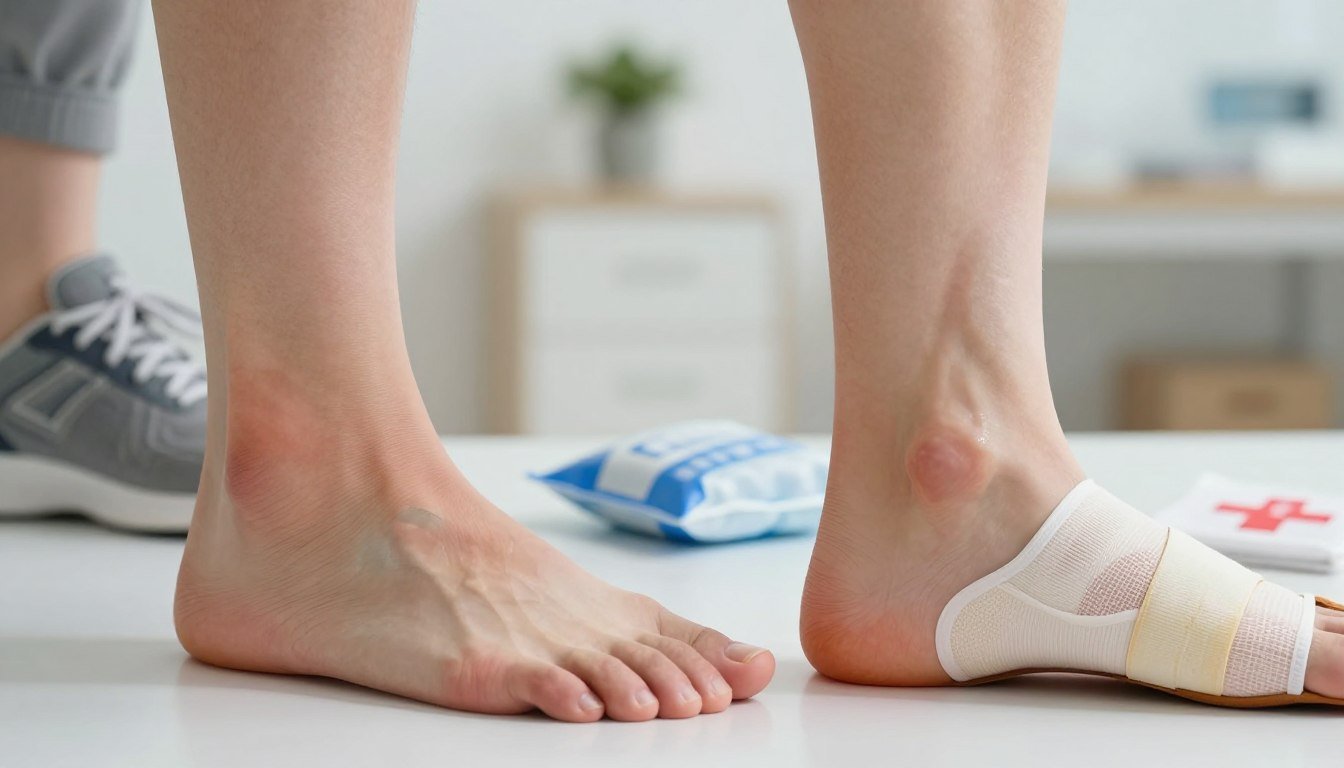
In my hospital on Magadi Main Road at Boss Multispeciality Hospital, patients often describe similar signs: pain, swelling, bruising and trouble bearing weight. In the first 24–72 hours these signs overlap and self-diagnosis is unreliable.
In this short guide I will explain the practical signs I use to compare the two, what to do at home immediately, and when you must seek urgent evaluation. My approach favors careful diagnosis, conservative protection, and physiotherapy-led recovery when appropriate.
Remember: most cases settle with correct care, but severe pain, obvious deformity, numbness or inability to walk needs prompt assessment and imaging to avoid missed injuries or repeat problems.
Why these ankle injuries are so easy to mix up
A simple slip or a bad landing can cause the same early signs, which is why people often get confused. The joint has many bones, ligaments and soft tissues packed close together. When one structure is hit, nearby parts react too.
Common causes I see in clinic
Most cases follow a similar story: a twist on uneven ground, missing a step on stairs, slipping in the bathroom, landing awkwardly during football or badminton, or falling from a scooter. These everyday events are common across India.
Shared symptoms that confuse people
Both sprains and fractures produce an early inflammation response: swelling, bruising and local tenderness. Pain level alone is not reliable. A severe sprain can hurt as much as a small break, and some minor breaks still allow walking.
- Close anatomy means different injuries look alike.
- Continuing activity often increases swelling and hides the original pattern.
- To tell them apart I focus on the exact mechanism, where the pain is, stability, and whether weight-bearing is possible.
| Feature | Common cause | Early sign | Clinical hint |
|---|---|---|---|
| Ligament injury | Twist on uneven ground | Swelling, bruising, tenderness | Pain over soft tissue; instability |
| Bone break | High force fall or awkward landing | Swelling, bruising, tenderness | Pain over bone; possible deformity |
| Mixed injuries | Sports or scooter falls | Same early symptoms | Needs imaging for clarity |
What I mean by an ankle sprain
When the foot rolls inward, the support that keeps the bones aligned often takes the hit. A sprain is injury to a ligament — the tough band that links bones across a joint and stops excess movement.
I describe grades in simple words so patients understand recovery. Grade 1 means the ligament is stretched. Grade 2 is a partial tear. Grade 3 is a full tear and needs stronger support and a longer rehab.
Typical injuries happen when the foot inverts during sports, steps, or slips. People often feel tenderness on the softer outside, swelling that grows over hours, and a wobbly or “giving way” sensation.
- Early protection with a brace or boot limits further damage.
- Most cases heal without surgery when supported and guided by physiotherapy.
- Strength and balance training reduce the chance of repeat problems.
| Grade | Findings | Typical recovery |
|---|---|---|
| Grade 1 | Ligament stretched, mild tenderness | 2–4 weeks with support and exercises |
| Grade 2 | Partial tear, more swelling, instability | 4–8 weeks; brace and physiotherapy |
| Grade 3 | Complete tear, marked looseness | Often longer; specialist review and structured rehab |
What I mean by an ankle fracture
What matters most in a broken bone is whether the pieces stay in their normal line. A true fracture is a break in one or more bones around the joint, and severity depends on alignment and joint involvement—not only pain.
Nondisplaced versus displaced injuries
In nondisplaced injuries the bone fragments stay well aligned. Healing often proceeds with a cast or boot and careful weight guidance.
In displaced injuries the normal shape is disturbed. These unstable breaks may need reduction to restore alignment and protect joint surfaces.
Common higher-force causes I see
Many urgent cases follow falls from height, road-traffic accidents, heavy-load twists, or high-impact sport. These events raise the chance of unstable breaks and joint involvement.
- Falls from height or stairs
- Scooter and road-traffic collisions
- High-impact sport or heavy-load twists
| Type | Alignment | Typical management |
|---|---|---|
| Nondisplaced | Bone pieces aligned | Immobilize, monitor healing |
| Displaced | Fragments out of line | Reduction ± surgery for stable alignment |
| Comminuted | Multiple bone pieces | Often needs specialist fixation |
I aim for safe healing with the least invasive option. Timely assessment and correct alignment protect long‑term function and reduce the chance of later arthritis or persistent problems.
Ankle sprain vs fracture: signs that help me differentiate them
I use a short checklist, where it hurts, what you heard, and if you can stand to decide how urgent the problem is.
Where the pain is
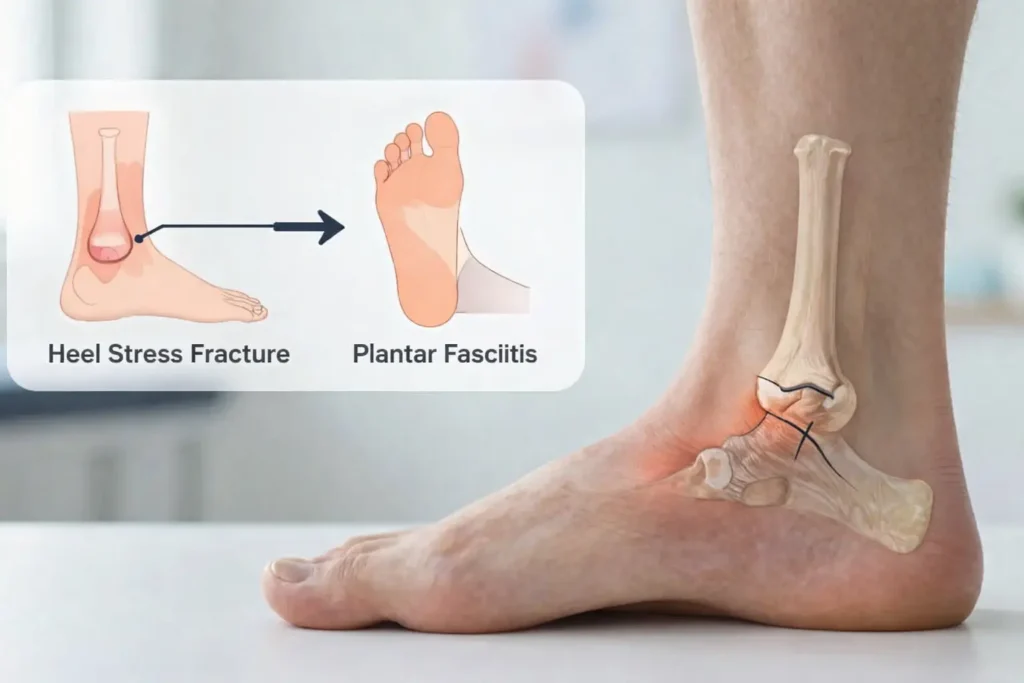
Pain over the bony points makes me more suspicious of a break. Tenderness directly on the bone often needs an X‑ray.
Pain in the softer areas beside the joint usually suggests ligament injury and more soft‑tissue discomfort.
Weight‑bearing and walking
If you cannot put weight at all, or pain spikes when you try, I treat this as a warning sign. Many breaks stop you from standing.
With many ligament injuries, limited walking is possible with support and pain control.
Sound, sensation and appearance
A sharp “pop” can occur with a tear; a “crack” or a grinding feeling raises concern for a break.
Swelling and bruising follow both types, but a crooked shape or visible deformity points to a displaced break.
| Checklist | Suggests | Action |
|---|---|---|
| Pain on bone | Break | X‑ray and urgent review |
| Soft‑tissue tenderness | Ligament injury | Brace, rest, follow‑up |
| Can’t put weight | Possible break | Protect, image, specialist care |
- Numbness, cold foot, or major deformity — seek immediate care.
- Remember: a ligament tear and a bone break can occur together; when unsure, protect the area and get evaluated.
How I confirm the diagnosis at the hospital
My first step is to listen closely to exactly what happened and what you felt immediately after the incident. That short history often points to the likely structure injured and tells me whether you should seek medical attention right away.
Next I perform a focused physical exam. I check swelling, bruising and any visible deformity. I press specific bony points to find pinpoint tenderness. I assess gentle stability only when it is safe, because aggressive testing can worsen damage.
When safe, I use simple functional tests. I ask you to move the foot through a small range and, if pain allows, take a couple of supported steps. These steps help me gauge function and urgency.
X‑ray is usually the first imaging I order to confirm or rule out breaks and to check alignment. I consider MRI when ligaments or soft tissue detail is needed, CT for complex bone patterns, and bone scan for tiny or occult problems.
| Step | Purpose | What I look for | Next action |
|---|---|---|---|
| History | Mechanism and symptoms | How it happened; immediate pain or sound | Plan exam and imaging |
| Physical exam | Localise tenderness | Swelling, deformity, pinpoint pain | Protect limb; order X‑ray |
| Functional testing | Assess stability and function | Range of motion, safe steps | Decide weight‑bearing plan |
| Advanced imaging | Detail soft tissue or complex bone | MRI for ligaments; CT for patterns | Targeted treatment to prevent chronic problems |
At Boss Multispeciality Hospital I combine these steps into a clear pathway so patients receive prompt, accurate care. Early, precise diagnosis reduces the chance of long‑term problems and helps you return to normal activity safely.
Treatment options I recommend for sprains and fractures
Protecting the area right after an injury makes later treatment simpler and recovery smoother. I start with measures that are safe whether it is a ligament injury or a broken bone.
Immediate care that’s safe for both
I advise rest, apply ice for 15–20 minutes at a time, use a snug compression bandage, and keep the limb elevated above the heart. Protect the joint from further twisting with a temporary brace or padded support.
Care for a sprained ankle
For moderate injuries I prefer a removable brace or walking boot, short‑term pain control, and an early plan for graded activity. Guided therapy begins with range of motion, then strength and balance work before sport or heavy work.
Care for a broken ankle
When bones are aligned, immobilization with a cast or boot is often enough. I may advise limited or non‑weight‑bearing for several weeks to allow bone healing. If alignment is poor, reduction or surgery may be needed.
When I consider reduction or surgery
I recommend reduction or fixation when fragments are displaced, the joint is unstable, or alignment cannot be kept in a cast or boot. Surgery uses plates, screws, or rods only when necessary to protect long‑term function.
Why physical therapy matters
Therapy is central to recovery. Physical therapy restores motion, builds strength, and improves balance to reduce repeat injuries. Most patients do best with structured rehab rather than a rushed return to activity.
| Situation | Typical treatment | Goal |
|---|---|---|
| Mild soft‑tissue injury | Brace, rest, therapy | Control pain, regain function |
| Aligned bone break | Cast or boot, limited weight | Stable healing |
| Displaced break | Reduction ± surgery | Restore alignment |
Recovery timeline, rehabilitation, and long-term concerns
Healing moves in clear steps: reduce swelling, restore motion, rebuild strength, and retrain walking. I use simple time ranges to help patients plan work, travel, and daily tasks.
Healing time ranges
Mild ligament injuries often improve in 1–3 weeks. Moderate tears usually need 3–6 weeks. Severe tears can take 3–6 months.
Many bone breaks heal in about 6–8 weeks or up to 2–3 months. After surgery recovery can extend from 3 months to a year depending on the repair and the person.
Physiotherapy-guided milestones
Early (days–weeks): control swelling and bruising, protect the limb, begin gentle range of motion.
Middle (weeks): build strength, reduce discomfort when putting weight, progress walking patterns.
Late (weeks–months): balance training, sport‑specific steps, return to heavy work when strength and confidence return.
What delays recovery
Returning too early, missed breaks that never got stabilized, and poor immobilization slow healing. Smoking, diabetes, and poor nutrition also affect time to heal.
Long-term outlook I discuss with patients
Repeated ligament injury can lead to chronic instability. When a joint is involved, the risk of arthritis rises later in life. These risks are real but often reduced by good rehab.
| Injury severity | Typical healing time | Key early goal | Usual milestone |
|---|---|---|---|
| Mild soft‑tissue | 1–3 weeks | Control swelling | Full motion, light walking |
| Moderate tear | 3–6 weeks | Regain range | Strengthening, partial weight |
| Severe tear or complex break | 3 months–6 months (or longer) | Protect and align | Balance, sport/work readiness |
| Operative recovery | 3 months–12 months | Safe weight bearing | Return to normal activity with precautions |
A realistic note I tell every patient: recovery differs for each person. Time, healing quality, and final function depend on age, bone health, existing conditions, and how closely you follow rehab steps. My goal is safe, lasting recovery so you can trust the joint on stairs, uneven ground, and during sport.
Conclusion
The best step after a twist or fall is to seek medical evaluation rather than guess. Early review helps confirm whether the problem is mainly ligament or bone, since symptoms often overlap.
Watch for clear clinic clues: bone‑point tenderness, severe pain when you try to bear weight, a grinding or cracking feeling, visible deformity, or numbness in the foot. These signs need prompt X‑ray and attention.
Many injuries heal well with simple protection, guided care, and structured physiotherapy. Recovery time varies by severity and how closely you follow rehab plans.
If you cannot put weight, have deformity, persistent swelling beyond 1–2 weeks, or worsening symptoms, please seek medical attention promptly. For an orthopaedic assessment, you can book an appointment or visit me at Boss Multispeciality Hospital on Magadi Main Road, near Kamakshipalya and RR Nagar.