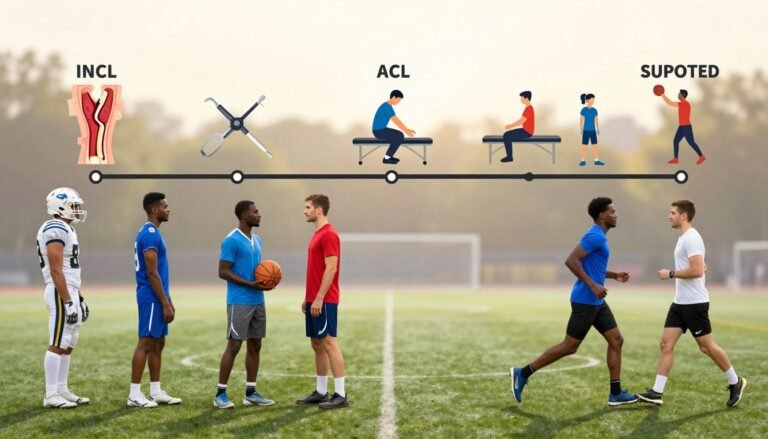

Meniscus Tear Recovery Without Surgery
Can most knee injuries heal well without an operation, or do we rush to the blade too soon?
I’m Dr. Lokesh Chowdary R, MBBS, MS – Orthopaedics, Managing Director and Senior Orthopedic Surgeon at Boss Multispeciality Hospital on Magadi Main Road, Bangalore.
Let me explain what a meniscus tear is, why it causes knee pain, and what “recovery without surgery” looks like in daily life.
Every case is different. The type and location of the damaged cartilage, your age, activity level, and how long symptoms have lasted shape the plan.
In my clinic we take a clear path: history, focused examination, imaging when needed, then a tailored plan that favors non-surgical care first.
Many patients improve with early protection, guided physiotherapy, and progressive strengthening. Surgery is reserved for specific patterns that cause locking or instability.
Understanding your knee joint and the meniscus
Picture your knee as a busy junction where the thigh bone, shin bone, and kneecap meet and work together. I explain this so you can see how structure links to symptoms and therapy.
The three bones
The femur (thigh bone) sits above, the tibia (shin) below, and the patella (kneecap) sits in front. These three bones form the knee joint and allow bending, straightening, and small rotations.
What the meniscus is and why you have two
The meniscus is a C-shaped piece of rubbery cartilage that sits between the femur and tibia. You have two menisci in each knee — one on the inside and one on the outside — to give balanced support.
How the meniscus helps your knee
- Distributes weight so no single spot bears too much force, lowering peak pressure.
- Acts as a shock absorber when you walk, run, or climb stairs.
- Improves stability during twisting and helps the bones glide smoothly with less friction.
Blood supply is limited in parts of the meniscus, so areas near the edge heal better than the inner zones. That’s why location matters when I plan treatment.
How meniscus tears happen and why symptoms can worsen after a day
Many knee problems start with a small twist during sport or a routine movement at home. I see this often in clinic. A planted foot with a turning body can cause a sudden tear even without a fall.
Common causes
- Twisting on a slightly bent knee while the foot is fixed.
- Sudden direction changes in sports and hard landings after a jump.
- Side impact to the knee or awkward steps during daily tasks.
Degenerative tears in older adults
In older people, wear-and-tear makes cartilage fragile. A small twist or routine motion can cause tears over weak tissue.
Typical symptoms and delayed swelling
Common signs are side knee pain, swelling, stiffness, popping, limping, and a sense of giving-way. Often pain and swelling increase after 24–48 hours because inflammation builds up once the initial adrenaline fades.
When the knee locks
Large or unstable tears can catch inside the joint and block straightening. If the knee locks, or if the injury followed a heavy trauma, we must also consider associated ligament problems such as an ACL issue. Don’t ignore locking or persistent giving-way — these are red flags that need prompt assessment.
Getting the diagnosis right before choosing treatment options
Before choosing any treatment, I make sure we have a clear diagnosis of your knee problem.
My clinic exam: what I look for
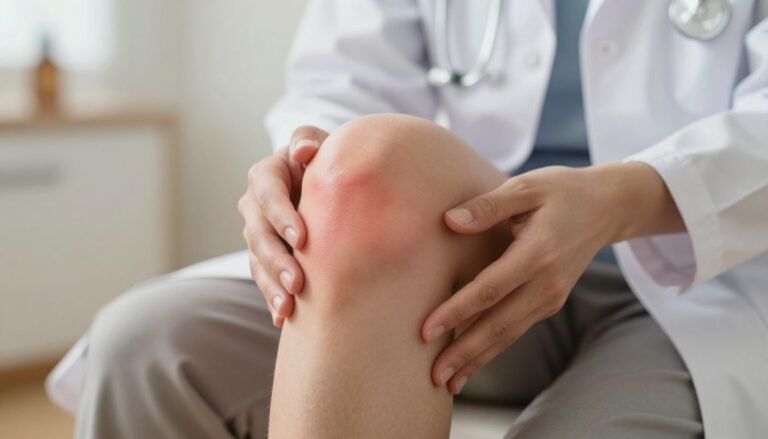
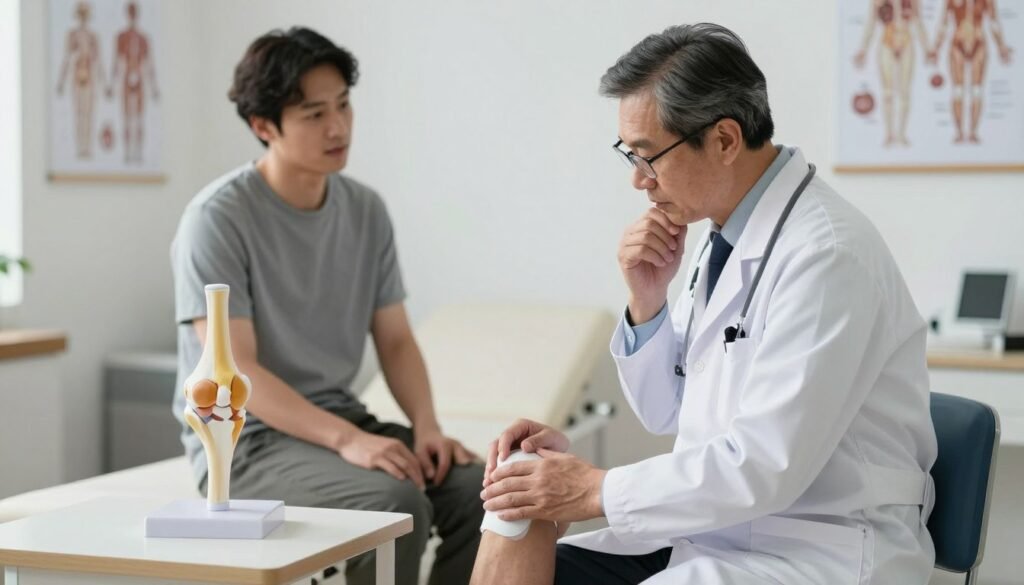
I check for swelling, range of motion, and exact points of tenderness. I test stability and specific movements that bring back the pain.
I compare the injured side with the other knee. This helps me tell what is local to the joint versus a referred problem.
Imaging for clarity
An MRI gives a clear view of cartilage, ligaments and bone when I need detail. Ultrasound helps with quick checks for fluid or surface problems.
Imaging is not only about seeing a torn meniscus. It also looks for other injuries that change the plan.
Why type and location matter
- Blood supply varies, so some areas heal better than others.
- Common patterns include longitudinal (bucket handle), horizontal (flap), radial (parrot beak), and complex tears.
- A stable small tear often suits conservative care; a displaced or locking type may need prompt surgical review.
I explain options to patients clearly and use exam plus imaging to guide the next step. As a doctor I prefer conservative care when it is safe and likely to work.
Meniscus tear recovery with non-surgical care
Early protection, sensible pain control, and targeted rehab can help many patients avoid surgery.
When non-surgical treatment is realistic — and when it may not be
I expect conservative treatment to work when the damage is small, the joint is stable, and symptoms improve with basic care. Many meniscus tears heal or become comfortable with time and therapy.
If you have repeated locking, a large displaced flap, or worsening swelling and pain despite protection, surgical treatment may be required to prevent further damage.
RICE at home: practical steps
Rest from activities that aggravate the knee. Use ice for about 15 minutes every few hours in the first days to reduce swelling and pain.
Apply a compression sleeve or bandage and elevate the leg on a pillow above heart level when resting to help swelling settle.
Safe pain control and early protection
I use anti-inflammatory medicines thoughtfully to reduce swelling and pain. They ease symptoms but do not heal the torn meniscus by themselves.
Protect the knee with activity modification. Use crutches briefly if walking causes bending or twisting that increases pain.
What to avoid and bracing advice
Avoid deep squats, kneeling, sudden stops or turns, and lifting heavy weight while the knee is inflamed. These increase shear forces and can re-aggravate tears.
Rigid braces may sometimes change joint pressure and worsen certain patterns. I often prefer simple compression sleeves and tailor any brace to your specific symptoms and imaging.
If swelling, increasing pain, instability, or locking does not improve with time and sensible home care, return for reassessment rather than pushing through.
Physiotherapy-guided recovery: rebuilding strength and returning to activity safely
Supervised rehab focuses on movement quality so the knee tolerates daily loads and sport drills again.
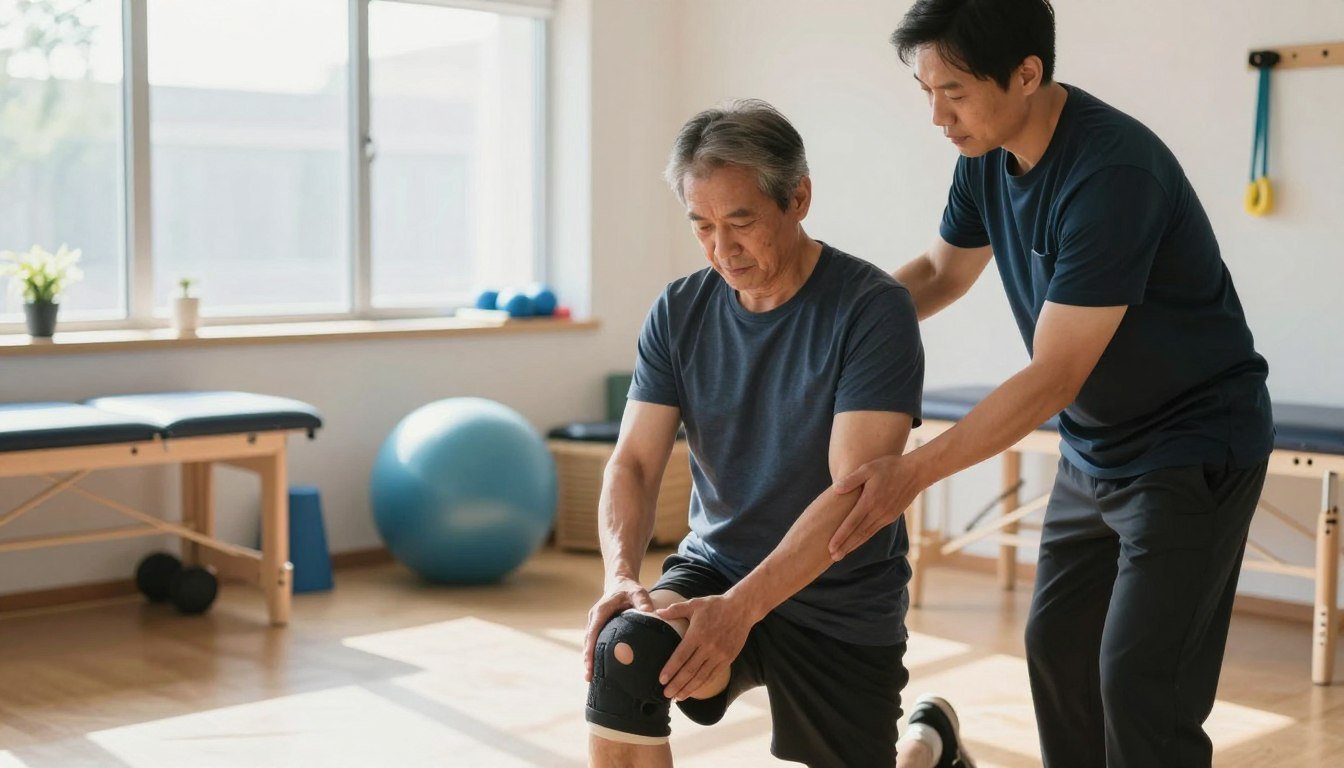
I use physical therapy as the backbone of non-surgical care. A physical therapist guides progressive exercises that retrain key muscles and movement patterns.
Targeted muscle groups
Therapy concentrates on the quadriceps and hamstrings, plus glutes and core control. Strong muscles help align the femur over the tibia and lower harmful twisting forces.
Timelines and factors
Many minor cartilage injuries improve in about 4–8 weeks with guided work and rest. Time varies with age, activity level, how long symptoms lasted, and the type of tear.
Progression and return to sport
I clear patients for full activity when swelling is minimal, range of motion is near normal, single-leg control is good, and sport-specific drills cause no sharp pain.
Red flags
- Persistent swelling or increasing pain
- Repeated giving-way or locking
- Symptoms that worsen despite therapy (may indicate associated ACL or other injury)
Some people use crutches briefly, but the aim is a stepwise return as strength and confidence grow. If warning signs appear, come back for prompt reassessment.
Conclusion
A clear plan and timely check-up often steer people away from unnecessary surgery.
Small cartilage injuries in the meniscus and mild pain often settle with protection, guided physiotherapy, and sensible home care. The type and location of the damaged area, plus blood supply, shape the best treatment.
I acknowledge that some cases need arthroscopic surgery, especially when locking or instability continues despite therapy. Leaving severe problems untreated can harm the joint and raise the risk of long-term damage.
If you suspect a meniscus tear or struggle with knee symptoms, book an appointment with me for a proper orthopedic evaluation at Boss Multispeciality Hospital, Magadi Main Road, Bangalore (near Kamakshipalya and RR Nagar). I will help you choose the safest treatment options for lasting health.