

Understanding Arthritis Flare-Ups: Triggers and Management

Have you ever wondered why well-controlled joint disease suddenly sends sharp pain that disrupts your routine?
I’m Dr. Lokesh Chowdary R, MBBS, MS (Orthopaedics), Managing Director and Senior Orthopedic Surgeon at Boss Multispeciality Hospital on Magadi Main Road, Bangalore. I see many people who feel surprised and worried when symptoms spike despite steady care.
A flare is a real, temporary rise in disease activity that can make medications seem less effective. Causes differ by type and by the stresses a body faces over time.
In this short article I will help you spot early signs, name common triggers, and take safe steps at home. I focus on accurate diagnosis, physiotherapy-guided recovery, and surgery only when truly needed.
Tracking patterns and acting early often limits impact on daily life. My goal is to reduce pain, protect joints, and guide the right support for your individual way forward.
What I mean by an arthritis flare-up and how it feels in the body
Sometimes patients tell me their joints suddenly feel much worse even though nothing obvious changed. I call this a flare when symptoms jump above your usual baseline and limit routine tasks like walking, climbing stairs, or gripping a cup.
Typical symptoms I see in clinic
Common signs include increased pain, visible swelling, and stiffness after rest. The area may feel warm, tender, and slightly weak.
- Sharp or dull joint pain that affects function
- Noticeable swelling or warmth around the joint
- Stiffness that eases with gentle movement
How long and why intensity changes
Some episodes settle in a day or two; others last a week or more. Symptoms change during the day based on activity, sleep, and cumulative load on the tissues.
Flare vs slow progression in osteoarthritis
Osteoarthritis worsens over months and years, but an acute jump can feel like progression. I look for recent overload, joint effusion, and whether short-term measures return you to baseline to tell the difference.
| Feature | Short episode | Progression |
|---|---|---|
| Onset | Sudden | Gradual |
| Swelling | Often present | Less obvious |
| Recovery with rest | Likely | Unclear |
If joint pain or repeated events persist, I recommend evaluation so we can find treatable causes and avoid unnecessary surgery.
How to recognize arthritis flare ups early and track patterns over time
Catching small shifts in how your body feels gives you a real chance to act before symptoms peak.
Early warning signs
Look for dull joint pain, increasing stiffness, reduced range of motion, or unusual daytime sleepiness over several days.
Noticeable fatigue or subtle loss of function in routine tasks is also an early clue. These signs often arrive before full symptom onset.
Why a simple diary helps me adjust your plan
A short daily record gives objective patterns I can use to tailor treatment safely. Note date/time, involved joints, pain level, swelling, morning stiffness, sleep quality, recent activity, food/alcohol, weather, and medication changes.
- Date/time and which joints
- Pain level and swelling
- Morning stiffness duration and sleep notes
- Recent activity and any medication change
When recurrent mild events suggest suboptimal control
If mild events recur, last longer than usual, involve new joints, or reduce your function, we should review your treatment plan. Tracking helps avoid guesswork and supports safer, personalized non-surgical care guided by your doctor.
| What to watch | Diary entry example | When to contact doctor |
|---|---|---|
| Dull joint pain and stiffness | Feb 10, knee, pain 4/10, stiffness 30 min | Repeated 3+ times in 2 weeks |
| Daytime sleepiness or fatigue | Feb 11, unusual tiredness after light activity | New fatigue with changing function |
| Loss of range or swelling | Feb 12, mild swelling, less bend in morning | Lasts longer than your usual days |
Common triggers that can worsen joint pain, swelling, and inflammation
I see predictable patterns of triggers that make joint pain and inflammation worse. Identifying these helps you and me plan safer activity and treatment.
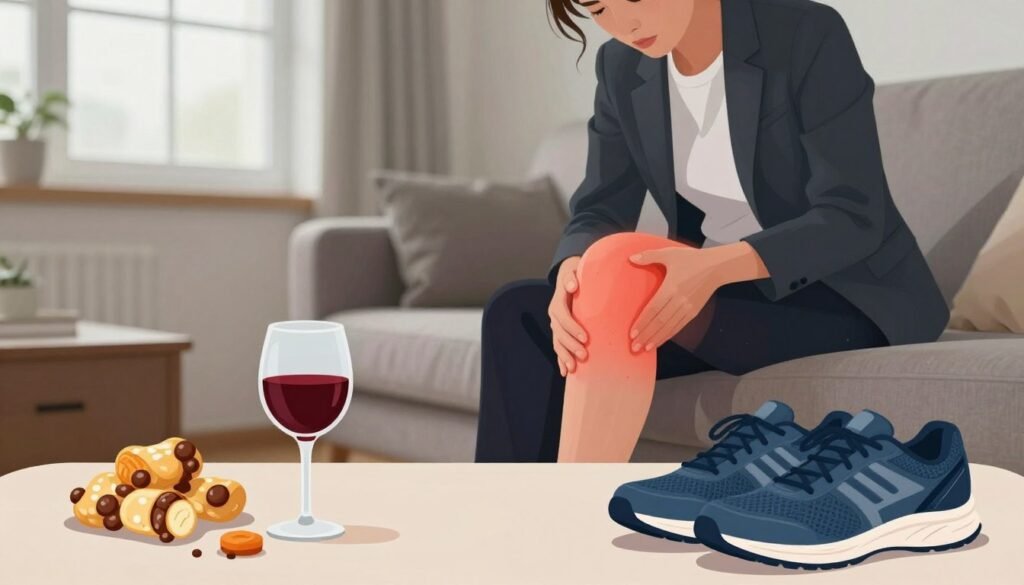
Medication changes or missed doses
Stopping, tapering, or missing medications is a common, fixable cause of breakthrough symptoms. We review any changes before assuming a new problem.
Overexertion, repetitive movement, and trauma
Work strain, repetitive kneeling, sudden spikes at the gym, sprains, or prior fractures often provoke local inflammation. Simple load changes can tip a joint into trouble.
Stress, sleep, weather, weight, foods, and infection
Poor sleep and chronic stress raise pain sensitivity. Cold temperatures and barometric pressure shifts commonly worsen how joints feel.
Weight gain adds pressure to knees, hips, and spine. Some people note certain foods or alcohol precede symptoms; use a diary rather than strict avoidance. Viral illnesses or infections can also time with symptom rises and require careful assessment.
- I start with medication and mechanical causes because they are often reversible.
- Stress reduction (for example, meditation) and sleep hygiene can lower symptom frequency.
- If symptoms are severe, persistent, or accompanied by fever, seek evaluation.
| Trigger | Typical source | What I advise | When to contact me |
|---|---|---|---|
| Medication change | Missed dose, taper, switch | Review plan, avoid abrupt stops | Sudden symptom rise after change |
| Mechanical overload | Work or sport strain, repetitive tasks | Reduce load, physiotherapy | New swelling or loss of function |
| Lifestyle & environment | Stress, poor sleep, cold, weight, foods | Sleep hygiene, meditation, weight plan, diary | Worsening despite self-care |
| Infection or trauma | Flu, strep, sprain, stubbed toe | Medical review, fluids, targeted treatment | Fever, intense pain, rapid swelling |
Trigger patterns by arthritis type I commonly evaluate
Different types of joint disease show distinct trigger patterns that help me choose the right treatment. Correct diagnosis matters because similar symptoms can come from very different causes and need different care.
Rheumatoid arthritis
Rheumatoid arthritis often shows variable inflammation levels. Missed medicines, infection, overexertion, stress, and poor sleep commonly provoke activity rises.
I act quickly because repeated uncontrolled episodes raise the risk of long‑term joint damage. Non‑surgical options and physiotherapy are my first steps when possible.
Osteoarthritis
Osteoarthritis flares usually follow mechanical overload: overdoing activity, minor injury, repetitive motion, or bone spurs. Weather and weight gain can amplify pain.
Psoriatic arthritis
Joint symptoms may follow skin activity. Stress, infections (including strep throat), medication changes, and fatigue are typical triggers here.
Gout
Gout results from uric acid crystal shifts. Dehydration, high‑purine foods and alcohol, kidney changes, or local trauma often cause sudden, intense pain.
- I look first for modifiable triggers: medication adherence, load management, sleep, and infection control.
- Identifying the type guides whether we adjust drugs, try physiotherapy, or plan further tests.
| Type | Common trigger | Initial approach |
|---|---|---|
| Rheumatoid arthritis | Infection, missed meds, stress | Review meds, treat infection, physiotherapy |
| Osteoarthritis | Overload, injury, bone spur | Load reduction, strengthening, weight plan |
| Gout | High‑purine foods, dehydration | Acute control, hydration, review urate therapy |
How I help you manage a flare at home and when to contact a doctor
A practical home strategy can reduce pain and keep you out of emergency care when joint symptoms rise. I start with easy steps you can follow the same day to limit inflammation and loss of function.
Reset the load on the joint
Rest from the activity that triggered the problem, but avoid total immobilization. Gentle movement prevents stiffness and aids circulation.
Heat vs ice
Use ice for recent swelling or sharp pain after activity. Use heat for tight, stiff muscles. Apply either 2–4 times a day for up to 15 minutes each session.
Medication and clinic options I may consider
I may advise NSAIDs (oral or topical) or acetaminophen depending on your health. Selected steroid injections are an option when needed. Don’t mix medicines without consulting me, especially if you have stomach, kidney, blood pressure, or heart concerns.
Support and therapies
Braces, canes, kinesio taping, acupuncture, massage, and stress counseling can reduce joint pressure and pain for some people. Physiotherapy guides mobility, progressive strengthening, and a safe return to activities.
| Action | When to use | Call doctor if |
|---|---|---|
| Home plan | First 48 hours | Severe pain, rapid swelling |
| Heat/ice | Within first few days, ≤15 min | No improvement in a couple of days |
| Medications/injection | After review of diary and health | Frequent events, fever, inability to bear weight |
I tailor the plan to your diagnosis, whether osteoarthritis or rheumatoid arthritis, and adjust over time based on your response and overall health.
Conclusion
A clear plan transforms unpredictable symptom days into manageable steps toward recovery. Recognize patterns early, keep a brief diary, and act with simple home measures to reduce disruption to your life and function.
Many triggers are identifiable — missed medication, overuse, stress, sleep loss, weather sensitivity, infection, or mechanical overload. Accurate diagnosis matters because rheumatoid disease, osteoarthritis, psoriatic conditions, and gout behave differently and need tailored care for long‑term joint health.
I favour conservative care and physiotherapy‑guided recovery and reserve surgery for cases that truly require it. Outcomes and timelines vary, so I avoid one‑size‑fits‑all promises.
If symptoms are frequent, intense, or last more than a couple of days, please book an appointment with me, Dr. Lokesh Chowdary R, at Boss Multispeciality Hospital on Magadi Main Road, Bangalore (near Kamakshipalya and RR Nagar). Let’s review your symptoms and build a safe plan for your health.